 Save
Save There's something magical about that moment when you pour steaming broth over paper-thin beef slices and watch them turn from raw to perfectly cooked in seconds. My first real pho experience happened during a late-night run to a cramped Vietnamese restaurant with a friend who insisted I had to taste the real thing. Years later, I realized I didn't need hours to recreate that same magic at home—just 35 minutes and the right balance of aromatics could deliver that soul-warming bowl without the wait.
I remember cooking this for my roommate on a cold Tuesday evening when she came home exhausted, and she literally set her bag down and just sat at the counter watching the steam rise from the bowl like it was the best therapy available. That's when I understood pho isn't really about the cooking time—it's about creating a moment where someone feels completely taken care of.
Ingredients
- Low-sodium beef or chicken broth (8 cups): This is your foundation, so use something you'd actually drink on its own—weak broth makes weak pho, period.
- Fresh ginger (2-inch piece, sliced): The brightness here is non-negotiable; don't use ground ginger, which tastes dusty and flat.
- Star anise (3 whole): This spice is polarizing but essential—it's the anise-like sweetness that makes pho taste like pho, not just spiced broth.
- Cinnamon stick (1): Adds warmth without overwhelming; a broken or crushed stick releases too much flavor too fast.
- Whole cloves (3): They're small but mighty, so count carefully or you'll end up with an overpowering bite.
- Fish sauce (1 tablespoon): Yes, it smells like low tide, but it's the umami backbone that makes people ask for your secret ingredient.
- Soy sauce (1 tablespoon): Rounds out the salt and depth; low-sodium broth needs this extra layer.
- Sugar (1 teaspoon): A tiny pinch balances the savory and fish sauce intensity—don't skip this balancing act.
- Dried or fresh flat rice noodles (300 g): Fresh noodles cook in a blink and taste silkier, but dried ones keep longer and work just fine.
- Beef sirloin or eye round, thinly sliced (300 g): Partially freeze the meat for 30 minutes before slicing so you get clean, even pieces that cook perfectly when the broth hits them.
- Fresh Thai basil: Not the same as Italian basil—it has a spicy, licorice-forward note that tastes authentically Vietnamese.
- Fresh cilantro, bean sprouts, scallions, red chili, and lime: These aren't afterthoughts; they're where the brightness and texture live.
- Hoisin sauce and Sriracha: Let people adjust these to their taste—some prefer their pho delicate, others want a kick and sweetness.
Tired of Takeout? 🥡
Get 10 meals you can make faster than delivery arrives. Seriously.
One email. No spam. Unsubscribe anytime.
Instructions
- Wake up the aromatics:
- Combine your broth with the halved onion, sliced ginger, star anise, cinnamon stick, and cloves in a large pot. Bring it to a boil so the spices release their perfume into the liquid, then reduce to a low simmer where just a few lazy bubbles break the surface. You want the broth to gently infuse for 20 minutes, not aggressively boil.
- Season and clarify:
- After the 20-minute simmer, add fish sauce, soy sauce, sugar, and salt to taste. The broth should taste flavorful but not aggressively salty—you can always add more at the table. Simmer for another 5 minutes, then strain through a fine-mesh strainer to remove all the solids, returning the clear, aromatic broth to the pot where you'll keep it hot on low heat.
- Cook the noodles while the broth simmers:
- Follow the package instructions for your rice noodles, usually 5-8 minutes in boiling water, then drain well. Fresh noodles might need just a minute or two, so keep an eye on them. Divide the drained noodles evenly among your bowls—this is your foundation.
- Arrange the beef:
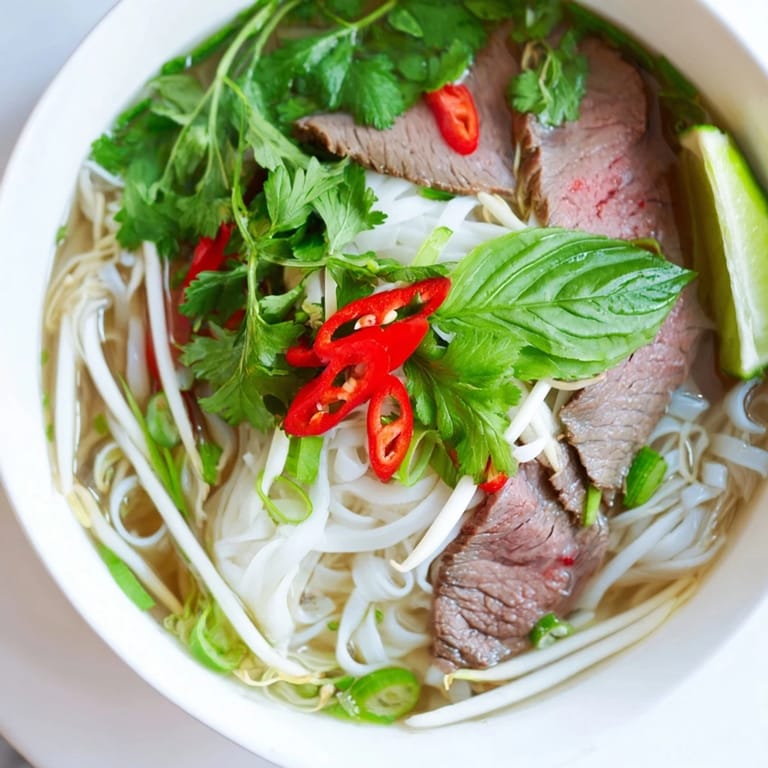
- Place a generous handful of the thinly sliced beef directly over the noodles in each bowl. Those thin pieces are going to cook instantly when the hot broth hits them, turning from raw and shiny to tender and cooked through.
- The magic moment—pour the broth:
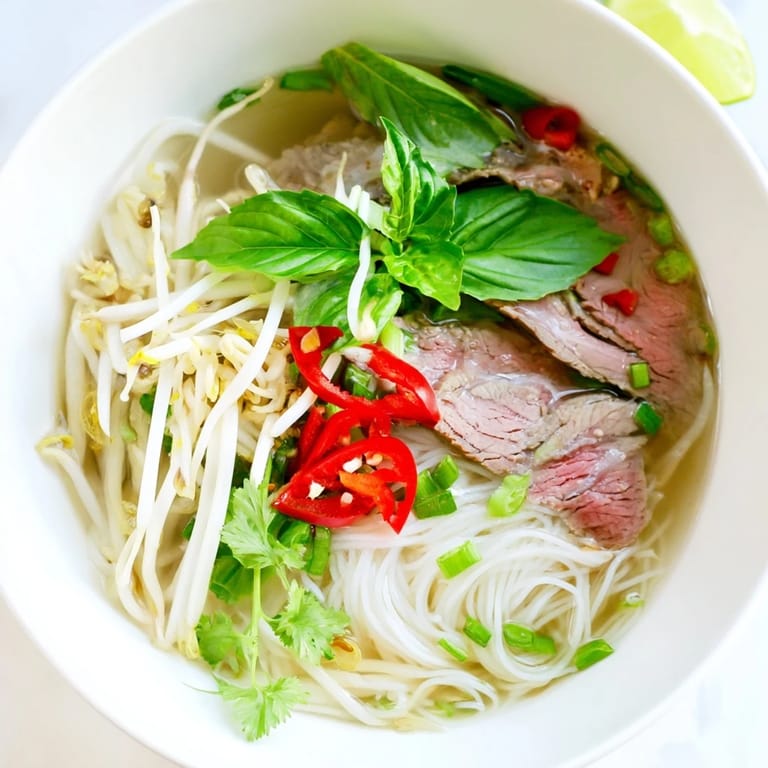
- Carefully ladle the steaming broth over the meat and noodles, making sure every bit gets submerged. Watch as the beef changes color right before your eyes—this is the moment someone always says it smells incredible.
- Crown with toppings and serve:
- Top each bowl with a handful of bean sprouts, a few leaves of Thai basil and cilantro, a scatter of sliced scallions, and as much red chili as you like. Serve immediately with lime wedges, hoisin sauce, and Sriracha on the side so people can squeeze, drizzle, and taste as they go.
 Save
Save I learned the true value of pho when I made it for a friend's first night in a new city, far from home and feeling overwhelmed. Watching her wrap the herbs in a leaf, squeeze lime over everything, and take that first spoonful—and seeing her shoulders relax—reminded me that sometimes the most nourishing thing food does has nothing to do with nutrition.
The Secret to Restaurant-Quality Broth
The difference between good pho broth and great pho broth often comes down to one small step many people skip: charring the aromatics before they go into the pot. When you hold the halved onion and ginger slices directly over a flame on your stovetop for just 30 seconds per side until they blacken slightly, something chemical happens—the sugars caramelize, the flavors deepen, and the broth gains this subtle complexity that tastes like it's been simmering for hours instead of minutes. I discovered this trick by accident when I was being lazy and left the onion near the burner, but now it's non-negotiable for my version.
Building Your Pho Bowl Experience
The genius of pho is that it's not a finished dish handed to you—it's an invitation to participate in your own meal. Some people swear by adding all their herbs and sauce at once, creating a unified flavor. Others prefer to taste the broth first, then gradually introduce each element, letting the citrus and basil hit their palate in waves. I've watched people build their bowls like they're conducting an orchestra, and that's exactly how it should be. The speed factor means everything stays hot and the toppings stay crisp, which matters way more than it sounds.
Quick Variations That Actually Work
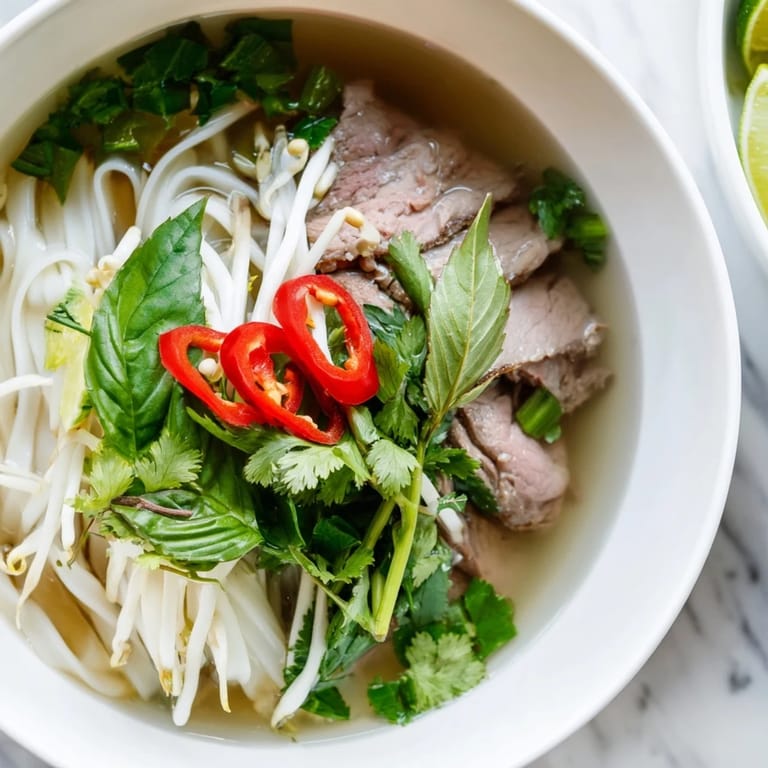
Once you nail the basic version, pho becomes endlessly adaptable without losing its soul. Chicken pho cooks even faster since poached chicken breast slices are thinner and more tender than beef. For vegetarian versions, swap the beef or chicken broth for vegetable broth and use extra-firm tofu pressed and sliced thin—it drinks in the flavor beautifully. Some nights I add a beaten egg that cooks into silky ribbons as I pour the broth, or toss in mushroom slices if I want earthiness. The aromatics stay exactly the same because they're doing the real work.
- Tofu swaps in perfectly if you skip the meat but keep the broth robust with extra fish sauce or add a splash of soy for umami.
- A handful of baby spinach or bok choy wilts into the hot broth and adds color and nutrition without changing the vibe.
- If you want to go all-in on authenticity, add a tablespoon of rock sugar instead of granulated sugar for a smoother sweetness.
 Save
Save Pho Express became my go-to meal because it proved that depth and speed aren't mutually exclusive. You're not rushing the process; you're just working smarter, and 35 minutes later you have something that tastes like love.
Cooking Guide
- → What type of meat works best for this dish?
Thinly sliced beef sirloin or eye round is traditional, but chicken breast can be a lighter option. The meat cooks quickly when ladled with hot broth.
- → Can I prepare the broth ahead of time?
Yes, the aromatic broth can be made a day ahead and refrigerated. Reheat gently before serving.
- → Are there vegetarian alternatives for this dish?
Substitute vegetable broth and tofu, and adjust toppings to maintain a fresh, flavorful balance.
- → How can I enhance the broth's flavor?
Lightly charring onion and ginger before simmering deepens the aromatic profile and adds a subtle smokiness.
- → What garnishes complement this bowl best?
Fresh Thai basil, cilantro, bean sprouts, scallions, and a squeeze of lime provide bright, fragrant contrasts to the savory broth.