 Save
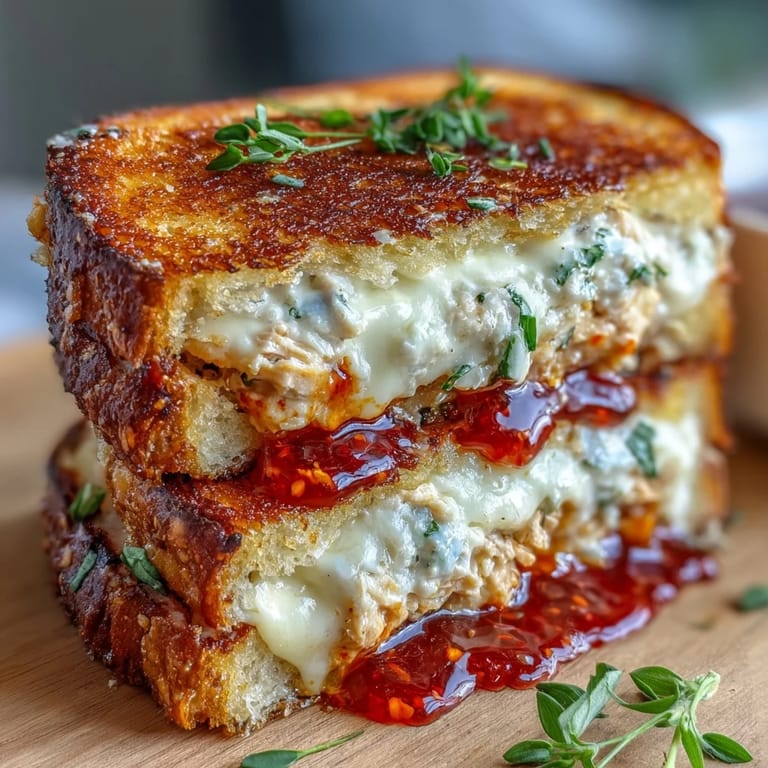
Save There's something about the sizzle of butter hitting a hot pan that makes you feel like you've got your life together, even if you're just making lunch. That's when I first understood the magic of a spicy tuna melt—not from some fancy restaurant, but from standing at my stove on a random Tuesday, watching the cheese bubble into these golden pools while Calabrian chili oil glistened on top. My friend had left a jar of those peppers in my pantry months earlier, and I'd been intimidated by them until that moment. Now it's become the sandwich I crave when I want something that tastes like it took hours but honestly takes less than thirty minutes.
I made this for my partner on a Sunday afternoon when we were both supposed to be meal-prepping, and instead we abandoned the plan entirely to sit on the porch eating these sandwiches while they were still warm. We barely talked, just kept trading bites and making approving sounds, and I realized that sometimes the best moments in a kitchen aren't about impressing anyone—they're just about food that tastes genuinely good and the person across from you wanting more.
Ingredients
- Canned tuna in water: Buy good quality if you can find it, because even though it's canned, the difference between a decent brand and a mediocre one really shows up in the final bite.
- Mayonnaise: This is your binding agent, so don't skip it, but the Greek yogurt keeps things from feeling too heavy or overly rich.
- Greek yogurt: A trick that adds creaminess and tang without doubling down on fat, which lets the other flavors actually shine through.
- Celery and red onion: These give you crunch and brightness—dice them small enough that they disappear into the mix but large enough that you still feel them in each bite.
- Calabrian chili peppers in oil: These aren't just hot, they're fruity and complex, which is why they matter so much here instead of just using hot sauce or cayenne.
- Dijon mustard and lemon juice: The mustard adds sharpness while lemon keeps everything from tasting heavy or one-dimensional.
- Sourdough bread: The slight tang in sourdough complements the spicy tuna better than white bread ever could, and it holds up to the butter and cheese without falling apart.
- Provolone or mozzarella: Provolone brings a little funky depth, but mozzarella works if that's what you have on hand—just know they'll give slightly different personalities to the finished sandwich.
- Unsalted butter: Softened butter spreads evenly without tearing the bread, and you want to taste the sandwich, not just the butter.
Tired of Takeout? 🥡
Get 10 meals you can make faster than delivery arrives. Seriously.
One email. No spam. Unsubscribe anytime.
Instructions
- Build your tuna salad:
- Drain your tuna thoroughly, then combine it in a bowl with the mayo, Greek yogurt, finely diced celery and onion, chopped Calabrian chili peppers, mustard, and lemon juice. The mix should feel creamy but textured, never mushy—taste it and adjust the salt, pepper, and lemon to your preference because this is where all your flavor decisions happen.
- Prep your bread:
- Lay out four slices of sourdough and spread softened butter on one side of each slice, using just enough so it coats the bread without making it soggy. You're creating a barrier between the bread and the pan so it gets golden instead of steamed.
- Assemble the sandwiches:
- Place two slices of bread buttered-side down on a clean surface, then divide your tuna salad between them, spreading it evenly. Top each pile of tuna with two slices of cheese, then cap it with your remaining bread slices buttered-side up.
- Heat your skillet:
- Set a large skillet over medium heat and let it warm for a minute or two—you want it hot enough that when you place the sandwich down, you hear a gentle sizzle, not a dramatic one. If the heat's too high, the bread will brown before the cheese melts.
- Cook the sandwiches:
- Place both sandwiches in the skillet and cook for 3 to 4 minutes without moving them—this is when the bread gets golden and the underside starts to set. Use a spatula to gently press down on the top of each sandwich for the last minute or so, which helps the cheese melt faster and creates better contact with the pan.
- Flip and finish:
- Flip the sandwiches carefully and cook the other side for another 3 to 4 minutes until that side is equally golden and the cheese inside is visibly melted when you peek inside. You'll see the cheese starting to peek out the sides, which is how you know you're done.
- Final touches:
- Slide the sandwiches onto a cutting board, drizzle each one with a teaspoon or so of Calabrian chili oil, and scatter fresh parsley over the top if you've got it. Cut them in half and eat them while they're still steaming, because that's when the contrast between textures is most pronounced.
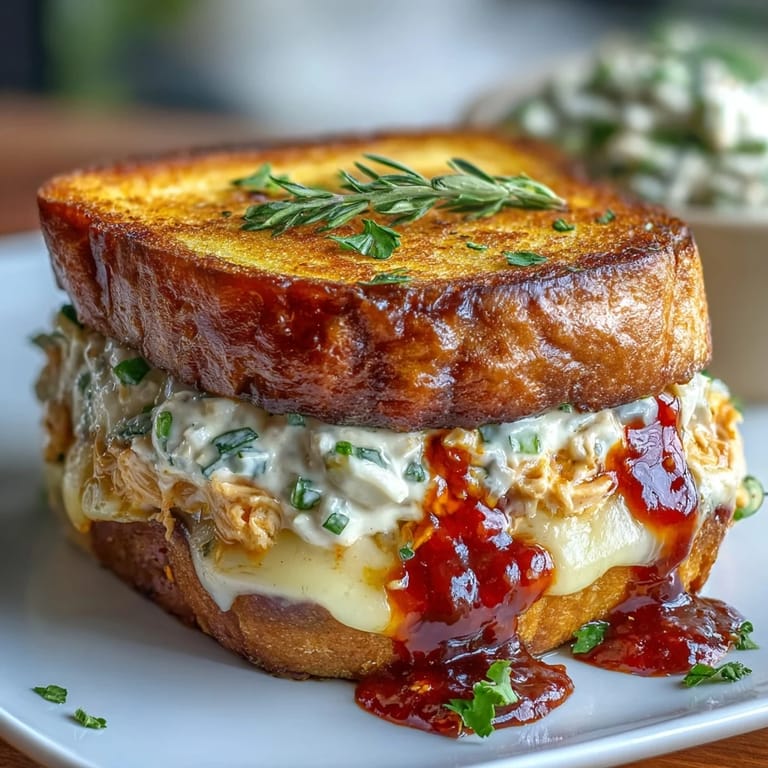 Save
Save What I didn't expect was how this sandwich would become my solution for mid-week cooking fatigue—those moments when you're tired but you don't want to eat something boring. It feels fancy enough to feel like you're taking care of yourself, but it's simple enough that you're not standing at the stove for an hour wondering if you made a mistake somewhere.
Why Calabrian Chili Makes All the Difference
Regular hot sauce or sriracha would make this spicy, but Calabrian chili peppers do something different—they're fruity and almost sweet underneath the heat, which means the spice doesn't dominate the other flavors. I learned this the hard way by trying to substitute with what I had in my pantry, and while it worked, it tasted flatter, more one-note. Now I actually keep a jar on hand specifically for moments when I want heat that has dimension.
The Cheese Question
Provolone and mozzarella behave differently as they melt, and honestly both work, just in slightly different ways. Provolone brings this slightly funky, almost smoky flavor that plays beautifully with the spicy tuna, while mozzarella is more neutral and lets everything else shine. I started with provolone because that's what was in my fridge, but I've made this with mozzarella since and discovered that the choice really depends on your mood—if you want the sandwich to taste bold and complex, go provolone; if you want the tuna to be the star, mozzarella steps back gracefully.
Variations and Serving Ideas
This sandwich is honestly good as-is, but there's room to play if you want to adjust it to your tastes or what's in your kitchen. A crisp green salad on the side cuts through the richness beautifully, and something cold to drink makes the heat from the chili feel less intense without making it disappear. If you want to make this your own, consider what flavors you naturally gravitate toward and trust yourself to experiment a little.
- Swap the provolone for sharp cheddar or fontina if you want a different flavor profile or have something else calling to you from your cheese drawer.
- Add more Calabrian chili or a tiny pinch of red pepper flakes if you're someone who genuinely loves heat and wants this sandwich to have more of a kick.
- Serve it with kettle chips on the side or alongside a simple salad, whichever feels right for the moment you're in.
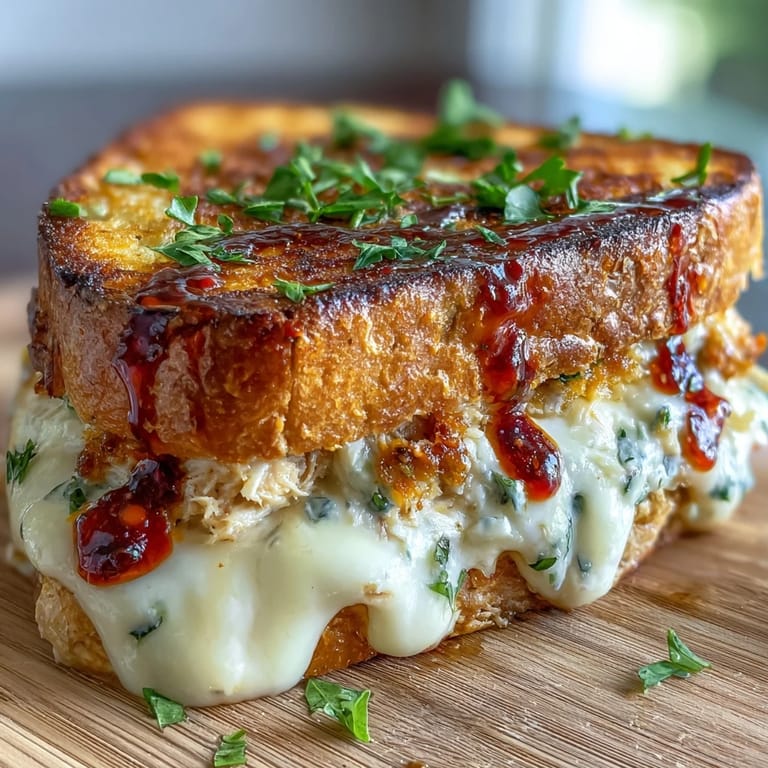 Save
Save This sandwich has become my answer to that question of what to cook when you want something that feels good to eat, that comes together quickly, and that genuinely tastes like you care about what's on your plate. It's the kind of food that makes a regular Tuesday feel a little bit special.
Cooking Guide
- → What cheese works best with this tuna sandwich?
Provolone and mozzarella melt well, but sharp cheddar or fontina are tasty alternatives if you prefer a stronger flavor.
- → How can I increase the heat level?
Add extra Calabrian chili peppers or a pinch of red pepper flakes to the tuna mix for more spice.
- → Can I prepare the tuna filling in advance?
Yes, the tuna mixture can be made a few hours ahead and refrigerated to let flavors meld before cooking.
- → What bread types are recommended besides sourdough?
Rustic Italian or crusty white breads work well, but avoid very soft breads to maintain structure when grilling.
- → Is Calabrian chili oil necessary?
It adds a distinctive vibrant heat, but you can substitute with other chili oils or omit for milder taste.