 Save
Save I discovered microwave pasta entirely by accident one chaotic Tuesday when my stovetop was somehow already occupied and I had maybe ten minutes before needing to leave. Out of sheer desperation, I dumped pasta and water into a bowl, hit the microwave, and walked away. When I came back, I had perfectly cooked pasta without a pot, without standing around waiting, without any fuss. It felt like stumbling onto a secret that somehow nobody talks about.
My roommate watched me pull this off and looked genuinely suspicious, like I'd somehow cheated at cooking. But then she tried it herself on a night she was running late, and now it's her go-to method when she wants dinner without the whole production. There's something satisfying about proving that fewer tools doesn't mean lower quality.
Ingredients
- Dried pasta (85 g): Penne, fusilli, or elbow macaroni all work beautifully here; shapes with grooves hold onto the creamy water better than long strands would.
- Water (375 ml): This is your cooking liquid and sauce combined, so don't skip the salt—it flavors the pasta from the inside out.
- Salt (¼ tsp): Essential for seasoning, stirred right in with the water so it distributes evenly.
- Olive oil or butter (1 tsp): Optional but honestly worth it, adds richness without any real effort.
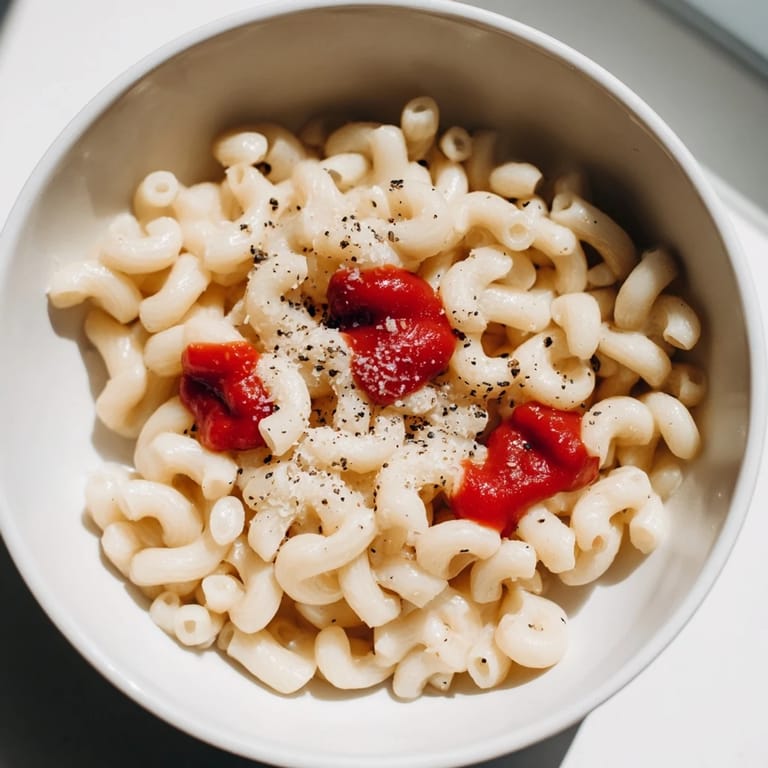
- Parmesan cheese (2 tbsp): The finishing touch that makes this feel intentional rather than just surviving on pasta.
- Black pepper: Fresh ground tastes sharper and more interesting than pre-ground ever does.
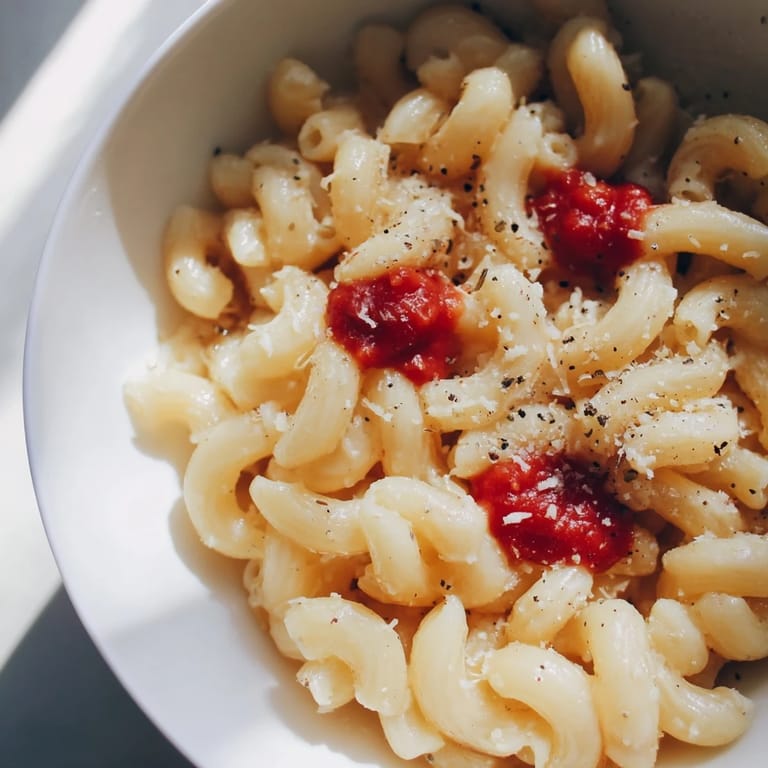
- Marinara sauce or pesto (2 tbsp): A tiny amount goes a long way to transform plain pasta into something with actual character.
Tired of Takeout? 🥡
Get 10 meals you can make faster than delivery arrives. Seriously.
One email. No spam. Unsubscribe anytime.
Instructions
- Set up your bowl:
- Use a large microwave-safe bowl—I learned this the hard way when pasta water bubbled up and made a mess. The pasta should sit comfortably in the bottom with room to move around.
- Add water and salt:
- Pour in your water, sprinkle the salt, stir everything together so the salt dissolves. This step takes thirty seconds and makes a real difference in flavor.
- First microwave burst:
- Microwave uncovered on high for 4 minutes without stirring; you want the water to heat up and get the pasta started. You'll hear it bubbling away and smell the starchy pasta scent filling the kitchen.
- Stir and continue cooking:
- Pull it out, give the pasta a good stir to make sure nothing's stuck to the bottom, then microwave in 2-minute increments. After each interval, stir again and check the texture; al dente means tender but still with a tiny bite to it.
- Check for doneness:
- Pasta is done when it's soft enough to eat but still has slight resistance, and most of the water has absorbed into the pasta. Total time is usually 8–10 minutes depending on your microwave's power and the pasta shape.
- Drain if needed:
- If there's excess water sitting in the bowl, carefully pour it off. Sometimes there isn't any, and that's fine too.
- Season and serve:
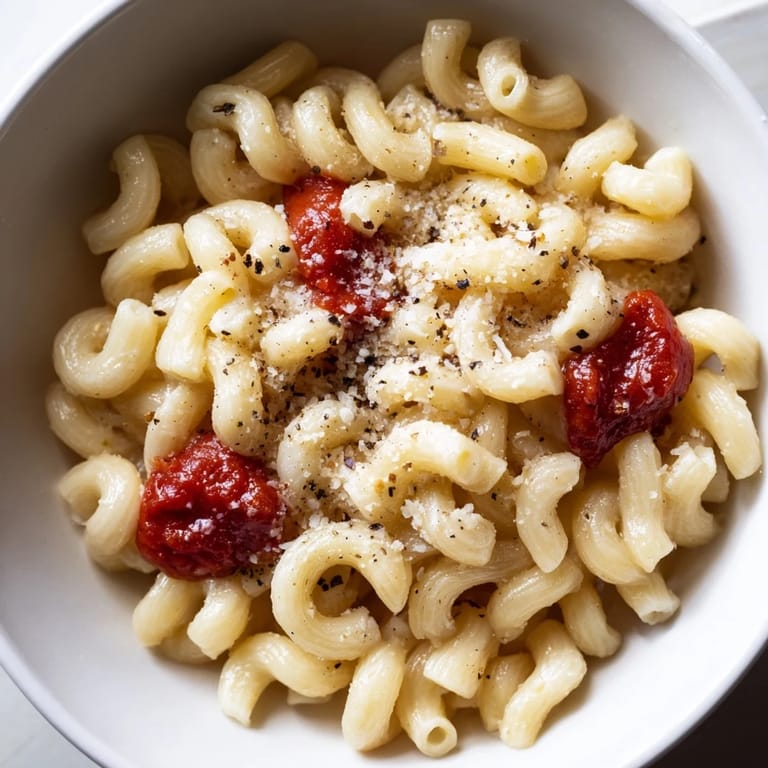
- Stir in your oil or butter, cheese, pepper, and sauce if you're using it. Taste it, adjust anything that needs adjusting, and eat it while it's still warm.
 Save
Save The best part is how quietly efficient this whole thing feels. No waiting for water to boil, no steam in your face, just gentle heat doing its job while you do something else. It's made me reconsider what cooking actually requires versus what's just tradition.
Why Microwave Pasta Actually Works
Pasta cooks by absorbing water and heat, and a microwave does both just fine—it's not fancy or impressive, but it's honestly effective. The main difference from stovetop cooking is that the water heats more gently and everything stays in one contained space, which means less evaporation and more even cooking. The starch released from the pasta thickens the remaining water into something almost sauce-like, which is why the pasta comes out creamy rather than dry.
Adding Substance to Your Bowl
This is great as written, but it becomes a real meal with a couple of additions. A handful of cooked vegetables, some fresh herbs thrown in at the end, or leftover protein stirred through turns it from a quick carb fix into something more balanced. I've added canned chickpeas, frozen broccoli (just toss it in raw—it'll cook in the steam), and even scrambled egg for different moods.
Variations That Work
Once you understand the basic ratio, you can play around without worrying. Gluten-free pasta works perfectly, though you'll want to check doneness earlier since cooking times vary. You could use broth instead of water for more flavor, add soy sauce and sesame oil for an Asian direction, or toss in cream and fresh spinach for something richer. The only rule is making sure the bowl is big enough and you stir frequently enough to avoid sticking.
- Start with the base method until you feel confident, then you'll naturally know how to adapt it based on what you're in the mood for.
- Keep the pasta shape in mind—longer thinner shapes might finish earlier than chunky elbow macaroni.
- Taste a piece before calling it done; undercooked is fixable with another minute, overcooked is not.
 Save
Save This method has quietly become my favorite way to eat pasta on nights when I just want something warm and satisfying without any ceremony. It's made me understand that cooking doesn't have to be complicated to be good.
Cooking Guide
- → How do I prevent water boiling over in the microwave?
Use a large bowl and avoid filling pasta above half the bowl’s capacity. Stirring between intervals helps control boiling.
- → Can I use different pasta shapes for this method?
Yes, penne, fusilli, elbow macaroni, or similar shapes work well, though cooking times may vary slightly.
- → Is it possible to cook gluten-free pasta this way?
Gluten-free pasta can be cooked similarly, but monitor doneness carefully as cooking times differ by brand.
- → What are good additions to enhance flavors?
Olive oil or butter, grated Parmesan, black pepper, and marinara or pesto sauces add richness and taste depth.
- → How should I handle excess water after microwaving?
If some water remains after cooking, carefully drain it before stirring in flavorings to avoid sogginess.