 Save
Save The first time I truly understood what laksa meant was standing in a tiny hawker stall in Penang, steam rising off a bowl so fragrant it felt like breathing in the whole of Southeast Asia. The vendor—an elderly woman with flour dusting her apron—handed me a spoon and smiled, not saying much, just watching as I took that first spoonful of creamy, spiced broth. That bowl changed something; suddenly all the restaurant versions I'd made felt flat. Now when I cook this at home, I chase that same magic: the way the coconut milk coats your tongue, how the lemongrass whispers through every sip, and that moment when all the fresh toppings tumble into the heat.
I made this for my partner on a cold evening when they'd had a rough week, and I watched their whole face relax with that first spoonful. They didn't say much, just kept eating, and I realized that sometimes a good laksa is more honest than any words. The noodles disappearing into that golden broth, the crunch of fresh sprouts, the way lime juice brightens everything—it became our quiet ritual.
Ingredients
- Vegetable oil: Use a neutral oil that won't compete with the laksa paste; it's just there to help everything toast together beautifully.
- Onion, garlic, ginger, and lemongrass: These four create the aromatic foundation that makes people ask 'what smells so incredible?' before they even taste it.
- Laksa paste: This is your shortcut to authenticity—a good paste carries all the complexity that would normally take hours to build from scratch.
- Coconut milk: Full-fat is non-negotiable here; it's what makes the broth silky and gives the spice somewhere soft to land.
- Vegetable broth: Choose one with character, not the bland stuff; it becomes the backbone of your final flavor.
- Soy sauce, sugar, and salt: These humble additions balance heat, round out edges, and make everything taste more like itself.
- Rice noodles: Buy the thicker ones if you can find them; they hold up better and have more presence in the bowl.
- Tofu: Firm tofu gives you those golden edges when fried—crispy outside, soft inside, a textural dream.
- Fresh vegetables and herbs: Bean sprouts, carrots, peppers, and cilantro bring crunch, color, and a sense of freshness that cuts through the richness.
- Lime and chili: Your finishing touches that wake everything up—don't skip them.
Tired of Takeout? 🥡
Get 10 meals you can make faster than delivery arrives. Seriously.
One email. No spam. Unsubscribe anytime.
Instructions
- Start your aromatics:
- Heat oil in a large pot and add onion, garlic, ginger, and lemongrass together. You'll know you're doing it right when the kitchen fills with that warm, grassy-spicy fragrance and the onions turn translucent and soft, around 3-4 minutes. Don't rush this step; it's laying down flavor.
- Deepen with paste:
- Stir in the laksa paste and let it cook for 2 minutes, which lets the deeper spices bloom and releases all that concentrated umami. You'll notice the color deepens and the smell becomes almost intoxicating.
- Build the broth:
- Pour in coconut milk and vegetable broth, stirring well so everything combines into a smooth, unified broth. Bring it to a gentle simmer; you want bubbles breaking the surface, not a rolling boil.
- Season and meld:
- Add soy sauce, sugar, and salt, then let it simmer uncovered for 10 minutes. This isn't wasted time—the flavors are getting to know each other, becoming something more integrated than the sum of their parts.
- Prep your noodles and tofu:
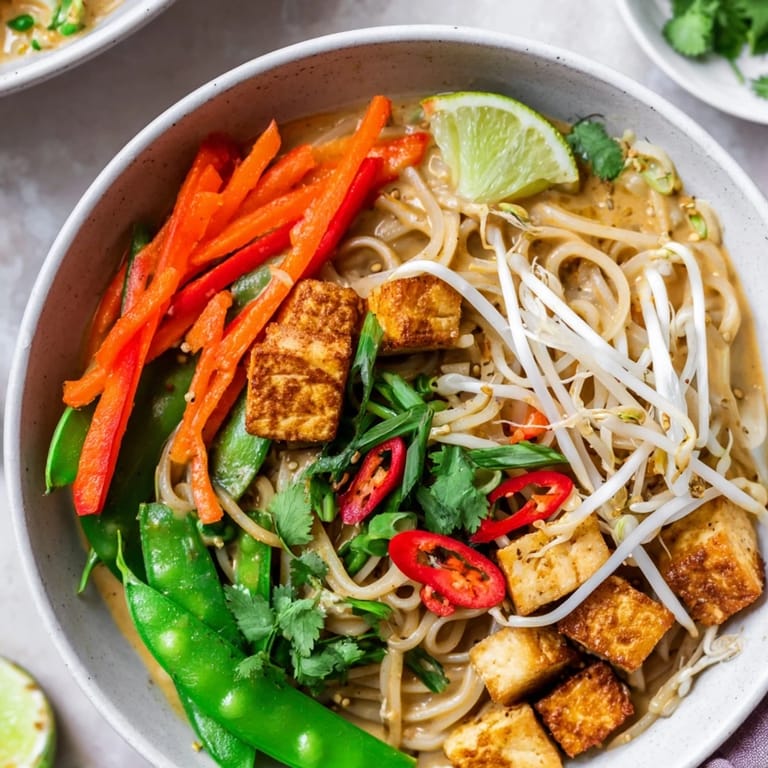
- While the broth simmers, cook or soak your rice noodles according to package instructions and drain them well. In a separate nonstick skillet, fry your tofu cubes over medium-high heat until golden and crispy on multiple sides, which takes about 5-8 minutes total.
- Add vegetables at the end:
- Add carrots, bell pepper, and snow peas to the simmering broth just 3-4 minutes before serving so they stay tender-crisp and keep their brightness. You want them cooked enough to soften slightly, but not so long that they lose their color and snap.
- Assemble with intention:
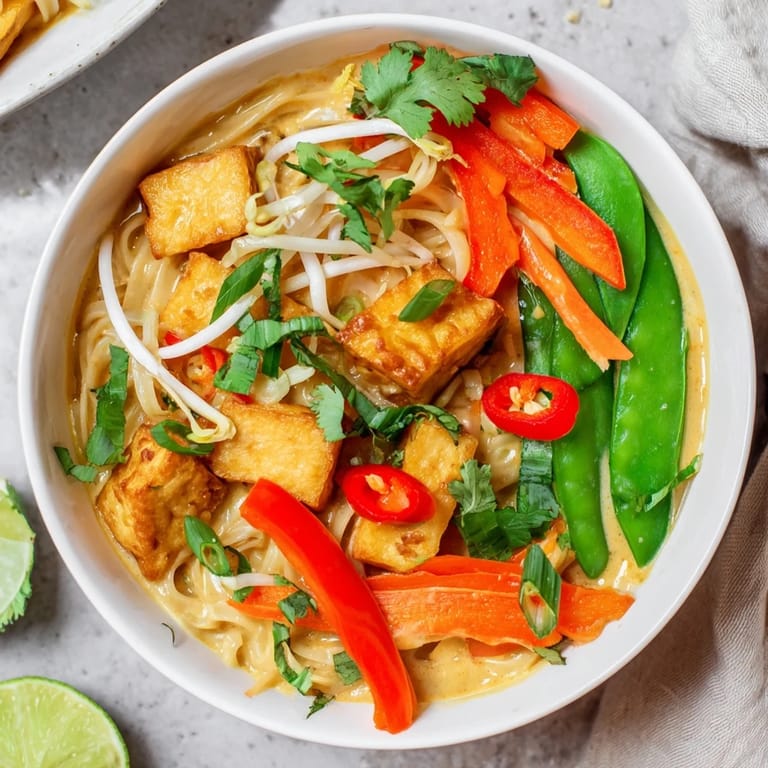
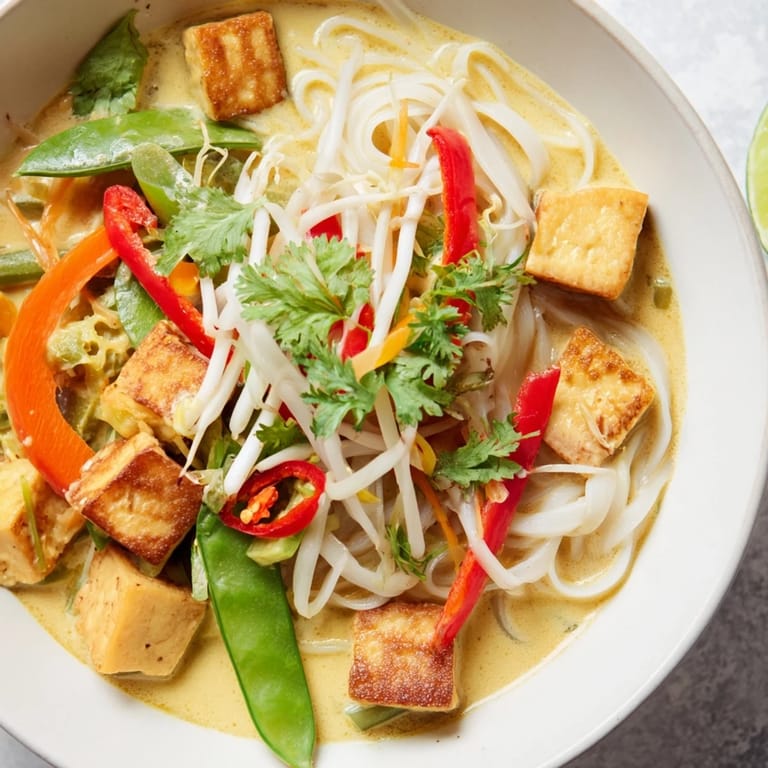
- Divide noodles into serving bowls, ladle the hot broth and vegetables over top, then scatter your fried tofu, bean sprouts, spring onions, cilantro, and chili across the bowl. Serve with lime wedges on the side so each person can brighten their bowl to taste.
 Save
Save There's a moment, right as you're squeezing lime into the broth and watching it swirl golden into the cream, when you feel the dish come alive. It stops being a recipe and becomes something you're offering—warmth, flavor, care all in one bowl.
Building Your Own Laksa
Once you understand the basic structure of laksa—aromatic paste, creamy coconut broth, fresh toppings—you can make it your own. I've added mushrooms when I didn't have snow peas, thrown in baby corn because it was on sale, even crumbled crispy shallots on top when I wanted extra texture. The broth is flexible; the structure isn't. As long as you nail that fragrant, balanced base, everything else is just embellishment.
About Laksa Paste
If you're buying paste, look for brands that have recognizable ingredients—you should see chilies, garlic, lemongrass, and spices, not a long list of mystery additives. I used to think making it from scratch was worth the effort, but honestly, a good store-bought paste does 90% of the work and lets you focus on everything else. There's no shame in that shortcut; it's just smart cooking.
Serving and Pairing
Laksa is best served immediately, while the broth is still steaming and the vegetables are at their freshest. If you're cooking for a crowd, prepare everything in advance and assemble bowls to order—your guests will appreciate the care. The bright acidity of lime and the cooling crunch of bean sprouts make this dish feel lighter than it is, so don't feel guilty about seconds.
- A crisp white wine like Riesling or Sauvignon Blanc cuts through the richness beautifully and won't compete with the spices.
- Leftover broth keeps for 3 days in the fridge and actually tastes better as the flavors deepen, so make extra if you can.
- Cold weather or warm, this soup somehow always feels right.
 Save
Save Making laksa is a small act of generosity, whether you're cooking for yourself or for someone you love. Every time I serve this, I'm hoping they feel a fraction of what I felt in that Penang stall—that sense of being cared for through flavor.
Cooking Guide
- → What ingredients give laksa its distinctive flavor?
Key flavors come from laksa paste, lemongrass, ginger, garlic, and coconut milk that create a balanced blend of spice and creaminess.
- → Can I substitute the tofu with another protein?
Yes, firm tofu can be replaced by grilled chicken, shrimp, or even boiled eggs depending on your preference.
- → How do I prepare the noodles for this dish?
Rice noodles should be soaked or cooked according to package instructions, then drained before serving with the broth.
- → What vegetables work best in this curry broth?
Carrots, bell pepper, snow peas, and bean sprouts are ideal for maintaining a balance of texture and freshness.
- → Is this dish suitable for vegetarians or vegans?
When using vegan-friendly laksa paste free of shrimp or fish products, the dish is fully vegetarian and vegan.
- → How should I serve the laksa for best results?
Serve noodles in bowls topped with hot coconut curry broth, tofu, vegetables, chili slices, fresh cilantro, and lime wedges for brightness.