 Save
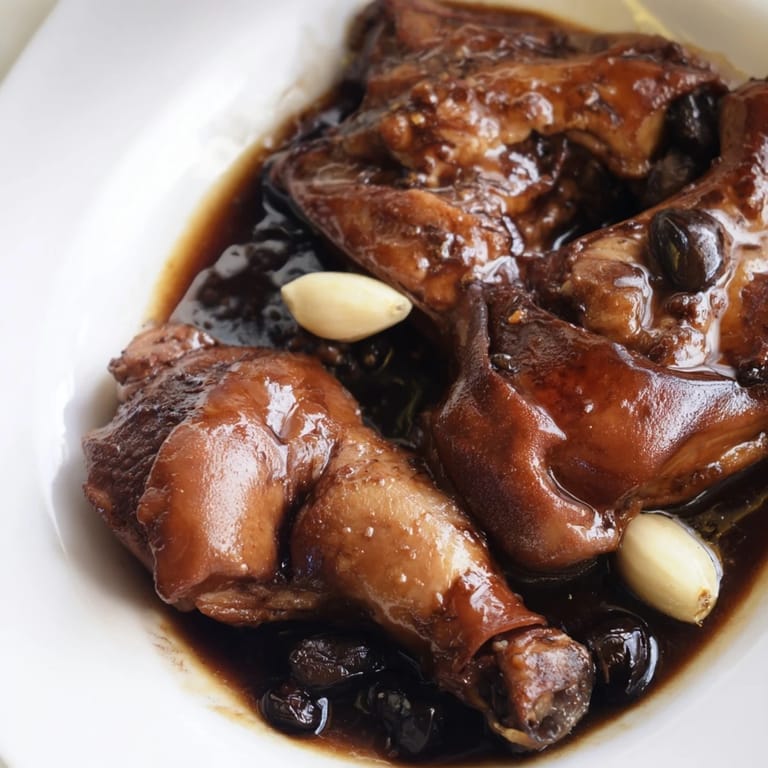
Save My tío used to cook adobo every Sunday, and the smell would drift through the whole house by noon—vinegar, soy, and garlic simmering together until it became something almost sweet. I remember standing on a stool to peer into his pot, watching the chicken turn golden in that dark sauce, completely mesmerized. Years later, I realized I'd been absorbing his technique the whole time, the way he'd let the marinade work before cooking, how he knew exactly when to uncover the pot. Making this now, I feel like I'm honoring that kitchen and those lazy afternoons.
The first time I made this for my partner, I worried the vinegar would be too sharp, that they'd find it strange. Instead, they had three bowls of rice with it and asked me to make it again the next week. Now it's our comfort food for rainy days, the kind of dish that doesn't require conversation, just quiet satisfaction.
Ingredients
- Bone-in, skin-on chicken thighs and drumsticks (1.5 lbs): The skin renders and keeps the meat moist while the bones add a richness to the sauce that boneless breasts simply can't.
- Soy sauce and cane vinegar (1/3 cup each): This is the heart of adobo—the balance between umami and acid, neither overpowering the other, which is why measuring matters here.
- Garlic, smashed (6 cloves): Smashing releases the oils and lets the garlic almost dissolve into the sauce rather than staying chewy and sharp.
- Bay leaves and black peppercorns (2 leaves, 1 teaspoon): These quiet the acidity just slightly and add complexity without announcing themselves.
- Brown sugar (1 tablespoon, optional): A tiny bit of sweetness rounds everything out, but skip it if you prefer a brighter, more vinegary finish.
- Water (1/2 cup): This prevents the sauce from reducing too fast and lets the chicken cook gently instead of stewing in pure acid.
- Cooking oil (2 tablespoons): Just enough to brown the chicken without making the dish greasy, since the skin will render its own fat.
Tired of Takeout? 🥡
Get 10 meals you can make faster than delivery arrives. Seriously.
One email. No spam. Unsubscribe anytime.
Instructions
- Marinate the chicken:
- Mix the chicken with soy sauce, vinegar, garlic, bay leaves, peppercorns, and brown sugar in a bowl. Even 30 minutes makes a difference, but overnight lets the flavors really settle into the meat.
- Prep before cooking:
- Pull the chicken out and pat it completely dry—this is what gives you that nice golden skin. Save every drop of the marinade.
- Brown the chicken:
- Get your oil hot and lay the chicken skin-side down first, letting it sit undisturbed for 3 to 4 minutes so the skin crisps and turns golden. Flip and brown the other side just as long.
- Braise low and slow:
- Pour in the reserved marinade and water, bring it up to a boil, then drop the heat way down, cover the pot, and let it bubble gently for 25 minutes. Turn the chicken once halfway through so it cooks evenly.
- Reduce the sauce:
- Uncover the pot and let it simmer another 10 to 15 minutes—you're cooking off the excess liquid so the sauce coats the chicken instead of drowning it. Skim off fat if you want, or leave it for flavor.
- Taste and finish:
- Remove the bay leaves, taste a spoonful of sauce, and adjust with a bit more soy or vinegar if needed. Serve over rice while it's still hot.
 Save
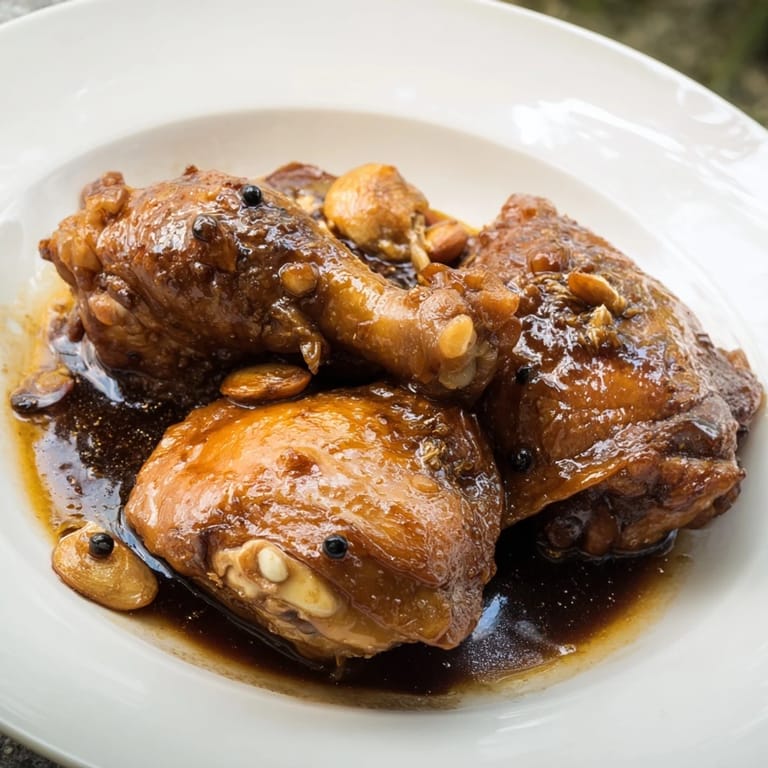
Save I made this once for a friend who was going through a rough time, and she cried a little at the dinner table—not from sadness, but from the kind of comfort that comes from food made with care. That's when I understood that adobo isn't just dinner; it's how we say 'I'm thinking of you' without saying it out loud.
Why This Dish Matters
Adobo is the closest thing Filipino cuisine has to a national dish, and it exists in almost every home kitchen with slight variations—some people add coconut milk, others swear by pork, a few sneak in a splash of sesame oil. This version is the traditional one, uncomplicated and honest, which is exactly why it endures. It's not flashy, but it's deeply satisfying in a way that makes people come back for more.
The Magic of the Marinade
The longer the chicken sits in that mixture, the more the salt, acid, and aromatics begin to work their way into the meat, breaking down the fibers and tenderizing from the inside. Even 30 minutes matters, but if you have time, let it go overnight and you'll notice a real difference in how silky the chicken becomes. The marinade also becomes your sauce, so nothing goes to waste—it's economical and brilliant.
Serving and Storage
Adobo tastes better the next day because the flavors deepen and meld together as it sits, so make it ahead without hesitation. It reheats beautifully on the stovetop or in the microwave, and it freezes well for up to three months. Leftovers are perfect for lunch bowls, nachos, or stirred into fried rice the following week.
- Serve with steamed white rice to soak up every bit of that dark, savory sauce.
- A squeeze of calamansi or lemon brightens it right before eating if you want extra tanginess.
- Chop scallions over the top for a fresh note that cuts through the richness.
 Save
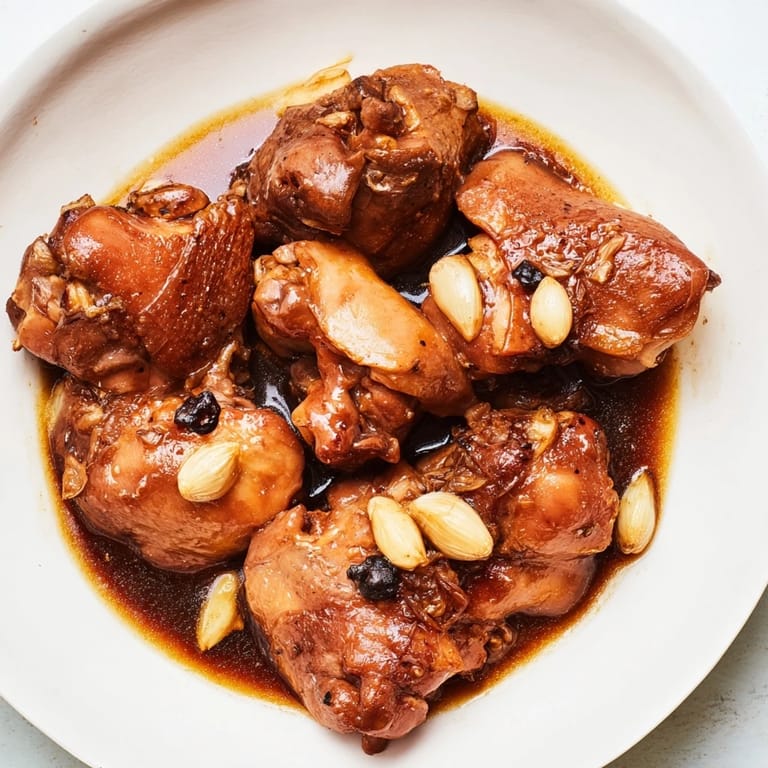
Save This is the kind of recipe that asks nothing from you except patience and attention, and in return, it gives you a meal that feels like home. Make it once, and it becomes yours.
Cooking Guide
- → What cut of chicken is best for this dish?
Bone-in, skin-on thighs and drumsticks provide the most flavor and stay juicy during braising.
- → Can I adjust the tanginess of the sauce?
Yes, varying the amount of vinegar will make the sauce more or less tangy according to taste.
- → Is marinating necessary before cooking?
Marinating helps the flavors penetrate the meat deeply, resulting in a richer taste and more tender texture.
- → What can I serve alongside this dish?
Steamed white rice is the traditional accompaniment, balancing the savory and tangy sauce.
- → Can additional ingredients be added for flavor?
Yes, coconut milk or dried chilies can be included for extra richness or heat.