 Save
Save There's something about the scent of coconut milk warming on the stove that instantly transports me to a beachside café I stumbled into years ago—except this version is mine to make on any ordinary Tuesday morning. My friend texted me a photo of her breakfast in Bangkok, and I became obsessed with recreating that perfect balance of creamy, sweet, and tropical without the dairy. Now this bowl has become my go-to when I want to feel like I'm traveling without leaving my kitchen.
I made this for my partner on a lazy Saturday when we both needed something better than cereal, and watching their face light up when they tasted the first bite—that moment when someone realizes comfort food can also be exciting—made it instantly worth repeating. We've since discovered it works equally well as a light dinner, which feels like finding a secret menu item in your own kitchen.
Ingredients
- Glutinous (sticky) rice, 1 cup: This is the foundation, and it's different from regular rice—the starch content is what creates that signature creamy texture when coconut milk hits it.
- Water, 1 1/2 cups: The ratio matters more than you'd think; too little leaves hard pockets, too much turns it mushy.
- Full-fat coconut milk, 1 can (13.5 oz / 400 ml): Don't reach for lite or reduced-fat here—the richness is what makes this sing.
- Maple syrup or agave nectar, 1/4 cup: Both work beautifully; maple adds warmth while agave keeps things lighter and more neutral.
- Sea salt, 1/4 teaspoon: A small pinch that amplifies the coconut flavor rather than making it taste salty.
- Ripe mangoes, 2 large: Choose ones that yield slightly to pressure and smell fragrant at the stem—underripe mangoes will make the whole bowl feel disappointing.
- Toasted sesame seeds or coconut flakes, 2 tablespoons (optional): These add a textural contrast that transforms the bowl from soft-only to interesting.
- Fresh mint leaves (optional): A finishing touch that feels fancy but requires zero actual effort.
Tired of Takeout? 🥡
Get 10 meals you can make faster than delivery arrives. Seriously.
One email. No spam. Unsubscribe anytime.
Instructions
- Rinse the sticky rice:
- Cold water running over the rice removes the excess starch that would otherwise make it gluey and unpleasant. Keep rinsing until the water looks clear, not cloudy—this step genuinely changes the final texture.
- Cook the rice low and slow:
- Bring it to a boil, then immediately drop the heat and cover it—this gentle approach prevents scorching on the bottom. Let it sit covered for 10 minutes after cooking; this resting period is when the magic happens and the grains finish absorbing water.
- Warm the coconut mixture:
- Heat your coconut milk with maple syrup and salt until it's steaming and fragrant, but never let it boil or the coconut flavor turns slightly bitter. This is when your kitchen smells like vacation.
- Reserve and fold:
- Scoop out half the coconut mixture before it touches the rice, then gently fold the rest into the warm rice while it's still hot. This way you have a drizzle that stays creamy and luxurious rather than absorbing completely into the rice.
- Assemble with intention:
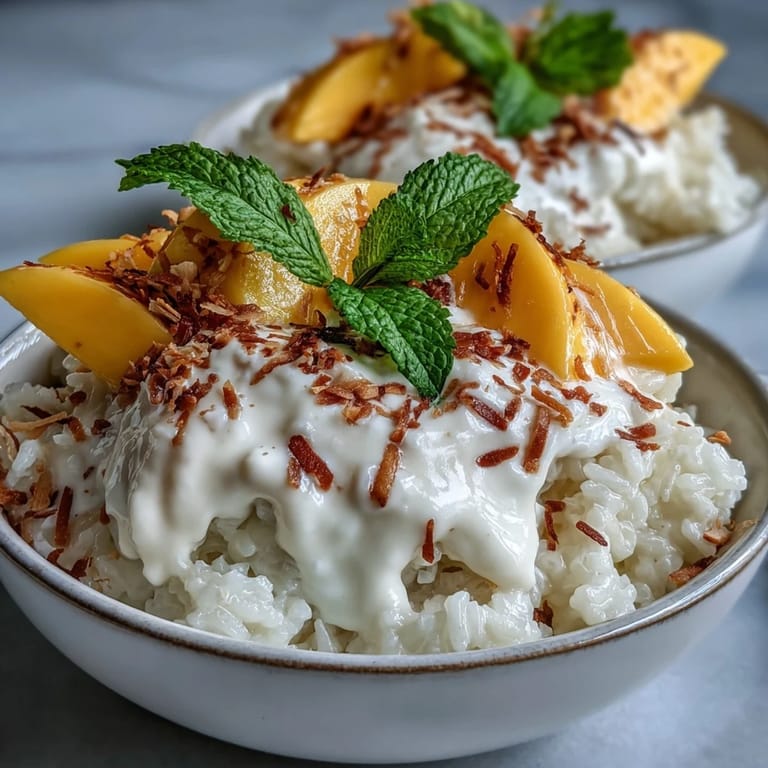
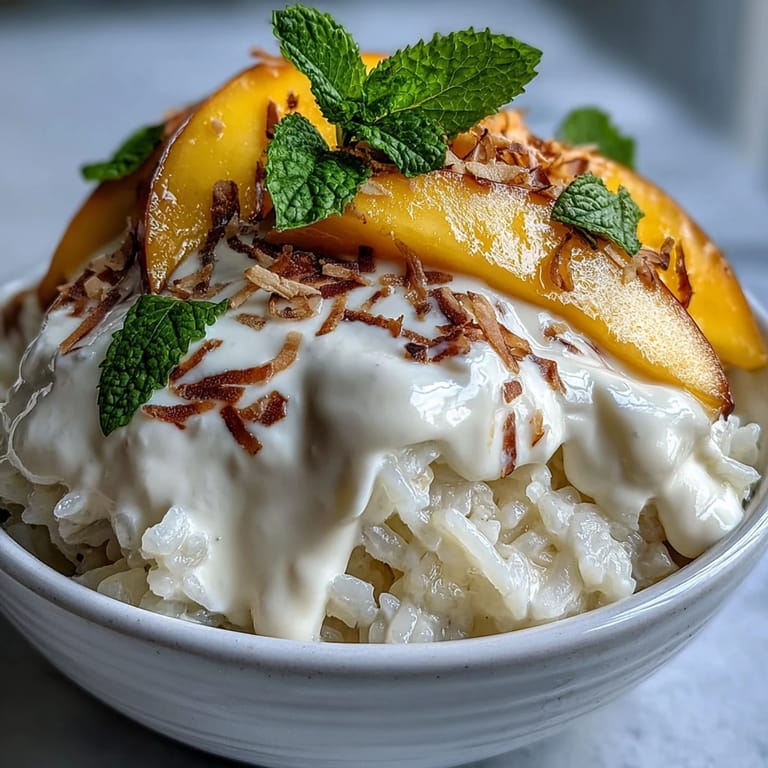
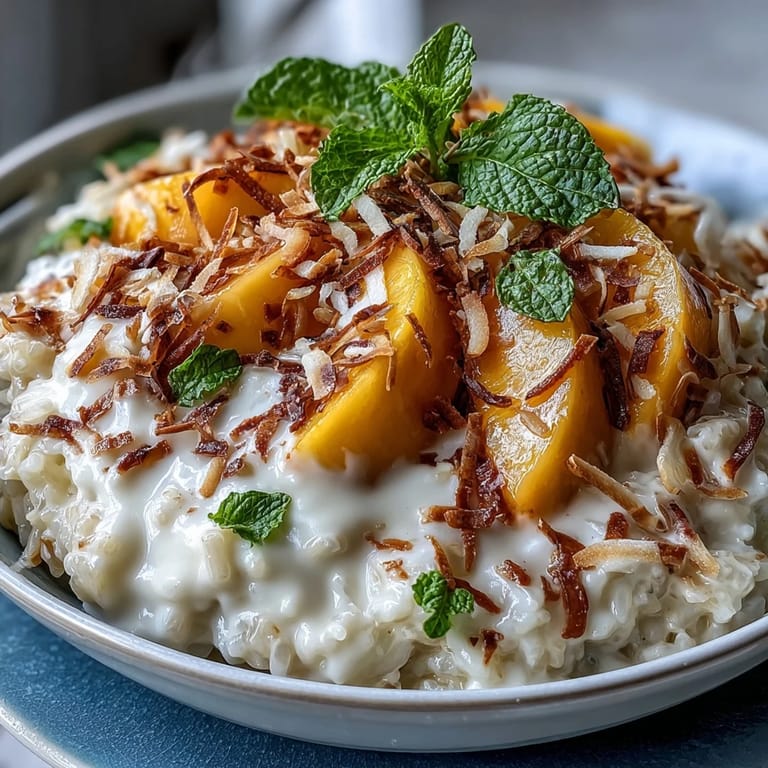
- Layer the sticky rice in bowls, arrange mango slices on top like you're plating something precious (because you are), drizzle with the reserved coconut cream, and finish with sesame seeds and mint. This final step takes 30 seconds but makes all the difference in how beautiful—and therefore how satisfying—the bowl feels.
 Save
Save My mom tried this once, and it became her thing to request on Sunday mornings, which meant more to me than any compliment because she's the hardest person to impress in the kitchen. Now I make it for her without being asked, and somehow that simple act of showing up with breakfast that tastes like care has become our thing.
Choosing the Right Mangoes
The mango is the star here, so don't phone it in by grabbing whatever's on sale. A ripe mango should smell sweet at the stem, yield slightly to gentle pressure, and have skin that's blushed with color rather than uniformly yellow—each variety looks different, but the fragrance is the universal truth. If your mango tastes mealy or flavorless, the whole bowl suffers, so take 30 seconds to choose carefully.
The Science of Sticky Rice Absorption
Sticky rice is glutinous, which sounds strange until you realize it means the rice grains are literally designed to cling together and absorb liquid like a sponge. When you fold coconut milk into just-cooked rice, those grains are still hot and porous, which is why they soak up flavor so perfectly—cold rice would just sit there. This is why timing matters: the rice needs to be warm, the coconut mixture needs to be warm, and they need to meet within a few minutes of cooking.
Variations and Make-Ahead Magic
I've learned that you can make the sticky rice up to two days ahead and store it in an airtight container, then warm it gently with a splash of water or plant-based milk before serving. The mango should be sliced fresh the morning you're serving, but honestly, the real magic happens when you sit down and actually eat it slowly instead of rushing through breakfast like usual.
- Try substituting the mango with fresh pineapple, berries, or even roasted stone fruits for seasonal variation.
- A sprinkle of toasted coconut flakes instead of sesame seeds creates a texture that feels extra luxurious.
- If you want to make it more substantial, a spoonful of almond or tahini butter swirled into the rice adds protein and depth.
 Save
Save This breakfast bowl exists in that rare space where it feels special enough for company but simple enough that you'll actually make it on a random Tuesday. Once you've had it, regular breakfast suddenly feels like settling.
Cooking Guide
- → What type of rice works best for these breakfast bowls?
Glutinous sticky rice is ideal for authentic texture, but short-grain sushi rice makes an excellent substitute. Both varieties absorb the coconut milk beautifully while maintaining that signature chewy consistency.
- → Can I prepare these bowls ahead of time?
The coconut sticky rice can be made up to two days in advance and stored refrigerated. Warm gently before serving, then top with fresh mango and coconut cream for the best texture and flavor.
- → What other fruits pair well with coconut sticky rice?
While mango is traditional, other tropical fruits work beautifully. Try sliced papaya, pineapple, or lychee. Berries, peaches, and roasted stone fruits also complement the creamy coconut base.
- → How do I store leftovers?
Keep the coconut rice and mango slices in separate airtight containers in the refrigerator for 2-3 days. The reserved coconut cream should be stored separately and can be gently warmed before serving.
- → Is this breakfast bowl gluten-free?
Yes, when using certified gluten-free sticky rice and checking that your coconut milk and sweeteners are labeled gluten-free. Most naturally glutinous rice and pure coconut milk are safe choices.
- → Can I use alternative sweeteners?
Maple syrup and agave work wonderfully, but coconut sugar adds rich caramel notes. For a whole-food option, blend softened dates into warm coconut milk until smooth before combining with rice.