 Save
Save There's something about the moment when you realize avocado belongs in chocolate that shifts your entire dessert philosophy. I was standing in my kitchen on a random Tuesday, staring at two perfectly ripe avocados that were about to tip from perfect to past their prime, when I thought: what if I stopped fighting the brownie craving and just leaned into the creamy richness that avocado could bring? Twenty minutes later, I had four cups of the silkiest, most decadent chocolate mousse I'd ever made without a drop of cream or eggs. My roommate took one bite and asked how I'd secretly become a pastry chef.
I made this for my sister's dinner party when she mentioned she'd gone vegan, and I was tired of the apologetic desserts people usually offer. Watching her take that first spoonful and then immediately come back for a second bite—that's when I knew this wasn't a compromise recipe, it was just genuinely good. She's requested it three times since, and each time I find myself tweaking the crunch topping slightly, which means it's become the kind of recipe that grows with you.
Ingredients
- Ripe avocados (2): The whole foundation here—you need them at that sweet spot where they yield to gentle pressure but still have structure, not the mushy stage where they've started browning inside.
- Unsweetened cocoa powder (1/3 cup): Don't reach for the Dutch-processed stuff unless you like your chocolate tasting almost bitter; natural cocoa powder gives a truer, less muddy chocolate flavor.
- Maple syrup (1/4 cup for mousse, 1 tbsp for crunch): This is your sweetener, and yes, it matters—it dissolves smoothly and adds a subtle warmth that sugar can't quite match.
- Unsweetened almond milk (1/4 cup): Just enough liquid to get the blender moving without turning your mousse into soup; if your avocados are extra fatty, you might need less.
- Vanilla extract (1 tsp): A small measure that somehow unlocks all the chocolate flavors and keeps things from tasting too intensely cocoa-forward.
- Fine sea salt (1/8 tsp for mousse): This tiny pinch amplifies everything—the chocolate deepens, the creaminess feels richer, and you won't taste salt at all.
- Raw cacao nibs (1/4 cup): These are the textural MVP, staying crisp and snappy instead of melting, and they taste like pure chocolate without any sugar.
- Roasted almonds, chopped (2 tbsp optional): They add a toasted nuttiness and keep the crunch from being one-note, though you can skip them if nuts aren't in the plan.
- Flaky sea salt (for finishing): The bigger flakes matter here—they don't dissolve into the mousse but sit on top like little flavor fireworks.
Tired of Takeout? 🥡
Get 10 meals you can make faster than delivery arrives. Seriously.
One email. No spam. Unsubscribe anytime.
Instructions
- Blend the base:
- Add avocados, cocoa powder, maple syrup, almond milk, vanilla, and fine sea salt to your food processor or blender. Blend until it's completely smooth and creamy, stopping to scrape down the sides a couple of times—you want no streaks of avocado or cocoa powder visible.
- Taste and adjust:
- Take a small spoon and try a bit straight from the blender; this is where you add more maple syrup if it needs sweetness or more cocoa powder if you want deeper chocolate flavor. Trust your palate here—what tastes right to you is what matters.
- Divide into cups:
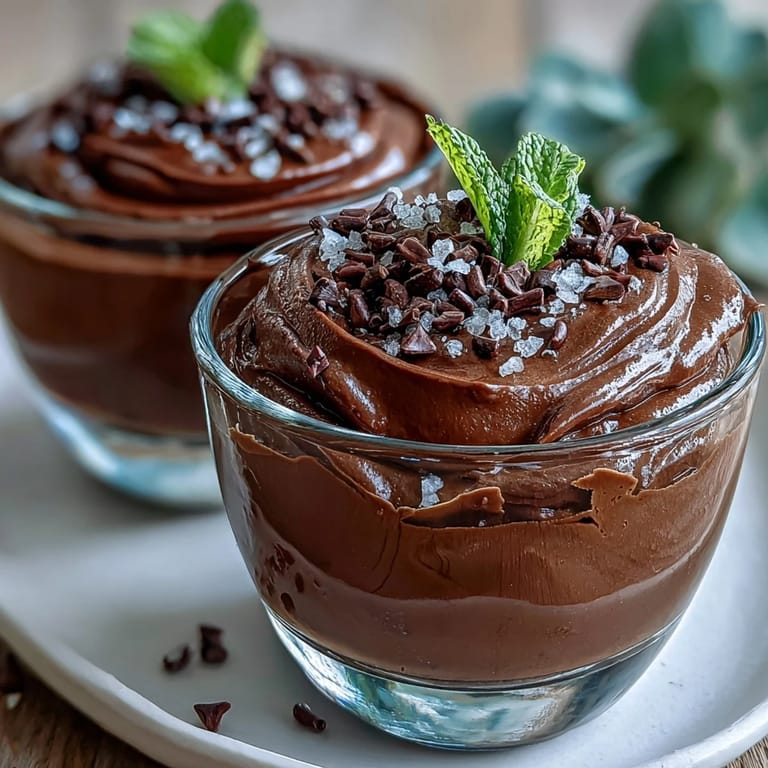
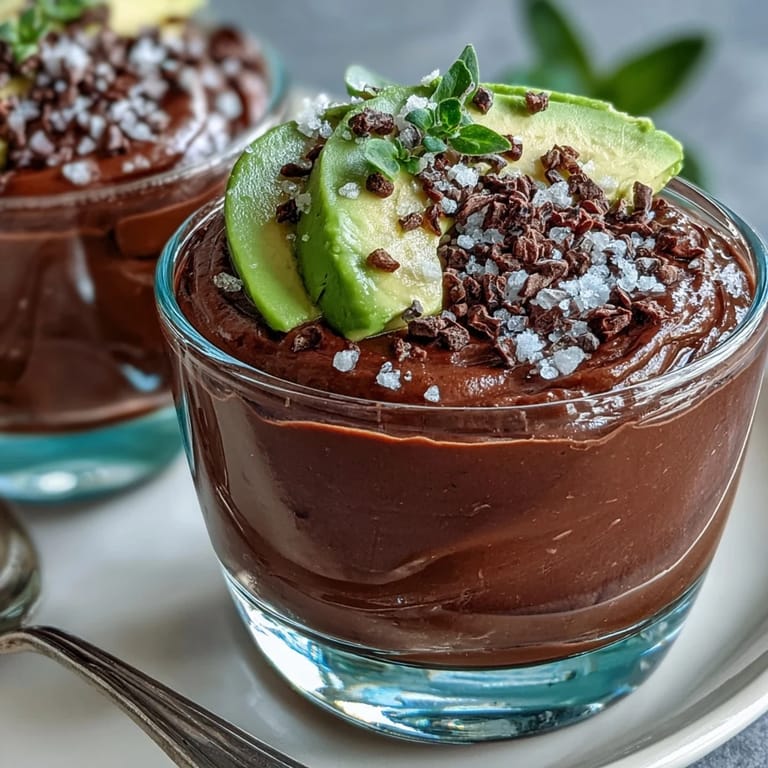
- Spoon the mousse equally into four serving cups, ramekins, or even wine glasses if you want to feel fancy. Smooth the tops gently, but don't fuss over it too much—some irregularity looks homemade and honest.
- Make the crunch:
- In a small bowl, toss together cacao nibs, chopped almonds if using, and 1 tablespoon of maple syrup until everything is lightly coated. The maple syrup acts like edible glue, keeping the crunch components stuck together instead of sinking into the mousse.
- Top and finish:
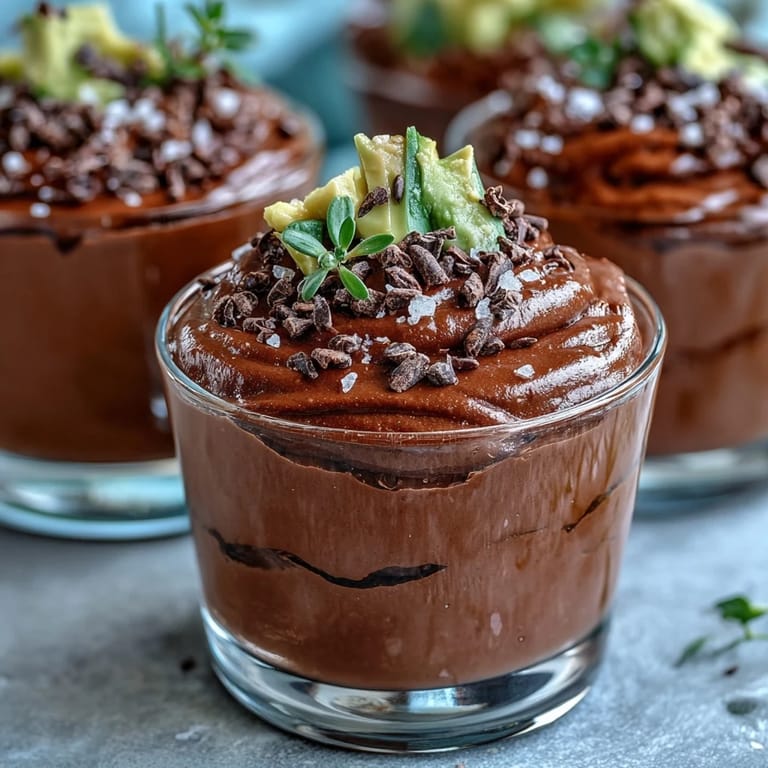
- Sprinkle the cacao nib mixture generously over each cup, then give each one a final pinch of flaky sea salt right before serving. The salt should sparkle on top, not hide in the crunch layer.
- Chill and set:
- Cover the cups and refrigerate for at least an hour—this is when the mousse sets to that perfectly spoonable texture and all the flavors become more pronounced and rounded. If you're in a rush, 30 minutes will get you something good, but the full hour is worth the wait.
 Save
Save The thing about serving this to people is that they're always shocked it's vegan until they ask why you'd mention it—it doesn't taste like it's trying to prove a point or substitute for something better. That moment when they realize there's no dairy, no eggs, just fruit and chocolate and intention, is when this recipe stops being a recipe and becomes part of how they think about what's possible in their own kitchen.
Why Avocado Makes Sense Here
Avocado gets a weird reputation in desserts—people think it's a trick, a way to sneak vegetables into something sweet. But really, it's just a neutral fat that happens to be incredibly creamy, more so than most dairy bases would ever be. It adds body and richness without competing with the chocolate, and because it's mild, it lets you taste every other flavor more clearly. The avocado isn't hiding; it's working quietly in the background, making everything else taste better.
The Power of Texture Contrast
Smooth mousse can be lovely, but it's kind of lonely on the spoon by itself. That moment when you hit the crispy, snappy cacao nibs and crunchy almonds is what makes people pause and really taste what's happening. It's the same reason chocolate chip cookies matter or why you'd add candied ginger to a pudding—a single texture is nice, but two textures talking to each other is memorable.
Making It Your Own
This recipe is genuinely flexible, and that's the gift of it. You can adjust chocolate depth by playing with cocoa powder amounts, add espresso powder for complexity, or use whatever plant milk you have hanging around. The bones are simple enough that you can improvise based on what your kitchen holds and what your mood demands.
- If you want more decadence, layer in some coconut whipped cream before the crunch, or serve it alongside fresh berries that cut through the richness.
- For deeper chocolate flavor, mix a pinch of instant espresso powder into the mousse—it amplifies chocolate without adding coffee taste.
- Make this the night before if you want to be hands-free when guests arrive; it actually firms up beautifully and tastes even better the next day.
 Save
Save This is the kind of dessert that proves you don't need complicated techniques or hard-to-find ingredients to make something that tastes like it came from somewhere special. It's proof that sometimes the best recipes are the simple ones that respect their ingredients and let them do the talking.
Cooking Guide
- → Does the avocado flavor come through?
No, the avocado simply creates an incredibly creamy texture without any noticeable taste. The cocoa powder and maple syrup completely dominate the flavor profile, making this taste like traditional chocolate mousse.
- → Can I make this ahead?
Absolutely. These mousse cups actually improve after chilling and can be made up to 24 hours in advance. Keep them covered in the refrigerator and add the crunchy topping just before serving for the best texture.
- → What can I substitute for maple syrup?
Agave nectar, date syrup, or liquid honey (if not strictly vegan) all work well. For a sugar-free version, blend 4-5 pitted dates with the avocado base until completely smooth.
- → How do I know when avocados are ripe enough?
Choose avocados that yield slightly to gentle pressure but aren't mushy. Over-ripe avocados may lend a slight grassy flavor, while under-ripe ones won't blend completely smooth, affecting the silky texture.
- → Can I freeze leftovers?
Yes, though the texture will change slightly. Freeze without the topping, then thaw in the refrigerator. The mousse becomes more like a dense chocolate fudge, which is still delicious but different from the original airy consistency.