 Save
Save Last winter, a friend brought a small tin of hojicha to my kitchen, and I was immediately drawn to its deep, toasted aroma—nothing like the bright green tea I'd grown up with. She mentioned it paired beautifully with chocolate, and that spark of curiosity led me to experiment with layering its earthy warmth into buttercream. The result felt like discovering a secret language between two flavors I thought I already knew well.
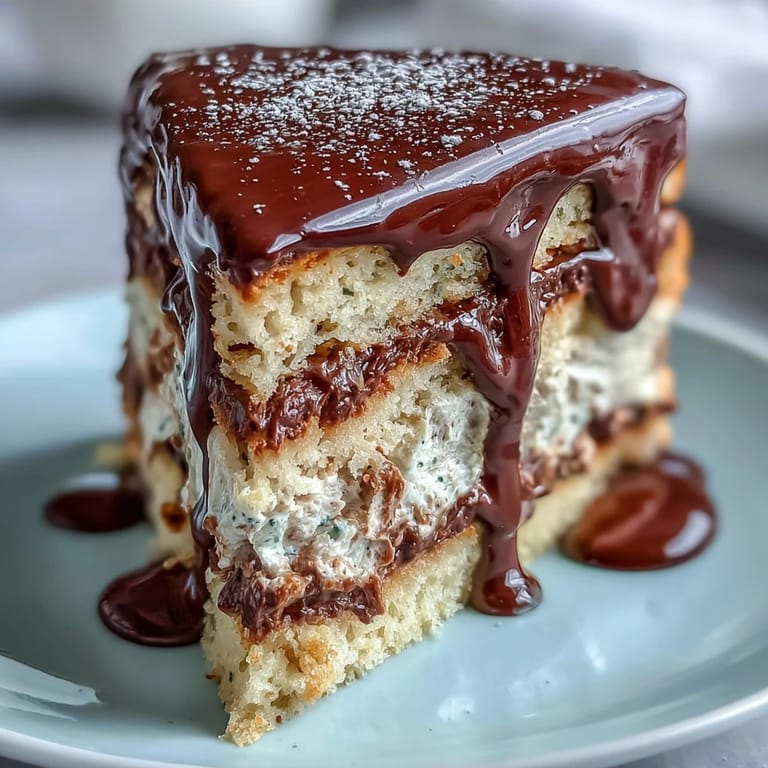
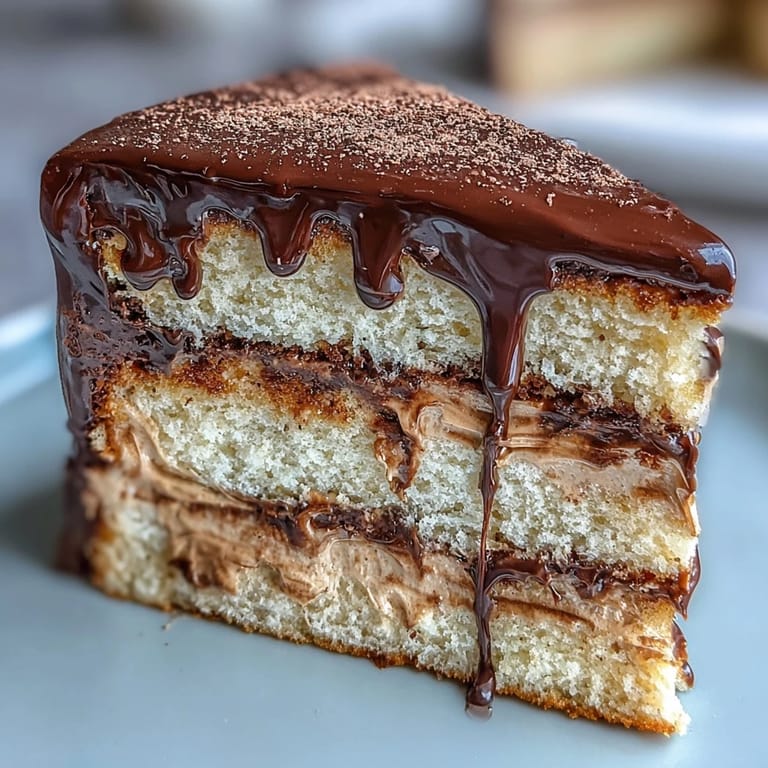
I made this cake for a small gathering on a rainy afternoon, and watching my mother taste it was one of those quiet moments—she paused mid-bite, then smiled in that way that meant she understood exactly what I was trying to do. The ganache dripped just slightly off the edge, catching the lamplight, and somehow that imperfection made it feel more honest than anything I'd planned.
Ingredients
- Cake flour: The lighter protein content matters here; all-purpose flour will make the cake denser and tighter, which works against that delicate crumb you're after.
- Eggs at room temperature: This is one of those non-negotiable things—cold eggs won't incorporate air the same way, and air is what gives the sponge its lift.
- Granulated sugar: You need the grit to trap tiny air bubbles during beating; superfine sugar moves too quickly through the eggs.
- Hojicha loose leaf tea: Seek out actual roasted green tea leaves rather than flavored powders, which can taste artificial and flat.
- Unsalted butter for the buttercream: Unsalted gives you control; salted butter will throw off the balance since you're already adding a pinch of salt.
- Dark chocolate for ganache: Anything below 60% cocoa will taste waxy; anything above 72% will demand more cream to stay silky.
- Heavy cream: Don't use whipped cream or light cream—the fat content in heavy cream is what creates that glossy, poolable consistency.
Tired of Takeout? 🥡
Get 10 meals you can make faster than delivery arrives. Seriously.
One email. No spam. Unsubscribe anytime.
Instructions
- Whip eggs and sugar until pale and doubled:
- This is where patience pays—5 to 7 minutes on high speed transforms a yellow mixture into something almost cloud-like. You'll hear the mixer's pitch rise slightly when air is fully incorporated; that's your signal to stop.
- Fold flour gently in three additions:
- Use a spatula and move from bottom to top in slow, deliberate strokes. Overmixing here toughens the crumb, and you'll know you've overdone it if the batter becomes dense and grainy.
- Temper the wet ingredients separately:
- Mixing a spoonful of batter into your milk-butter mixture first prevents temperature shock that would cause the batter to seize. Fold this mixture back in slowly, watching the batter loosen slightly.
- Divide and bake with confidence:
- A skewer test that comes out with a few moist crumbs is fine; a cake that bounces back when gently pressed is done. The layers will continue cooking slightly as they cool, so don't overbake.
- Steep hojicha in hot milk like you mean it:
- The steam matters—it opens the leaves and coaxes out that roasted, almost coffee-like depth. Ten minutes is the sweet spot; longer than that and bitterness creeps in.
- Beat buttercream until it holds soft peaks:
- This usually takes 3 to 4 minutes and will look fluffy and pale, almost like mousse. Adding the hojicha milk gradually prevents the mixture from breaking or becoming grainy.
- Let ganache cool before pouring:
- Warm ganache on a cold buttercream layer causes the frosting underneath to melt. Room temperature ganache pools beautifully without sabotaging the layers you've carefully built.
- Chill before slicing for clean edges:
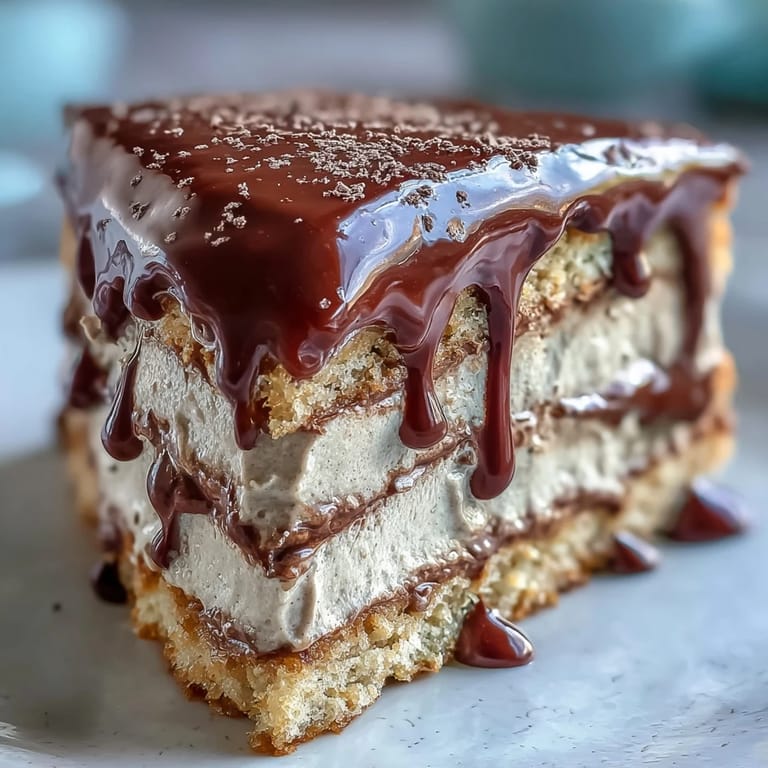
- Cold cake holds its shape better, and you'll get those magazine-worthy cross-sections that show off your layers.
 Save
Save There's something almost meditative about that moment when you pour ganache over a frosted cake and watch gravity do the work for you, creating those dark rivulets that catch light. In that instant, all the precision of the earlier steps feels rewarded by something that looks almost effortless.
The Magic of Hojicha
Hojicha tastes nothing like delicate, vegetal green tea—it's roasted over charcoal until the leaves turn deep brown, which mutes the astringency and brings out warmth that feels almost woody and toasted. When steeped into buttercream, it acts like a bridge between chocolate and tea, making each flavor seem more pronounced without overwhelming anything. This cake taught me that sometimes the best pairings aren't the obvious ones; they're the ones that make you pause mid-bite and wonder why you never thought of it before.
Timing and Temperature Matters More Than You Think
Room temperature ingredients don't just sound like recipe orthodoxy—they actually allow air to incorporate more easily and flavors to blend smoothly. When I rushed this step once, using cold butter straight from the fridge, the buttercream stayed grainy no matter how long I beat it, and the hojicha flavor tasted muted. Since then, I leave everything out for 30 minutes before starting, and the difference is noticeable from the first beat.
Assembly and Serving Secrets
The order of assembly matters—cake, hojicha buttercream, cake, remaining buttercream, then ganache—because each layer needs to be stable enough to support what comes next. An offset spatula is worth buying if you don't have one; spreading frosting with a regular knife is like trying to write calligraphy with a marker. For serving, a hot knife dipped briefly in water and wiped dry between slices keeps everything clean and beautiful.
- Slice the cake at room temperature if you want that slight softness; straight from the cold will be firmer but more structurally sound.
- Leftover cake keeps for 3 days in an airtight container in the refrigerator, and it actually tastes better the next day as flavors meld.
- If you want to serve with tea, a light roasted oolong or a second steep of hojicha echoes the cake's flavor without overshadowing it.
 Save
Save This cake has become the one I turn to when I want to impress someone without sounding like I'm trying too hard. There's real joy in serving something that tastes both familiar and unexpected at the same time.
Cooking Guide
- → What does hojicha taste like?
Hojicha has a warm, toasty flavor with nutty and caramel notes. Unlike other green teas, it's roasted over charcoal, giving it a reddish-brown color and milder, less astringent taste that pairs beautifully with sweet cream and chocolate.
- → Can I make the sponge cake ahead of time?
Yes, bake the sponge layers up to 2 days in advance. Wrap them tightly in plastic wrap and store at room temperature. The buttercream and ganache are best made fresh but can be refrigerated overnight - bring to room temperature before using for smooth spreading.
- → What if I can't find hojicha tea?
You can substitute with other roasted Japanese teas like genmaicha (green tea with roasted brown rice) for a similar nutty profile. Regular matcha works but will give a grassier, more vibrant flavor. For a non-Japanese alternative, try English breakfast tea infused into the milk.
- → Why did my buttercream curdle when adding the hojicha milk?
This usually happens when the infused milk is too cold or added too quickly. Make sure the milk is completely cooled to room temperature, and drizzle it in very gradually while beating constantly. If it does curdle, keep beating - it often comes back together as emulsification occurs.
- → How should I store the finished layered cake?
Due to the dairy-rich buttercream and ganache, store in an airtight container in the refrigerator for up to 3 days. Bring to room temperature 20-30 minutes before serving for the best texture and flavor. The cake can also be frozen for up to 1 month - wrap well in plastic and foil.
- → Can I make this as a single-layer sheet cake instead?
Absolutely. Use a 9x13-inch pan and bake for 25-30 minutes. You'll have extra buttercream and ganache, which you can use for thicker coverage or pipe decorative borders. The baking time may vary slightly, so check for doneness with a skewer.