 Save
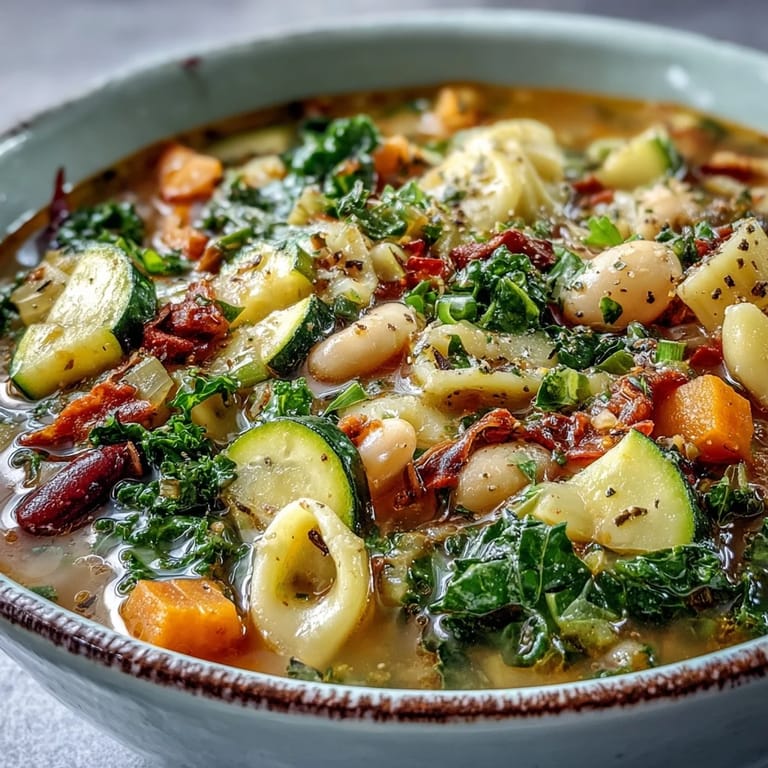
Save There's something about November that makes me crave a pot of minestrone—not the thin, watery kind you might find at a chain restaurant, but the kind that feels like a warm hug when the temperature drops. I discovered this version while standing in a farmer's market, arms full of butternut squash and kale, chatting with a vendor who insisted the secret was cooking everything low and slow. She was right, and now I can't imagine winter without it.
I made this for my neighbor last January when she was recovering from the flu, and I'll never forget how she called me the next day just to ask for the recipe. The pasta was soft enough to eat easily, the kale wasn't bitter, and somehow the whole thing felt nourishing without being heavy. That's when I realized minestrone isn't just soup—it's kindness in a bowl.
Ingredients
- Olive oil: Use good quality here since it's the foundation of flavor—the initial softening of vegetables depends on it.
- Yellow onion, carrots, and celery: This trio is the Italian holy trinity (soffritto), and they form the aromatic base that makes everything taste right.
- Garlic cloves: Mince them small so they dissolve into the broth rather than remaining as harsh chunks.
- Butternut squash: Cut the pieces uniform in size so they cook evenly and add natural sweetness that balances the tomatoes.
- Zucchini: A summer vegetable that works beautifully in winter soup because it softens without falling apart.
- Diced tomatoes: Canned works perfectly—they're picked at peak ripeness and provide acidity.
- Kale: Remove those thick stems first or they'll stay chewy; the leaves should be tender and almost delicate by the end.
- Cannellini beans: Rinse them well to remove that starchy liquid, which keeps the broth from becoming cloudy.
- Small pasta: Ditalini or elbow works best because larger shapes overwhelm the delicate vegetables.
- Vegetable broth: The quality matters more than you'd think—a good broth lifts the whole soup.
- Bay leaf, oregano, thyme, and rosemary: These herbs create that unmistakable Italian warmth, but use dried rather than fresh for deeper flavor.
Tired of Takeout? 🥡
Get 10 meals you can make faster than delivery arrives. Seriously.
One email. No spam. Unsubscribe anytime.
Instructions
- Build Your Base:
- Heat olive oil over medium heat and add onion, carrots, and celery—you'll know it's ready when the onion becomes translucent and the whole kitchen smells like comfort. This 5-minute sauté is where the foundation of flavor happens, so don't rush it.
- Awaken the Garlic:
- Stir in minced garlic and let it cook for exactly 1 minute—any longer and it becomes bitter, any shorter and it stays sharp. That fragrant moment is your signal to move forward.
- Add the Squash:
- Add butternut squash and zucchini, stirring occasionally for 5 minutes to let them start softening. The squash will eventually melt into the broth and add subtle sweetness.
- Bring Everything Together:
- Pour in tomatoes, broth, bay leaf, and all the herbs, then bring to a boil—watch for the moment the surface starts rolling with small bubbles. This is when you know the liquid is hot enough to properly cook the vegetables.
- Let It Simmer Gently:
- Reduce heat, cover, and simmer for 15 minutes until the squash is just tender but not falling apart. If you press a piece with a spoon it should yield easily without dissolving.
- Finish with Pasta and Greens:
- Add beans, pasta, and kale, then simmer uncovered for 10 to 12 minutes—the uncovered pot lets the pasta cook properly without trapping excess steam. The kale will wilt down dramatically and turn a deeper green when it's done.
- Season and Serve:
- Remove the bay leaf, taste for salt and pepper, then ladle into warm bowls. A sprinkle of Parmesan and parsley on top transforms each bowl into something special.
 Save
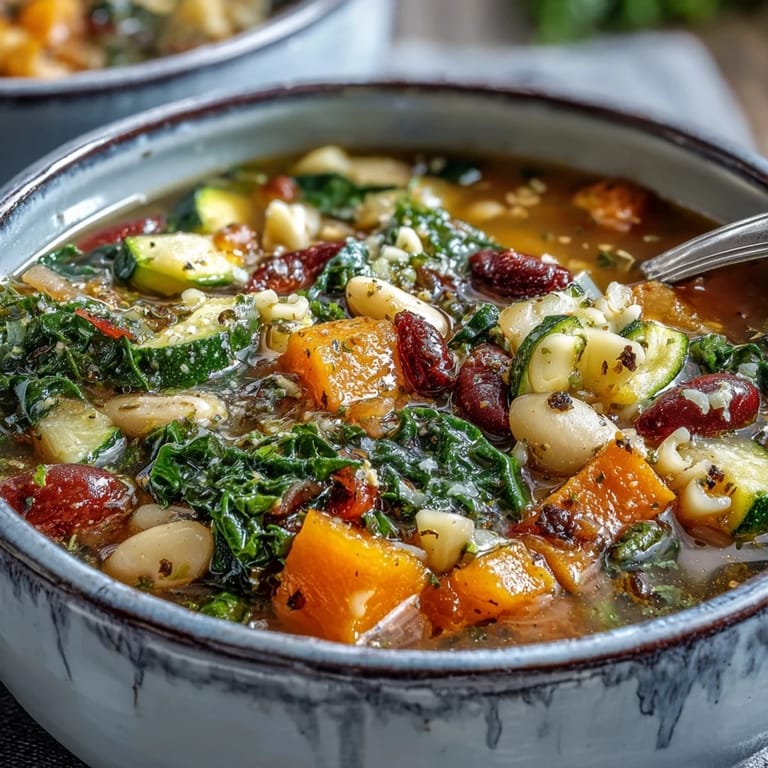
Save I once brought a thermos of this to my son's soccer practice in December, and the whole sideline smelled like rosemary and tomato. Parents were asking me questions between matches, and suddenly it wasn't just about staying warm—it was about community. That's when I understood why Italians have kept this recipe alive for generations.
Why This Soup Becomes Better the Next Day
If you have leftovers (which rarely happens), refrigerate them in an airtight container for up to 3 days. The flavors continue to meld and deepen overnight, and the pasta softens into the broth in the most comforting way. Simply reheat gently on the stovetop, adding a splash of water if the consistency has become too thick.
Vegetable Swaps That Work
Minestrone is wonderfully forgiving—if you don't have butternut squash, try sweet potato, pumpkin, or even parsnips, which add earthiness. Red bell pepper can replace zucchini, spinach works beautifully instead of kale, and if you're out of cannellini beans, chickpeas or white beans offer similar creaminess. The soup stays true to itself as long as you keep the variety of textures and colors.
Making It Your Own
Some cooks add a Parmesan rind while simmering to deepen the savory notes—it infuses the broth with umami that feels almost magical. Others stir in a splash of red wine after the garlic for added complexity, or finish with a drizzle of good olive oil and crusty bread crumbles. The beauty of minestrone is that it welcomes your creativity.
- For a creamier version without dairy, blend a cup of the cooked soup and stir it back in.
- Add fresh basil at the very end if you have it—just a handful torn by hand makes the soup taste like a memory of summer.
- Serve with crusty bread on the side for dipping and soaking up every last drop.
 Save
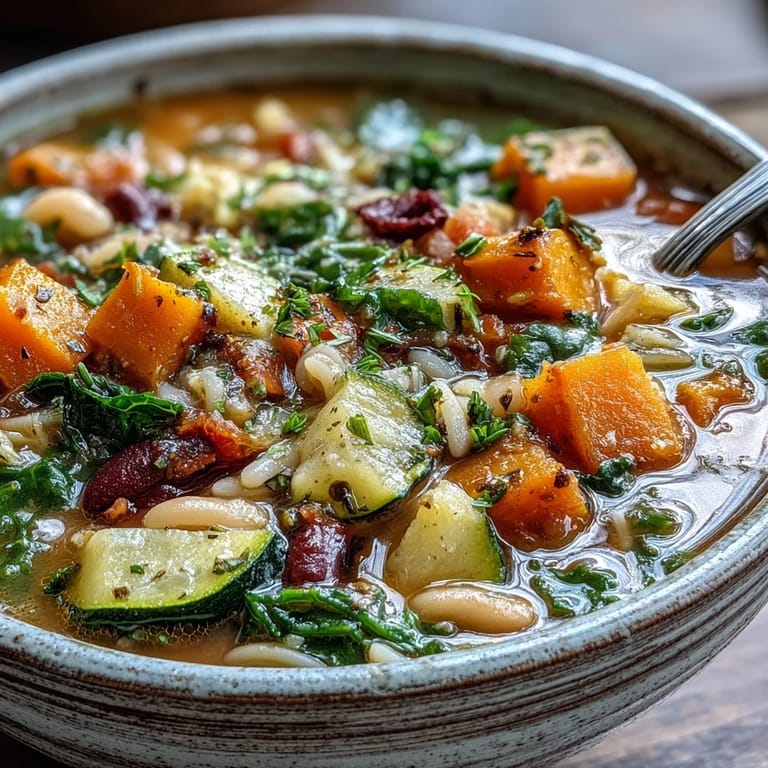
Save This minestrone has become the soup I turn to when I want to feel grounded during gray months, and I hope it does the same for you. There's real power in a bowl of vegetables and broth that tastes like home.
Cooking Guide
- → Can I make this ahead of time?
Absolutely. In fact, the flavors develop even better after a day in the refrigerator. Store in an airtight container for up to 4 days. Add a splash of broth when reheating if the pasta has absorbed too much liquid.
- → What pasta works best?
Small shapes like ditalini, elbows, or small shells are ideal because they fit on the spoon with the vegetables. Gluten-free pasta works too—just cook it separately and add at the end to prevent mushiness.
- → Can I freeze leftovers?
Yes, though the pasta texture may change slightly. For best results, freeze without the pasta and cook fresh pasta when reheating. Freeze in portion-sized containers for up to 3 months.
- → How do I make it more filling?
Add another can of beans, increase the pasta to 1.5 cups, or serve with thick slices of crusty bread. A drizzle of olive oil and extra Parmesan also adds satisfying richness.
- → What vegetables can I substitute?
Swap butternut squash for sweet potato or pumpkin. Try chard or spinach instead of kale. Green beans, peas, or diced potatoes also work well in this versatile preparation.