 Save
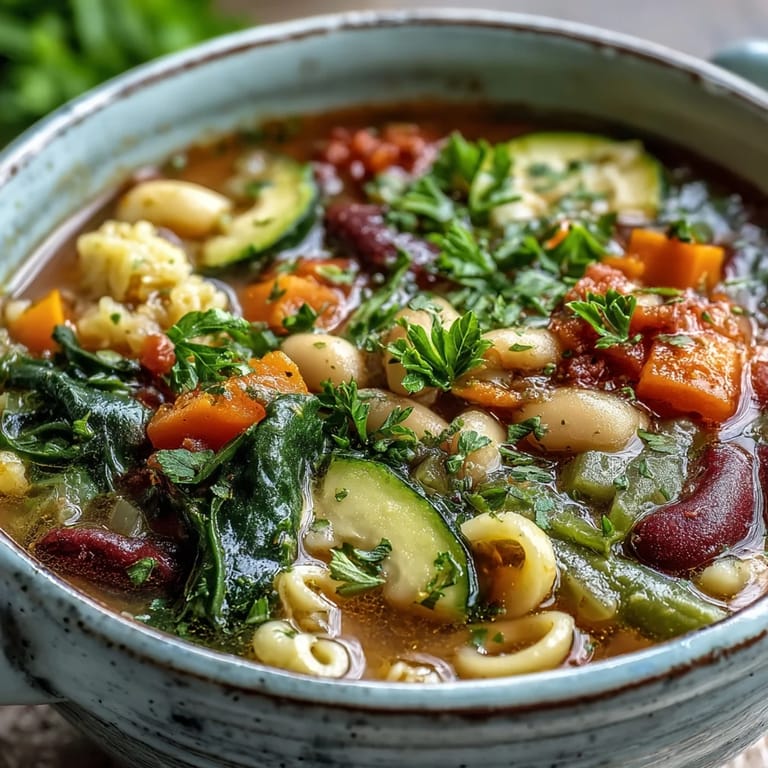
Save My neighbor Maria taught me that minestrone isn't something you perfect—it's something you make with whatever's sitting in your vegetable drawer on a Thursday afternoon. She'd open her fridge, squint at the contents, and somehow turn celery, carrots, and half a zucchini into something that tasted like it had been simmering since morning. The first time I made it her way, I stopped overthinking and just started chopping, and that's when I understood why this soup has survived generations of Italian kitchens.
I made this for my sister during a particularly gray November when she needed something warm that wasn't complicated. She sat at my kitchen counter watching the vegetables soften, and by the time I added the spinach, she was already asking for seconds before the first bowl had cooled. That's when I realized minestrone does something most soups can't—it fills you up without weighing you down, and it makes people want to linger.
Ingredients
- Olive oil: Start with good oil since it's one of the few ingredients doing the heavy lifting at the beginning—it'll carry the flavor of everything that comes after.
- Onion, celery, and carrots: This holy trinity is your soup's backbone, and taking five minutes to soften them properly makes more difference than you'd think.
- Garlic: Two cloves minced fine enough that they almost disappear into the broth—they're flavor, not texture.
- Zucchini and green beans: These add substance without overwhelming the broth, and they stay tender without turning to mush if you time it right.
- Baby spinach or kale: Either works beautifully; spinach wilts faster and melts into the broth, while kale holds its shape if you like that slight chew.
- Diced tomatoes and tomato paste: The paste concentrates the flavor and adds depth that canned tomatoes alone can't quite reach.
- Vegetable broth: Use something you'd actually drink on its own—it's the canvas for everything else.
- Cannellini or kidney beans: Drain and rinse them well; you don't want that starchy liquid clouding your broth.
- Small pasta: Ditalini or elbow pasta are traditional because they fit on a spoon without requiring teeth or strategy.
- Oregano, basil, and thyme: Dried herbs are your friend here; they have time to unfold while the soup simmers.
- Bay leaf: One is enough—it's there to whisper, not shout.
- Fresh parsley: Save this for the end so it stays bright and doesn't turn dark and funky in the heat.
Tired of Takeout? 🥡
Get 10 meals you can make faster than delivery arrives. Seriously.
One email. No spam. Unsubscribe anytime.
Instructions
- Start with the aromatics:
- Heat oil in a large pot over medium heat and add your diced onion, celery, and carrots. You'll know they're ready when the onion turns translucent and the whole kitchen smells like the beginning of something good—around five minutes. Don't rush this step; these vegetables are building the foundation.
- Layer in the texture:
- Stir in minced garlic, diced zucchini, and green beans, then cook for another three to four minutes until the garlic is fragrant but not brown. You want everything to soften slightly and get to know the oil.
- Add the depth:
- Stir in your diced tomatoes, tomato paste, vegetable broth, oregano, basil, thyme, and bay leaf, then bring the whole thing to a boil. Once it's bubbling at the edges, turn the heat down to a simmer and let it go for fifteen minutes so the flavors can marry.
- Finish with pasta and beans:
- Add your drained beans and small pasta directly to the simmering broth and cook for about ten minutes until the pasta is tender but still has a slight resistance when you bite it. Stir occasionally so the pasta doesn't stick to itself.
- Wilt in the greens:
- Stir in your spinach or kale along with the fresh parsley and let everything simmer for two to three minutes until the greens have given up their fight and turned soft and dark. The soup will look more abundant now, full of color and promise.
- Taste and adjust:
- Fish out the bay leaf, then taste the broth and add salt and black pepper until it tastes like comfort. You might need less salt if your broth was already seasoned.
- Serve with ceremony:
- Ladle the soup into bowls, scatter a little extra parsley on top, and serve while it's still steaming. Have good bread nearby and maybe some grated Parmesan if you're not keeping this vegetarian.
 Save
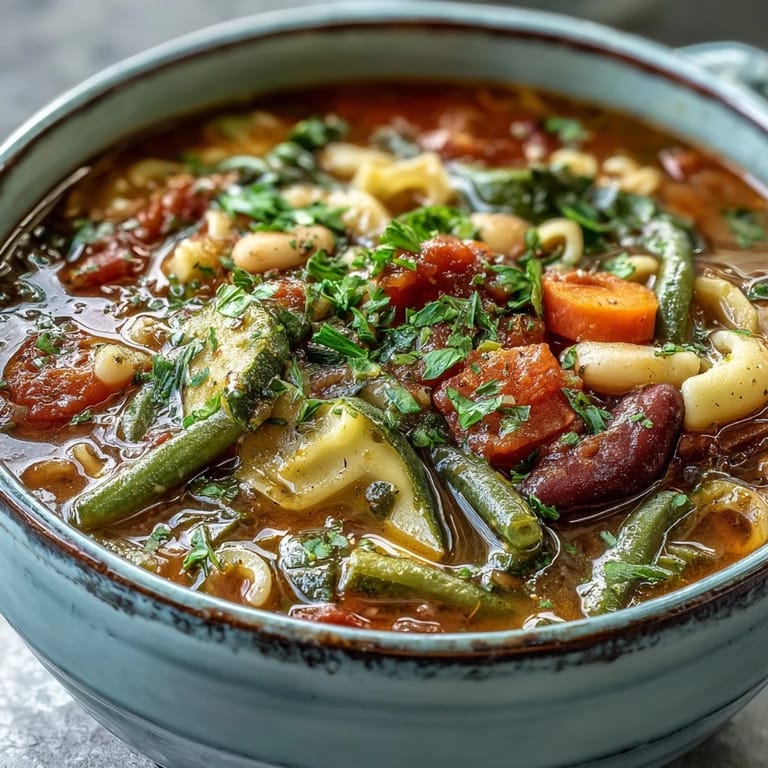
Save One afternoon, my daughter helped me make this soup and she spent the entire time asking questions about why we did things in a certain order. By the time we were eating it, she'd understood something about how cooking actually works—that each step matters, that timing changes everything, and that food you've made yourself tastes different because you paid attention. That's when minestrone stopped being just a soup and became a way to show someone you care enough to get it right.
The Beauty of Substitutions
Minestrone is the most forgiving soup you'll ever make, which is exactly why Italian grandmothers have been making it forever. If you don't have zucchini, use eggplant or bell peppers; if green beans aren't in season, add snap peas or even broccoli broken into small pieces. The soup doesn't have feelings to hurt, and it actually benefits from whatever fresh vegetables you're trying to use up before they go sad in your crisper drawer.
Why This Soup Tastes Better Tomorrow
There's a reason people make minestrone on Sunday for the whole week—it actually improves as it sits. The pasta continues to soften slightly and absorb broth, the beans become creamier, and all those herbs get a chance to go from separate flavors into one unified voice. If you're storing it, keep the soup and pasta separate if you can, and combine them when you reheat, but honestly most people just let it all meld together and don't complain.
Serving and Storage
This soup is meant to be served hot and eaten with crusty bread that you use to soak up every bit of broth at the bottom of the bowl. It stores beautifully in the refrigerator for four or five days, and it freezes well too, though I always add fresh parsley after reheating so it stays bright. If you're feeding a crowd, this recipe doubles easily and fills people up without costing a fortune.
- Reheat gently over medium heat and add a splash of water if the soup has thickened too much while resting.
- Top with freshly grated Parmesan or a drizzle of good olive oil right before serving.
- Make extra and freeze in portions so you always have comfort available when you need it most.
 Save
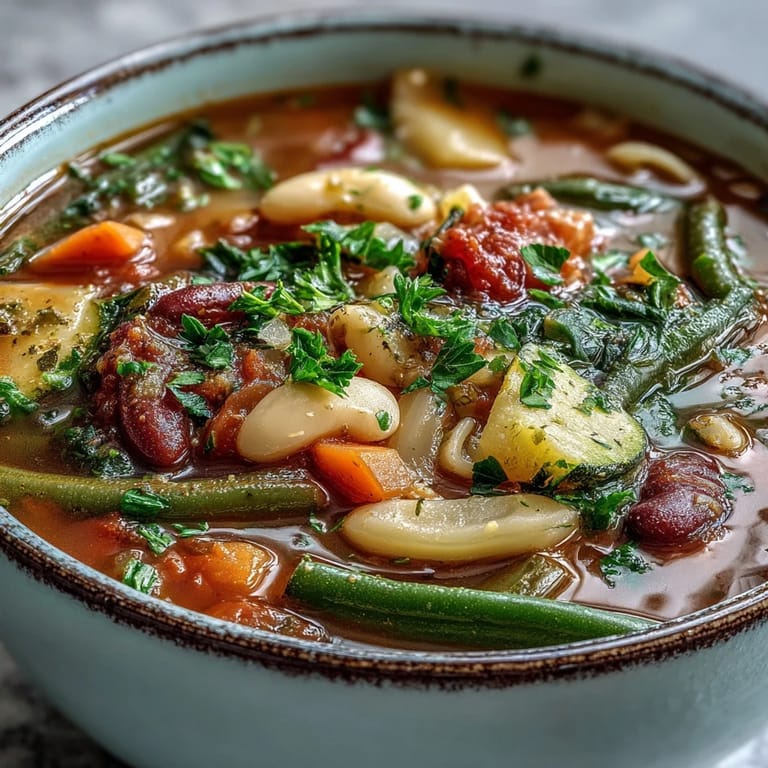
Save Minestrone taught me that the best recipes are the ones that work with you instead of against you, that let you use what you have, and that taste even better when someone you care about is sitting across from you eating it. Make this soup, and you'll understand why it's survived this long.
Cooking Guide
- → What vegetables work best in minestrone?
Classic vegetables include onions, carrots, celery, zucchini, and green beans. You can also add seasonal favorites like potatoes, cabbage, or Swiss chard based on what's available.
- → Can I make minestrone gluten-free?
Yes, simply substitute gluten-free pasta for traditional pasta and ensure your vegetable broth is certified gluten-free. The flavor and texture remain excellent.
- → How long does minestrone keep in the refrigerator?
Stored in an airtight container, minestrone keeps well for 4-5 days. The pasta may absorb more liquid over time, so you may need to add extra broth when reheating.
- → Can I freeze minestrone?
For best results, freeze without the pasta. Add freshly cooked pasta when reheating. If freezing with pasta, it may become softer but remains delicious for up to 3 months.
- → What pasta shape is traditional for minestrone?
Small shapes like ditalini, elbow macaroni, or small shells work beautifully as they spoon up easily with the vegetables and beans. Larger shapes can be broken into smaller pieces.