 Save
Save My first hojicha latte was at a tiny tea shop in Kyoto where the barista poured it with such care that the foam sat perfectly still for a moment before I even touched it. Years later, I was craving that exact feeling—the toasty warmth, the delicate bitterness—but wanted something I could actually eat. So I started experimenting with hojicha powder in cakes, and this version, naturally vegan and gluten-free, became the one that makes my kitchen smell like a Japanese tea house on a quiet afternoon.
I baked this for a friend who'd just moved into her first apartment, and she stood in her kitchen with bare walls, eating cake straight from the plate, saying it tasted like a memory she hadn't had yet. That's when I knew this recipe belonged in my regular rotation—it has this gentle, grounding quality that makes people pause.
Ingredients
- Gluten-free all-purpose flour blend (1 ½ cups): Use a blend that includes xanthan gum or pick one without it if your blend already has it—double-checking saves you from dense cake.
- Almond flour (½ cup): This adds moisture and a subtle nuttiness that plays beautifully with hojicha.
- Hojicha powder (2 tbsp for cake, plus 1 tsp for garnish): This is your star ingredient—splurge on good quality because the flavor really shines through.
- Baking powder and baking soda (1 ½ tsp and ½ tsp): They work together to give you that tender crumb without eggs.
- Salt (¼ tsp): A pinch wakes up the hojicha's toasted notes.
- Unsweetened almond milk (¾ cup): Any plant milk works, but unsweetened keeps the flavor profile clean.
- Apple cider vinegar (1 tbsp): Mixed with almond milk, it creates a vegan buttermilk that adds tang and lift.
- Maple syrup (½ cup for cake, 2 tbsp for frosting): The natural sweetness complements hojicha better than refined sugar ever could.
- Coconut oil (1/3 cup, melted): It keeps the cake moist and adds just enough richness.
- Vanilla extract (1 tsp for cake, 1 tsp for frosting): Use real vanilla if you can—it rounds out the toasted tea flavors.
- Full-fat coconut milk (1 can, refrigerated overnight): The overnight chill is non-negotiable if you want frosting that actually holds its shape.
- Toasted coconut flakes and extra hojicha powder: These are optional but turn an already lovely cake into something you'd serve at a dinner party.
Tired of Takeout? 🥡
Get 10 meals you can make faster than delivery arrives. Seriously.
One email. No spam. Unsubscribe anytime.
Instructions
- Set your stage:
- Preheat your oven to 350°F (175°C) and grease an 8-inch round cake pan, lining it with parchment paper so the cake releases without a fight.
- Make your vegan buttermilk:
- Combine almond milk and apple cider vinegar in a small bowl and let it sit for 5 minutes—you'll see it start to curdle slightly, which is exactly what you want for lift and tang.
- Whisk the dry team:
- In a large bowl, whisk together your gluten-free flour blend, almond flour, hojicha powder, baking powder, baking soda, and salt until evenly combined.
- Mix the wet ingredients:
- In another bowl, combine that vegan buttermilk with maple syrup, melted coconut oil, and vanilla extract, stirring until smooth.
- Bring them together gently:
- Pour the wet mixture into the dry ingredients and stir just until combined—overmixing develops gluten and toughens the cake, so stop as soon as you don't see dry flour streaks.
- Into the pan:
- Transfer your batter to the prepared pan, smooth the top with a spatula, and slide it into the oven.
- Bake with patience:
- Bake for 30 to 35 minutes, until a toothpick inserted in the center comes out clean or with just a few moist crumbs—the cake will continue cooking slightly as it cools.
- Cool slowly:
- Let the cake sit in the pan for 10 minutes to set, then turn it out onto a wire rack to cool completely before frosting.
- Prepare the frosting:
- Open your chilled coconut milk and scoop out the solid cream layer into a bowl (save the liquid for smoothies or tea). Add maple syrup and vanilla, then beat with an electric mixer until it's light and fluffy, about 2 to 3 minutes.
- Frost and garnish:
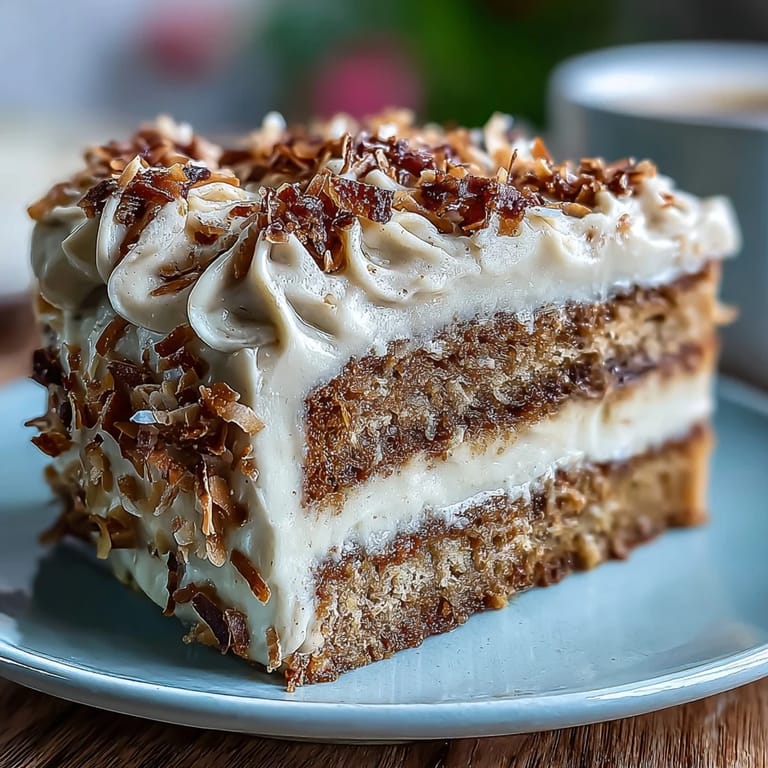
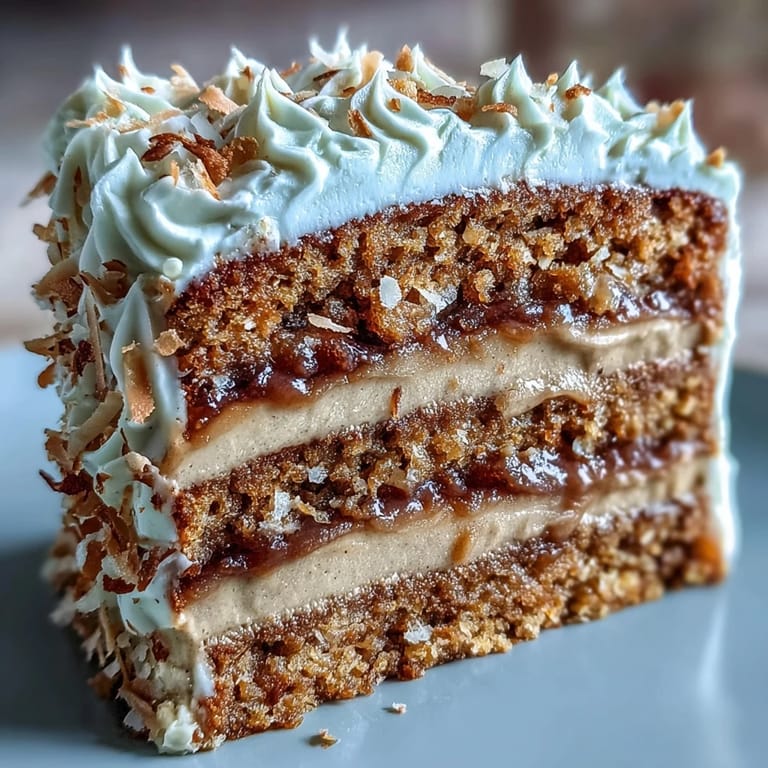
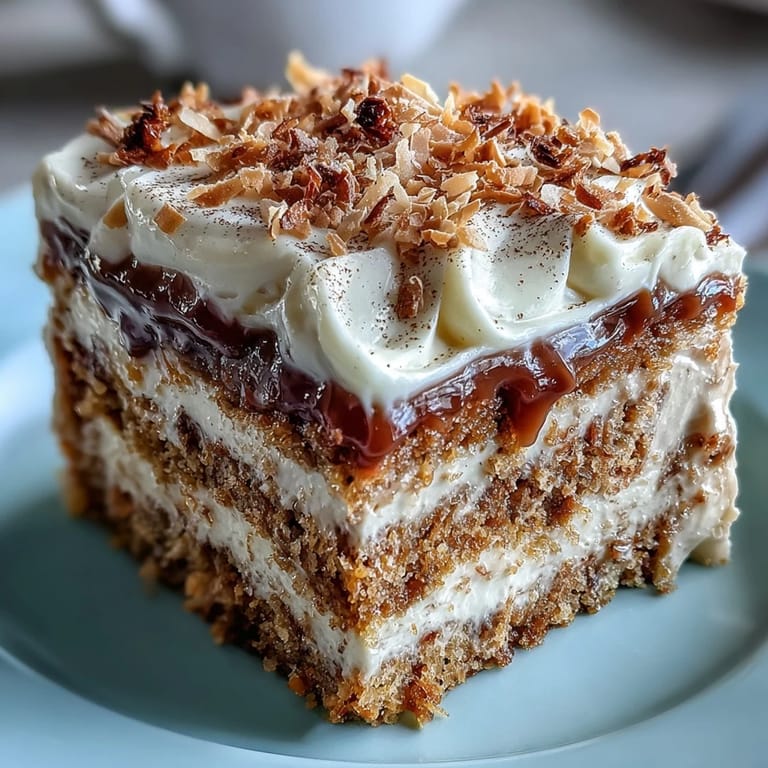
- Once the cake is completely cool, spread the coconut frosting evenly over the top with an offset spatula, then dust with hojicha powder and scatter toasted coconut flakes if you're feeling it.
 Save
Save One evening, my partner cut a slice and sat quietly for a moment before saying it tasted like the smell of autumn—and that's when I understood this cake does something more than just satisfy hunger. It tells a story.
Why Hojicha Deserves Your Attention
Hojicha is roasted green tea, which means it's been heated until it becomes this warm chestnut color with almost no bitterness left—just pure toasted comfort. I didn't understand what made it so different from regular matcha until I actually tasted a good hojicha latte and realized the roasting process transforms the whole flavor profile into something smoky and grounding. In cake form, it acts like a sophisticated spice that doesn't shout for attention but makes every other ingredient taste better.
The Vegan and Gluten-Free Part Isn't a Compromise
I used to think vegan baking meant accepting a denser, heavier result, but this cake taught me otherwise. Almond flour keeps everything moist, the vegan buttermilk creates rise, and hojicha's depth actually masks any traditional cake flavors so well that no one tastes the absence of eggs or dairy. The gluten-free flour blend needs respect—choose a quality one with binders already mixed in, or you'll be adding your own xanthan gum to the dry ingredients.
Coconut Frosting That Actually Works
The trick to frosting that doesn't melt into a puddle is cold, cold coconut milk and patience—don't try to beat it at room temperature because it just won't cooperate. I learned this the hard way after watching my frosting separate into greasy puddles the first time I got impatient. Now I refrigerate the can overnight, scoop the solid part into a cold bowl, and whip it until it holds peaks like traditional buttercream.
- Save that liquid coconut part for morning smoothies or to thin out your tea.
- If your frosting still seems loose after beating, refrigerate it for 15 minutes and try again.
- The frosting keeps in the fridge for 2 days, so you can frost the cake ahead if you need to.
 Save
Save This cake has become my answer when someone needs comfort in the form of something you can eat, and it never fails to remind me why I started baking in the first place. Make it, and let it become part of your story too.
Cooking Guide
- → What does hojicha taste like?
Hojicha has a distinct roasted, earthy flavor with notes of caramel and subtle sweetness. Unlike green teas, it's lower in caffeine and has a warm, toasty character that pairs beautifully with sweet desserts and creamy frostings.
- → Can I make this without coconut?
You can substitute the coconut frosting with a vegan buttercream or cashew cream frosting. For the sponge, replace coconut oil with melted vegan butter or refined coconut oil for a neutral flavor profile.
- → How should I store this cake?
Store in an airtight container in the refrigerator for up to 3 days. The coconut frosting firms up when chilled, so let slices come to room temperature for 15-20 minutes before serving for the best texture.
- → Can I make this into a layer cake?
Absolutely. Double the sponge ingredients and divide between two 8-inch pans. You'll need approximately 1.5 times the frosting amount to generously fill and cover a two-layer cake.
- → Is hojicha powder the same as matcha?
No, hojicha is made from roasted green tea leaves, giving it a reddish-brown color and toasty flavor. Matcha is made from shade-grown, steamed leaves with a vibrant green color and grassy taste. They cannot be used interchangeably.