 Save
Save There's something about assembling a Mediterranean bowl that feels less like cooking and more like painting with vegetables. I discovered this particular combination on a surprisingly warm afternoon when my fridge held exactly these ingredients and nothing felt right about turning on the stove. The simplicity of it caught me off guard—no heat, no fuss, just textures and flavors coming together in minutes. That bowl became my go-to when life got busy, and somehow it never felt like I was settling for something quick.
I made this for a friend who'd just gone vegan, and I remember being nervous I'd miss the mark somehow. When she took that first bite and just smiled without saying anything, I knew the Kalamata olives and that tangy vegan feta had done their job. She asked for the recipe right there, and I realized I'd been writing it down in my head the whole time I was assembling it.
Ingredients
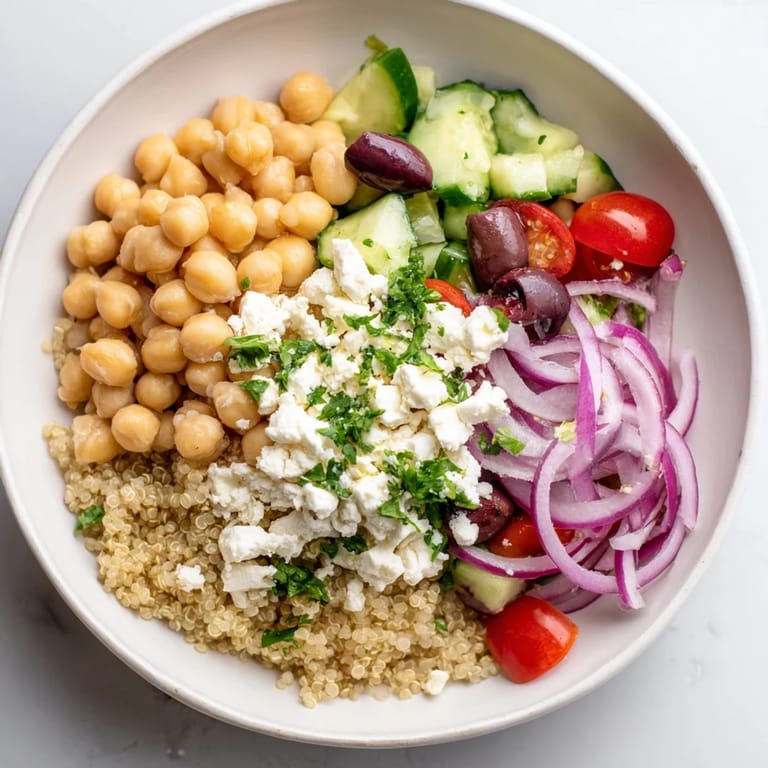
- Chickpeas (1 can, drained and rinsed): They're your protein anchor here, hearty enough to make this a real meal without feeling heavy. I always rinse mine an extra time to get rid of that starchy liquid that can make everything gummy.
- Quinoa or Brown Rice (1 cup cooked, optional): This is your choice—skip it if you want a lighter bowl, or add it when you need something more substantial to carry you through the afternoon.
- Cucumber (1 medium, diced): The crunch matters more than you'd think; it keeps every bite feeling fresh and alive.
- Cherry Tomatoes (1 cup, halved): Cherry tomatoes have more natural sweetness than their larger cousins, which balances the salty olives beautifully.
- Red Onion (1/4 small, thinly sliced): Slice it paper-thin so it doesn't overpower, and if raw onion feels too sharp to you, let it sit in the lemon dressing for a few minutes first.
- Red Bell Pepper (1/2, diced): The color is half the appeal, but the sweet pepper also softens the briny olives in the best way.
- Vegan Feta (80 g, crumbled): This is where the magic happens—creamy, salty, and distinctive enough to justify its own ingredient slot.
- Kalamata Olives (1/3 cup, pitted and halved): Don't skip pitting them yourself if you can; there's something satisfying about knowing exactly what's in every bite.
- Fresh Parsley (2 tbsp, chopped): It's not just garnish—those bright green bits are flavor and a little bit of life on the plate.
- Extra-Virgin Olive Oil (2 tbsp): This is one of three ingredients, so don't cheap out here; good oil makes the difference.
- Lemon Juice (1 tbsp): Fresh lemon only; bottled won't capture that brightness that ties everything together.
- Dried Oregano (1 tsp): It tastes like the Mediterranean coast tastes, if that makes sense—herbaceous and somehow both light and grounding.
- Sea Salt and Black Pepper (1/2 tsp and 1/4 tsp): Taste as you go; these amounts are a starting point, not a law.
Tired of Takeout? 🥡
Get 10 meals you can make faster than delivery arrives. Seriously.
One email. No spam. Unsubscribe anytime.
Instructions
- Chop with intention:
- Get your cutting board ready and work through the cucumber, tomatoes, onion, and pepper. The size of your cuts doesn't have to be perfect, but consistency matters—similar sizes mean everything mingles together instead of some pieces dominating.
- Build your base:
- In a large bowl, combine the chickpeas and all your vegetables. At this point it's just raw ingredients sitting together, waiting to become something.
- Make your dressing:
- In a separate small bowl, whisk the olive oil, lemon juice, oregano, salt, and pepper. You'll taste the oregano bloom as you whisk; that's how you know it's alive.
- Bring it together:
- Pour the dressing over the chickpea mixture and toss gently—you're coating everything, not mashing it. This is also when you taste and adjust; more salt, more lemon, you're in control.
- Add your base (if using):
- Divide the quinoa or rice between two bowls first if you're using it, then top with the chickpea mixture. If you're skipping the grain, just divide the mixture directly into bowls.
- Crown it:
- Top each bowl with crumbled vegan feta, Kalamata olives, and a scatter of fresh parsley. This is the part where it stops being ingredients and becomes dinner.
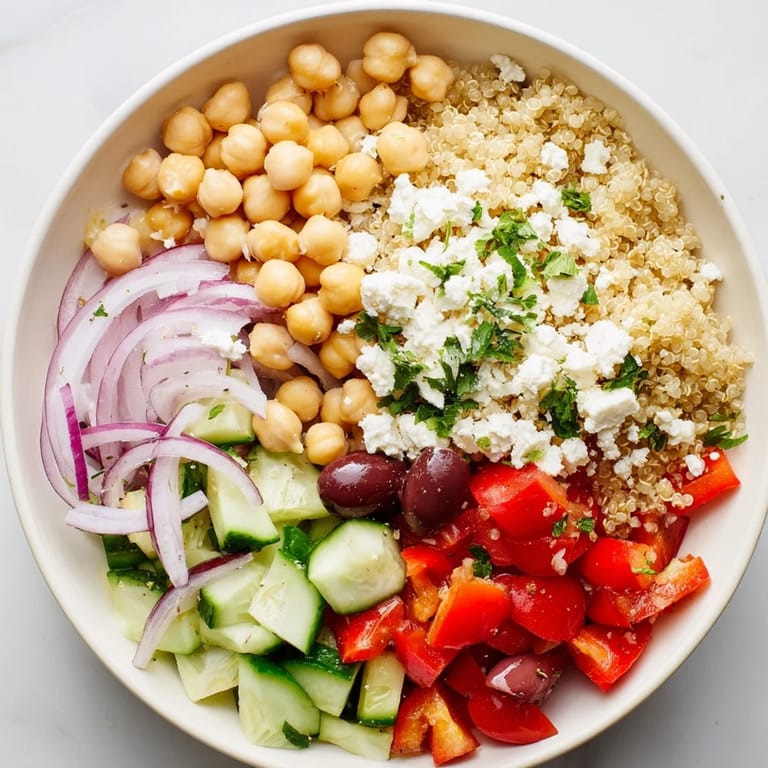 Save
Save This bowl taught me something about eating with intention. A friend and I sat on her apartment balcony with these bowls on our laps, and we stopped talking for a moment just to notice how good it was. That's when I understood this wasn't just a recipe—it was an invitation to slow down and actually taste.
The Power of No-Cook Meals
There's real freedom in knowing you can make something nourishing without heating up your kitchen. On days when it's already warm, when you're exhausted, or when you just don't feel like cooking, this bowl reminds you that effort and complexity aren't the same thing. Raw vegetables are alive in a way cooked ones aren't, and sometimes that aliveness is exactly what you need on your plate.
Vegan Feta: The Game Changer
I used to think vegan feta was a compromise, a substitute you made do with. The first time I used a good brand, I realized I'd had it backwards—it's its own ingredient with its own character. It's creamier, sometimes a touch tangier, and it crumbles differently than dairy feta. Find a brand you like and stick with it; that consistency matters more than chasing whatever's on sale.
Making It Your Own
This bowl is a foundation, not a formula. The beauty of it is how it welcomes variations depending on what you have or what you're craving. Some days I add roasted chickpeas for extra crunch, other times I'll throw in some toasted pine nuts or a handful of spinach. I've been known to swap the parsley for mint or cilantro, and it's never the same dish twice.
- Roasted chickpeas and toasted nuts add texture and turn this into something you can feel good about eating as a main course.
- Swap out the vegan feta for traditional feta if that's what your kitchen holds, or even a soft goat cheese.
- A drizzle of tahini mixed into the dressing is magical if you want something earthier and more filling.
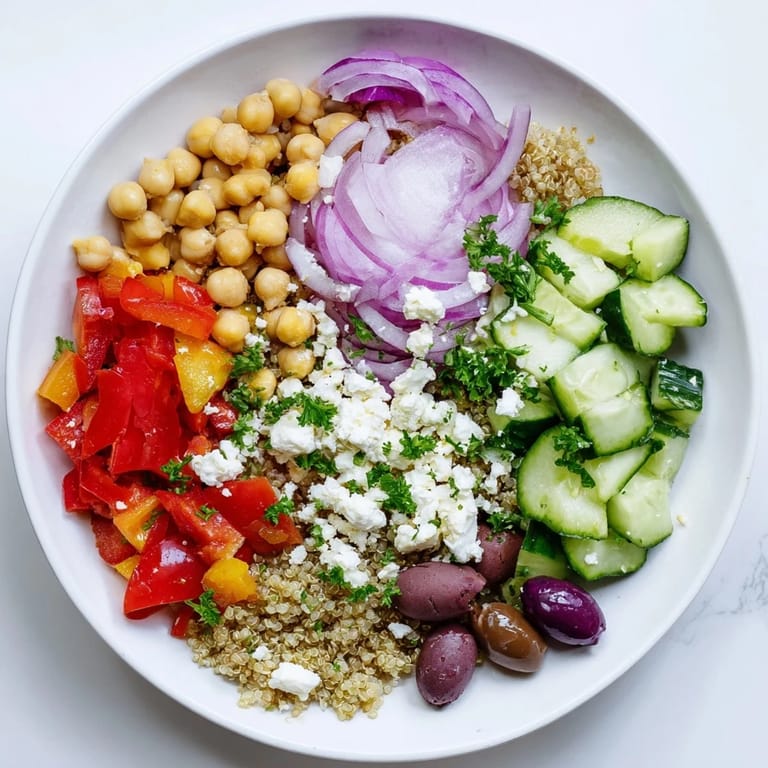 Save
Save This bowl has become my answer to so many questions: What's for lunch? What can I bring to a potluck? What's something I can make when I haven't been to the grocery store in too long? It's reliable without being boring, simple without feeling like settling.
Cooking Guide
- → Can I substitute vegan feta with traditional feta?
Yes, traditional feta can be used if vegan options are not preferred, adding a classic Mediterranean tang.
- → Is it possible to add grains to this bowl?
Absolutely, quinoa or brown rice can be served beneath the mix for extra texture and substance.
- → How long can this bowl be stored?
It can be refrigerated for up to two days, allowing flavors to marinate and deepen.
- → What dressing is used in this dish?
A light dressing made from extra-virgin olive oil, lemon juice, dried oregano, salt, and black pepper enhances the fresh ingredients.
- → Are there any common allergens to be aware of?
Depending on the vegan feta brand, soy or nuts may be present; olives might contain traces of nuts, so check packaging carefully.