 Save
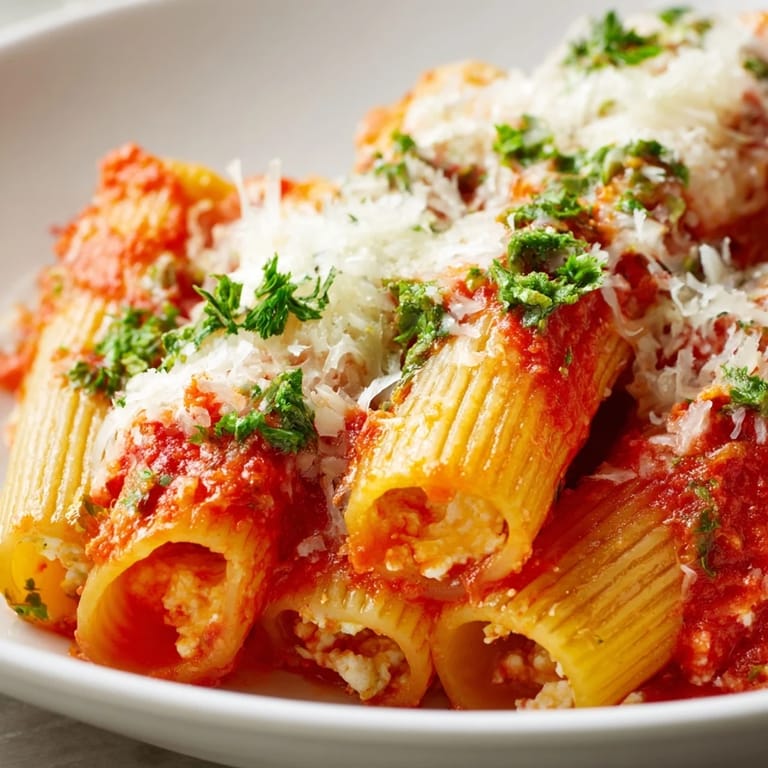
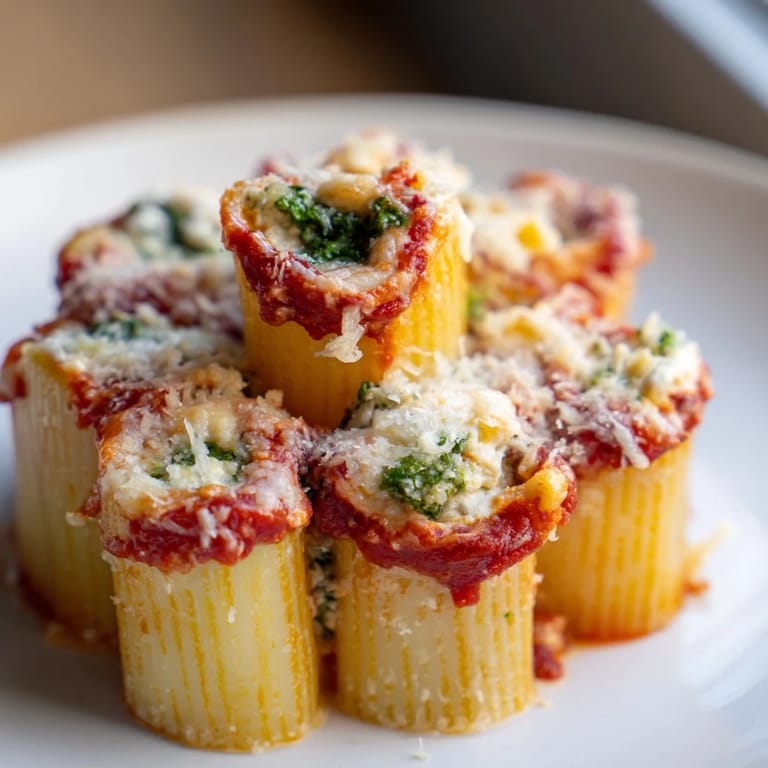
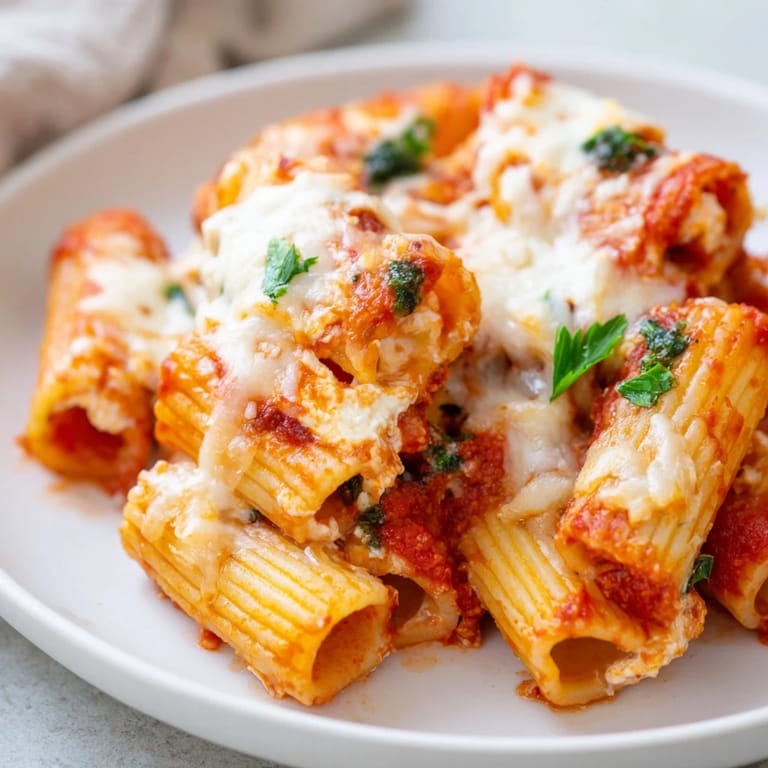
Save The first time I stood a tube of rigatoni upright in a baking pan, I felt like I was building something rather than cooking it. My friend Maria had described this dish with such reverence—honeycomb pasta bake, she called it—that I couldn't resist trying. What struck me most was how the standing tubes caught the marinara sauce like little chimneys, each one stuffed with creamy cheese that would melt into pockets of richness. It seemed fussy at first, but once I piped that first filling into those hollow centers, I understood the magic.
I made this for a dinner party on a rainy October evening, and something shifted when everyone went quiet after their first bite. My usually talkative neighbor looked up with genuine surprise, and I caught myself smiling into my plate. That's when I realized this recipe wasn't just about technique—it was about creating that moment when food becomes a conversation, when strangers lean toward each other and say, 'This is incredible.'
Ingredients
- Rigatoni, 500 g: The tubes are your edible vessel, so don't skip them for a smaller pasta shape. Cook them slightly underdone so they hold their structure and texture when baked.
- Ricotta cheese, 350 g: This is your creamy backbone—it keeps the filling tender and mild, balancing the sharp Parmesan beautifully.
- Mozzarella, shredded and grated: Use 100 g grated for the filling so it melts seamlessly, and 150 g shredded for the top to get that gorgeous golden crust.
- Parmesan cheese, 50 g plus 2 tbsp: The umami hero that makes everything taste richer and more intentional.
- Large egg: This binds everything together so your filling stays put instead of leaking out during baking.
- Fresh basil and parsley, 1 tbsp each: Fresh herbs make an enormous difference here—dried won't give you that bright, living quality.
- Marinara sauce, 700 ml: Use a good quality sauce or make your own; it's the backbone of the whole dish and deserves respect.
- Olive oil: Use it to grease your pan generously and toss the cooked pasta so nothing sticks together.
- Salt and pepper: Taste as you go; the Parmesan adds saltiness, so start conservative.
Tired of Takeout? 🥡
Get 10 meals you can make faster than delivery arrives. Seriously.
One email. No spam. Unsubscribe anytime.
Instructions
- Set the stage:
- Preheat your oven to 200°C and grease a 23 cm springform pan with olive oil, then line the bottom with parchment paper. This step matters more than it sounds—you want the pasta to release cleanly when you slice it.
- Cook the pasta perfectly:
- Boil your rigatoni in salted water for two minutes less than the package says—you want them al dente, almost stubbornly firm. Drain them, toss with a little olive oil, and let them cool slightly so you can handle them.
- Build your filling:
- In a bowl, combine the ricotta, mozzarella, Parmesan, egg, basil, parsley, salt, and pepper until it's smooth and creamy. Taste it and adjust seasoning; this is where you make the whole dish sing.
- Assemble the honeycomb:
- Stand each pasta tube upright in the pan, packed tightly together like you're building a little city. They should fit snugly enough that they hold each other up.
- Fill each tube with care:
- Transfer your cheese mixture to a piping bag or zip-top bag with the corner snipped off, then pipe it into each pasta tube until it's generously filled but not overflowing. Take your time here—it's meditative work.
- Add the sauce:
- Pour the marinara sauce evenly over the whole pan and gently tap it on the counter to help the sauce settle between the tubes and into the crevices. You want every tube to get some sauce love.
- Top and cover:
- Scatter the shredded mozzarella and grated Parmesan over the top in a generous layer, then cover the pan loosely with foil to trap steam and prevent the top from burning too quickly.
- Bake in two stages:
- Bake covered for 25 minutes until you see sauce bubbling at the edges, then remove the foil and bake for another 10 minutes until the cheese on top turns golden and bubbly. The aroma at this point will make you slightly dizzy.
- Rest and release:
- Let it sit for 10 minutes so the pasta firms up slightly and the filling sets, then carefully release the springform pan sides and cut into wedges. Serve warm and watch people's faces.
 Save
Save What stayed with me most wasn't the compliments, though there were plenty of those. It was the way my eight-year-old nephew asked if he could help next time, already planning in his head how we'd build the pasta city together. Food becomes memory when it invites people into the process, and this dish does exactly that.
How to Make It Yours
The beauty of this recipe is that it welcomes additions without falling apart. I've stirred sautéed spinach into the filling on days when I wanted more vegetables, and it shifts the whole thing from rich to balanced. Other times I've added cooked Italian sausage to the cheese mixture for someone in the crowd who needed heartier flavors. The dish is sturdy enough to hold your preferences.
Make-Ahead and Storage
You can assemble this completely the night before and refrigerate it covered, which actually gives the flavors time to get to know each other. Bake it straight from the cold, just add a few extra minutes to the covered bake time. Leftovers slice cleanly and reheat beautifully in a 180°C oven wrapped loosely in foil—the texture stays creamy instead of drying out.
Why This Works as a Dinner Party Dish
There's something about food that looks like it took real effort that makes people feel seen at your table. This dish delivers that feeling in spades because it's visually architectural, tastes genuinely delicious, and takes less than an hour from start to serving. You can prep everything in the morning, slide it into the oven while people arrive, and have dinner ready exactly when you need it.
- Pair it with a simple green salad dressed in lemon vinaigrette to cut through the richness.
- Serve alongside garlic bread if your crowd likes bread, though honestly the pasta is filling enough on its own.
- A medium-bodied red wine like Chianti complements the marinara and cheese without overpowering anything.
 Save
Save This recipe taught me that sometimes the most memorable meals come from small acts of intention—standing up pasta tubes, filling them one by one, watching them transform in the oven. It's humble work that produces something genuinely special.