 Save
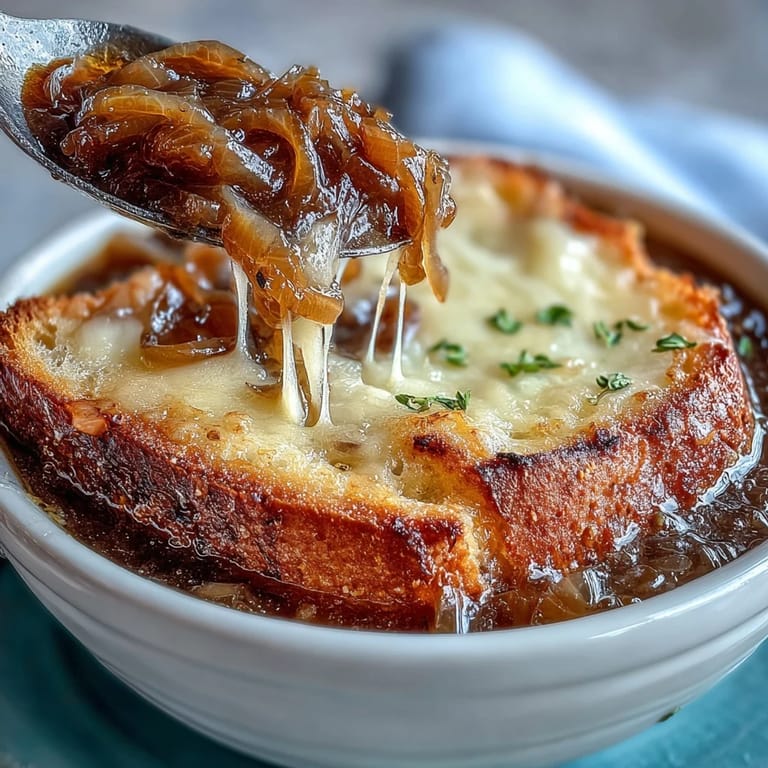
Save There's something almost meditative about standing at the stove for forty-five minutes, watching onions transform from sharp and papery into sweet, mahogany ribbons. My grandmother used to say that French onion soup was the soup that taught you patience, and she was right—I learned more about cooking by making this dish than I ever did from a cookbook. The deep, caramelized flavor that emerges feels almost impossible until you taste it, and then you understand why this soup has endured for centuries.
I made this soup for my neighbor one winter evening when she'd just moved in and seemed overwhelmed by boxes and silence. She came over with red eyes and left two hours later laughing, with a belly full of warmth and that grateful look people get when someone feeds their soul a little. She still texts me asking for the recipe, and every time I smile because I know she's tasting more than just soup—she's tasting that moment when things started feeling better.
Ingredients
- Yellow onions: Use five large ones sliced thin—thinner than you think is right, because they cook down dramatically and thin slices cook more evenly into that silky sweetness.
- Unsalted butter and olive oil: The combination of both matters; butter gives richness while oil prevents the butter from burning during the long caramelization.
- Garlic cloves: Just two, minced fine, added near the end of caramelization so it seasons the onions without turning bitter.
- Sugar: A teaspoon might seem small, but it jumpstarts the caramelization process and deepens the natural sweetness of the onions.
- Beef broth: Eight cups of good quality broth is the foundation—it should taste like something you'd want to sip on its own.
- Dry white wine: Half a cup adds acidity and complexity, and scraping up those browned bits from the bottom creates incredible depth.
- Fresh thyme and bay leaves: These are the quiet herbalists of the pot; they whisper flavor rather than shout it, which is exactly what this soup needs.
- Worcestershire sauce: One tablespoon adds umami that makes people wonder what the secret ingredient is—now you know.
- Baguette and Gruyère cheese: The crispy bread and melted cheese are the finale, toasted and broiled until they're irresistible.
Tired of Takeout? 🥡
Get 10 meals you can make faster than delivery arrives. Seriously.
One email. No spam. Unsubscribe anytime.
Instructions
- Get your Dutch oven ready and start the magic:
- Heat medium, melt butter with olive oil, and add those thin onion slices with a pinch of sugar. The sizzle is your signal that transformation has begun, and you'll stir frequently for the next forty to forty-five minutes while the onions slowly caramelize into deep golden-brown sweetness.
- Wake up the pot with garlic:
- After the onions reach that rich caramel color, add minced garlic and let it cook for just one minute—you want fragrant, not burned, so stay close and breathe it in.
- Add the wine and scrape:
- Pour in the white wine and use your wooden spoon to scrape up every browned bit stuck to the bottom of the pot; these are flavor bombs that deserve to be in your soup. Simmer for a couple minutes and watch the liquid reduce slightly.
- Build the broth and season:
- Pour in all eight cups of beef broth, scatter in the thyme leaves and bay leaves, and add the Worcestershire sauce. Bring it to a simmer, then reduce heat and let it cook uncovered for twenty to thirty minutes, tasting as you go and seasoning with salt and pepper until it tastes like comfort itself.
- Toast your bread while you wait:
- Preheat your broiler and arrange baguette slices on a baking sheet, toasting them under high heat for about a minute per side until golden and crispy. They should snap slightly when you break them, ready to stand up to hot soup and melted cheese.
- Assemble the masterpiece:
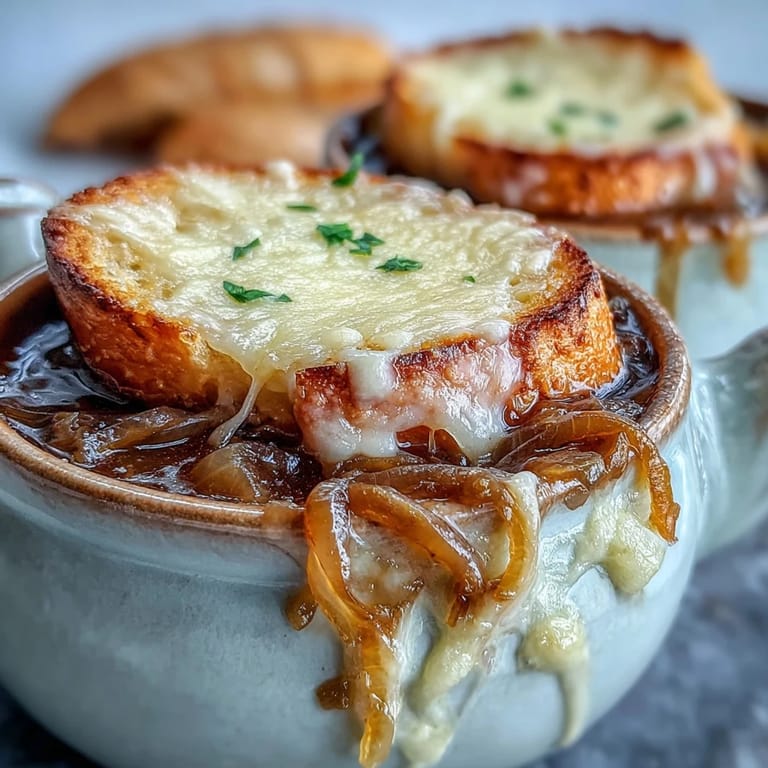
- Ladle hot soup into oven-safe bowls, top each with a toasted baguette slice, and pile on that Gruyère—be generous, this is the best part. If you're using Parmesan too, sprinkle it on for even more complexity.
- Broil until bubbling and golden:
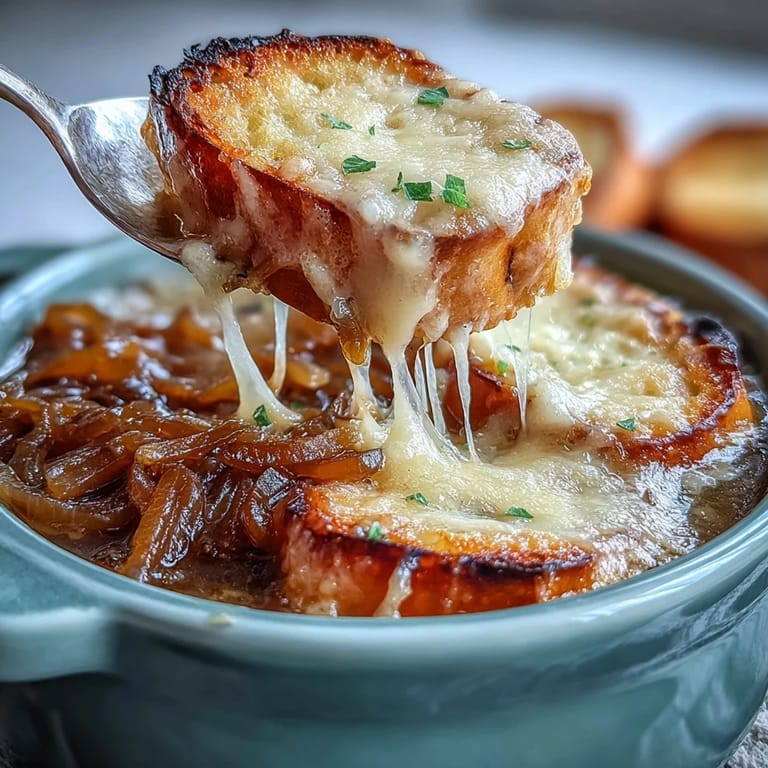
- Place the bowls on a baking sheet and slide them under the broiler for two to four minutes, watching carefully until the cheese melts into a bubbly, slightly browned blanket. The kitchen will smell absolutely incredible.
- Serve with intention:
- Bring those bowls straight to the table while everything is still steaming and molten, and watch people's faces light up when they take that first spoonful.
 Save
Save This soup has a way of becoming part of memory—people don't just eat it, they remember it. Whether it's a quiet night alone with a book or a gathering of people around a table, French onion soup marks those moments with warmth and intention.
The Sacred Caramelization
The first time I made this, I tried to rush the onions and ended up with soup that tasted good but not great—it lacked that deep, sweet, almost mysterious flavor that makes people close their eyes when they taste it. Caramelization isn't just browning; it's a chemical transformation where the onions' natural sugars break down and create hundreds of new flavor compounds that your taste buds haven't encountered before. The smell alone tells you something profound is happening, and if you pay attention to that smell—how it shifts from sharp to sweet to rich and almost savory—you'll know exactly when to move forward with confidence.
Why This Soup Belongs in Winter
There's something about the cold months that makes a bowl of melted cheese over deep, rich broth feel like medicine for the soul. This isn't just sustenance; it's a ritual, a way of saying that we're taking care of ourselves and the people we love. I find myself craving it most when the days get short and the evenings are dark by dinnertime, when something hot and layered and complex feels necessary.
Variations and Conversations
The beauty of this soup is that it welcomes interpretation without losing its identity. I've experimented with sherry instead of white wine, added a whisper of brandy, used a blend of onion types, and tried different cheese combinations depending on what's in my kitchen. Each version tells a slightly different story while keeping that soul-warming quality intact. The vegetarian version works beautifully too—just use vegetable broth, skip the Worcestershire or use a vegetarian alternative, and you'll have something equally satisfying and complex.
- Add a splash of sherry or brandy to the wine step for deeper, warmer notes.
- Combine Gruyère with Swiss or aged cheddar for different flavor dimensions.
- Toast the bread with a little garlic rub before layering on the cheese for an extra dimension.
 Save
Save This soup has taught me that patience in the kitchen is never wasted time; it's time spent creating something that feeds more than just hunger. Every time you make it, you're participating in a tradition that spans centuries and continents, adding your own small story to something bigger.
Cooking Guide
- → Why use a Dutch oven for French onion soup?
A Dutch oven provides even heat distribution and excellent heat retention, which is crucial for the long, slow caramelization process that develops the onions' deep, sweet flavor profile.
- → How do I achieve properly caramelized onions?
Cook sliced onions over medium heat with butter and olive oil for 40-45 minutes, stirring frequently. The onions should turn deep golden brown and become very soft—don't rush this step as it builds essential flavor.
- → Can I make this vegetarian?
Absolutely. Substitute vegetable broth for beef broth and use a vegetarian Worcestershire sauce or simply omit it. The result remains deliciously savory and satisfying.
- → What cheese works best for topping?
Gruyère is traditional for its nutty, complex flavor and excellent melting properties. Swiss or Emmental make great alternatives. Adding Parmesan boosts the savory depth and creates a lovely golden crust.
- → Can I freeze leftover French onion soup?
Freeze the soup base without the bread and cheese topping for up to 3 months. Thaw overnight in the refrigerator, reheat gently, and add fresh toppings when ready to serve.
- → What wine pairs well with this soup?
A crisp white Burgundy or Chardonnay complements the rich, savory flavors beautifully. The wine used in cooking should be dry and drinkable—avoid cooking wines as they can be overly salty.