 Save
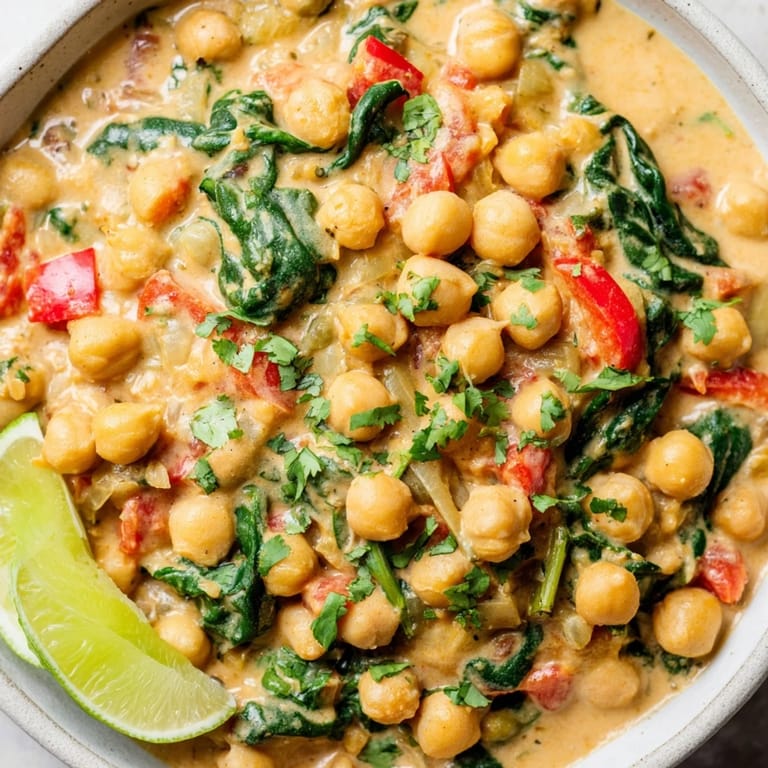
Save There's something about the smell of spices blooming in hot oil that makes you feel like you're doing something right in the kitchen. I stumbled onto this chickpea curry on a weeknight when I was tired of the usual rotation and had a can of coconut milk sitting in the cupboard that felt like it was calling my name. One pot, thirty-five minutes, and suddenly dinner tasted like it had simmered for hours, the kind of meal that makes everyone at the table slow down and actually enjoy their food.
I made this for friends who'd all gone vegetarian around the same time, and nobody missed the meat for even a second—that's when I knew the chickpeas and coconut milk were doing their job. The curry was warm and satisfying in a way that felt intentional, not like a compromise, and by the end of the meal, one friend was already asking if I could write down the recipe.
Ingredients
- Yellow onion: Diced onions are your flavor foundation—they'll soften and nearly disappear into the sauce, creating a natural sweetness that balances the spices.
- Garlic and ginger: Fresh ginger adds a subtle heat and brightness that canned never quite captures, while garlic deepens everything it touches.
- Red bell pepper: It softens into the curry and gives you small moments of sweetness in each spoonful.
- Baby spinach: Added at the very end so it stays tender and doesn't turn into mush—kale works too if you prefer something sturdier.
- Carrot: Optional but worthwhile if you want a little earthiness and texture, or skip it if you're in a rush.
- Chickpeas: Drain and rinse them well—this small step keeps the sauce from getting cloudy and lets the spices shine.
- Coconut milk: Full-fat version gives you richness, but light coconut milk works if you're watching calories; either way, shake the can before opening so you get the creaminess.
- Vegetable broth and diced tomatoes: Together they create the body of the sauce and keep everything from drying out during the simmer.
- Curry powder, cumin, turmeric, and smoked paprika: Toast these spices together in the pot for one full minute—it wakes them up and makes the whole curry taste more alive.
- Chili flakes: Leave them out if you're cooking for people who prefer mild, or add a pinch extra if your crew likes heat.
- Coconut oil or olive oil: Either works, though coconut oil feels right with the curry powder.
Tired of Takeout? 🥡
Get 10 meals you can make faster than delivery arrives. Seriously.
One email. No spam. Unsubscribe anytime.
Instructions
- Start with the base:
- Heat your oil over medium heat and add the diced onion, letting it cook for a few minutes until it turns translucent and smells sweet. You're building flavor here, so don't rush it.
- Add the aromatics:
- Stir in the garlic, ginger, and bell pepper, cooking for another two minutes until the kitchen smells absolutely incredible. This is the moment when you know something good is happening.
- Toast the spices:
- Sprinkle in all your spices and stir constantly for a full minute—you'll actually see the color deepen and smell the difference. This one minute of patience changes everything.
- Build the curry:
- Add your tomatoes, coconut milk, broth, and chickpeas, stirring to combine. The pot will transform from spice base into actual curry before your eyes.
- Simmer low and slow:
- Bring it to a gentle simmer, then lower the heat and cover the pot for fifteen minutes, stirring every few minutes. The chickpeas will soften further and the flavors will meld together.
- Finish with spinach:
- Uncover the pot and stir in your spinach, letting it wilt for a couple of minutes while the sauce reduces slightly and thickens. Taste everything now and adjust salt or spices if it needs it.
- Serve immediately:
- Ladle into bowls and top with fresh cilantro and a squeeze of lime juice, which brightens everything it touches.
 Save
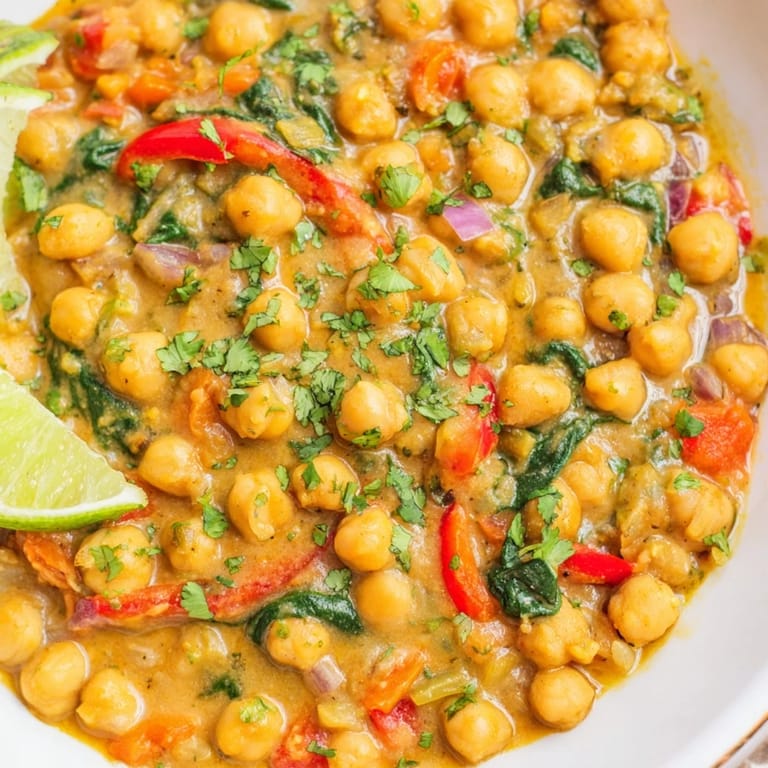
Save There's a particular moment in this curry's life, right after the spices have bloomed and before the liquid goes in, when you realize how simple and honest cooking can be. That's the moment that hooks people—when they taste something that took barely any time but somehow feels like you cared.
Why One Pot Changes Everything
Cooking everything in one vessel means less cleanup but also means you're building flavor in layers right there in the same space—the oil carries the onion sweetness into the spices, then the spices stain the oil golden, and by the time you add the liquids, you've already created something complex. There's also something satisfying about watching a whole meal come together without a stack of dirty dishes piling up beside you.
The Spice Story
Curry powder gets a bad reputation as a catch-all, but when you pair it with cumin, turmeric, and smoked paprika, it becomes something bigger and more interesting than any of those spices alone. The smoked paprika especially—it's a quiet ingredient that adds depth nobody can quite put their finger on, and the turmeric gives you that golden color that makes everything look more intentional. These spices weren't randomly picked; they work together because they've been working together for generations, and your job is just to set them free.
Serving and Leftover Genius
Serve this over rice or alongside naan, or if you're feeling light, eat it straight from the bowl with just cilantro and lime to keep things fresh. The truth is, this curry tastes even better the next day—the flavors deepen overnight, and if your household is like mine, leftovers disappear quickly.
- Cilantro and lime are not just garnish; they're the final note that keeps the curry from feeling heavy.
- Leftover curry freezes beautifully in portions if you want to have dinner solved for another busy week.
- If you end up with extra, try it on toast with a fried egg, or fold it into rice for a quick fried rice situation.
 Save
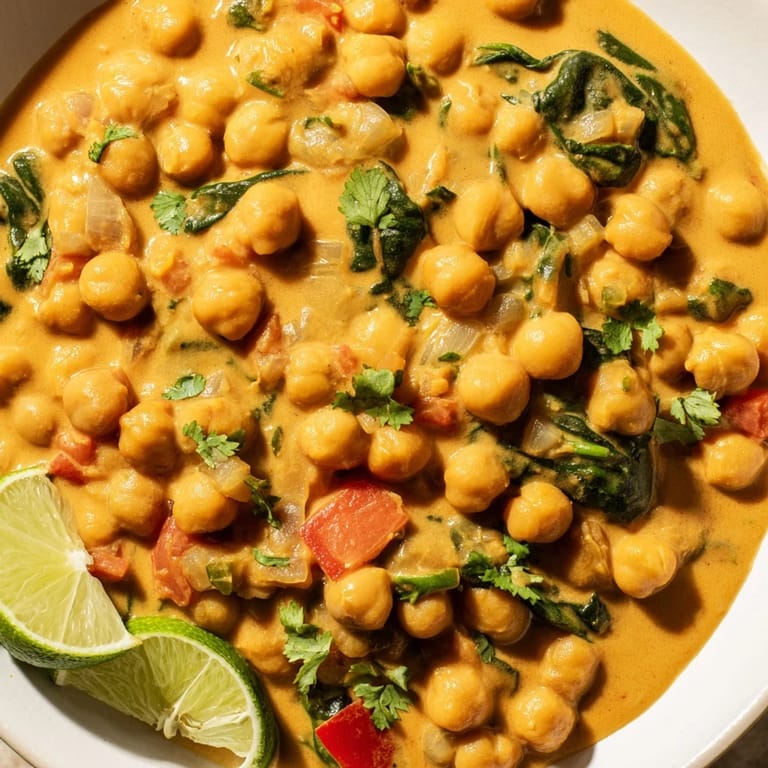
Save This is the kind of recipe that lives in your regular rotation because it actually tastes good and doesn't demand much of you. Make it once, and it becomes the curry you come back to on nights when you need something warm and real.
Cooking Guide
- → Can I use canned chickpeas for this dish?
Yes, canned chickpeas are convenient and work perfectly. Just drain and rinse them before adding.
- → How can I adjust the spice level?
You can add or omit chili flakes depending on your preferred heat intensity.
- → What can I substitute for spinach?
Kale or Swiss chard make great alternatives that maintain a similar texture and flavor.
- → Is coconut milk necessary for the flavor?
Coconut milk adds a creamy texture and subtle sweetness that balances the spices well.
- → Can I add extra protein to this dish?
Yes, cubed tofu or tempeh can be added for additional plant-based protein.
- → What sides pair well with this curry?
Serve with jasmine or basmati rice, or warm naan to complement the rich flavors.