 Save
Save The first time I made this was on a rainy Wednesday when I had a craving for ramen but only Thai curry paste in my pantry. I started mixing, tasting, adjusting, and somehow landed on something that tasted like both worlds colliding in the best way. My roommate walked in mid-stir, sniffed the air, and asked what smelled so good—that's when I knew I'd stumbled onto something worth repeating.
I made this for friends who were skeptical about fusion dishes, and watching them taste that first spoonful and pause—really pause—to process the flavors was worth the whole effort. Someone asked for the recipe before they'd even finished their bowl, which never happens.
Ingredients
- Vegetable oil: Use a neutral oil that won't compete with the bold flavors; I prefer it for the initial sear because it has a higher smoke point than sesame oil.
- Onion, garlic, and ginger: These three form the aromatic base—finely chopped onion sweetens as it cooks, garlic deepens the savory notes, and ginger adds that familiar warmth.
- Thai red curry paste: This is your bridge between Japanese and Thai traditions; a tablespoon gives you color and spice without overpowering the miso.
- Chicken broth: Low sodium is essential here because you're adding soy sauce, fish sauce, and miso, which all bring salt—you want to control the final seasoning.
- White miso paste: Milder and sweeter than red miso, it dissolves smoothly into hot broth and plays nicely with curry without creating a muddled flavor.
- Soy sauce and fish sauce: These two together create depth; the fish sauce is quiet but unmistakable, rounding out the broth's savory backbone.
- Sesame oil: Added at the end, it brings a toasty finish and prevents the broth from tasting flat.
- Chicken breasts: Boneless and skinless cook quickly and absorb the broth's flavor as they poach gently.
- Fresh ramen noodles: They cook in minutes and have a tender, chewy texture; if you use dried, add a minute or two to the cooking time.
- Bok choy: Its mild green flavor balances the bold broth, and it stays tender when blanched in the noodle water.
- Soft-boiled eggs: The runny yolk becomes part of the sauce when you eat; it's the small luxury that makes this bowl feel complete.
- Crispy fried shallots: Buy them or make your own—they add a textural contrast that keeps each bite interesting.
- Scallions, cilantro, and fresh chili: These are your brightness and bite; they cut through the richness of the broth and egg.
Tired of Takeout? 🥡
Get 10 meals you can make faster than delivery arrives. Seriously.
One email. No spam. Unsubscribe anytime.
Instructions
- Sear the chicken:
- Get your oil shimmering in the pot, then place the seasoned breasts down with confidence—you want that golden crust on both sides in about 2 minutes per side. Don't move them around; let the heat do the work.
- Build the aromatic base:
- Fresh oil goes in the same pot, then onions go down first to soften and release their sweetness. After 2 minutes, garlic and ginger join in, and you'll smell that sharp, green fragrance that tells you they're awake.
- Toast the curry paste:
- This one minute of cooking transforms the paste from raw and pasty to fragrant and alive—don't skip it or rush it.
- Simmer the chicken in broth:
- The chicken returns to the pot with the broth, and you let it poach gently for 12 to 15 minutes until the meat is no longer pink inside. This is your moment to step back and let the flavors begin talking to each other.
- Finish the broth:
- Whisk in the miso paste—cold broth clumps it, so make sure the liquid is hot when you add it. The miso dissolves into something silky, then soy sauce, fish sauce, sugar, and sesame oil follow, each one contributing a layer.
- Time the soft-boiled eggs:
- Seven minutes in boiling water gives you that soft, jammy yolk; the ice bath stops the cooking instantly. This precision matters because the yolk's richness is part of the eating experience.
- Cook noodles and bok choy together:
- Fresh noodles take just 3 to 4 minutes; add the bok choy in the last 2 minutes so it's tender but still has a gentle bite. Drain together and divide among bowls.
- Assemble with intention:
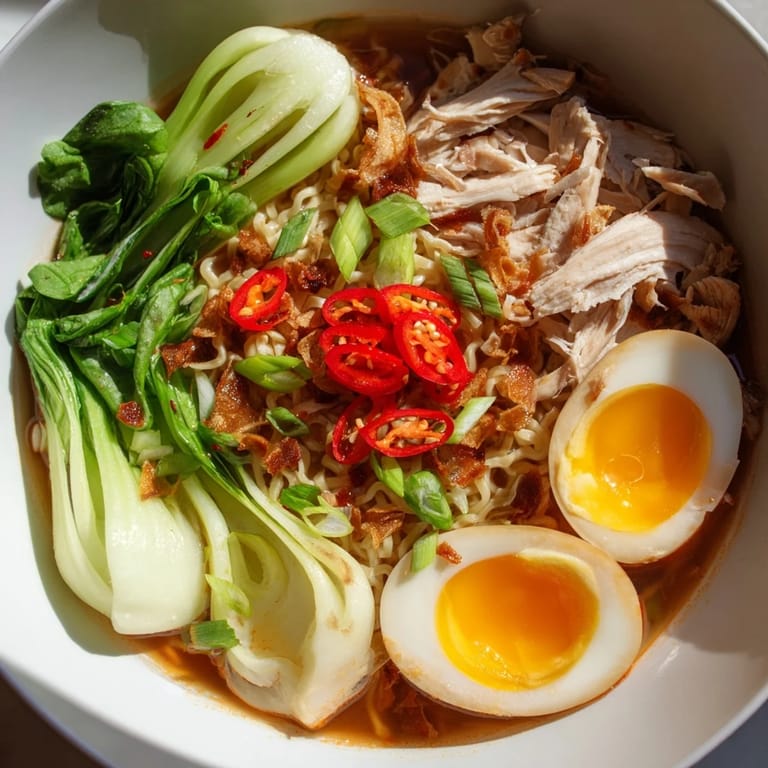
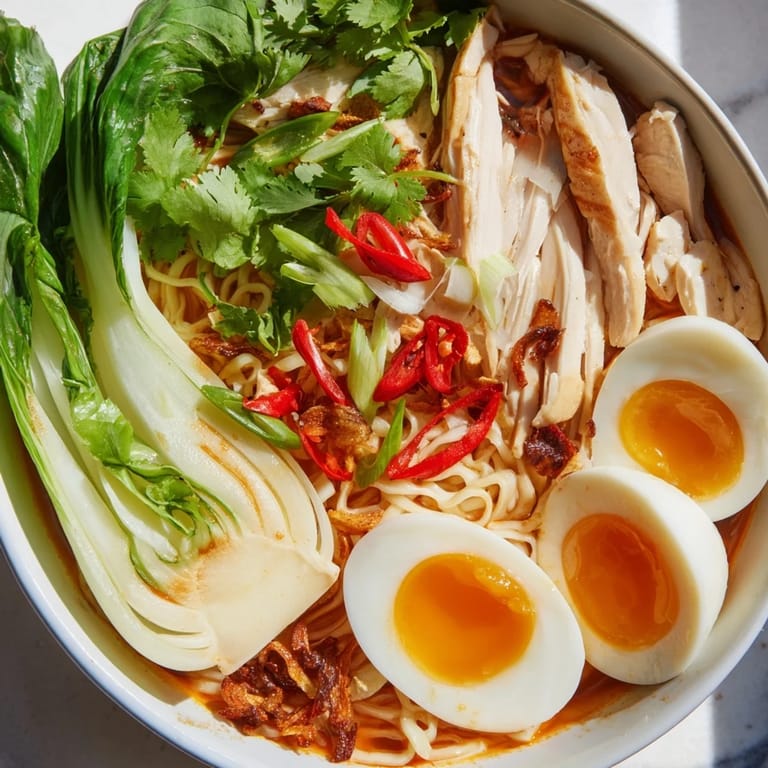
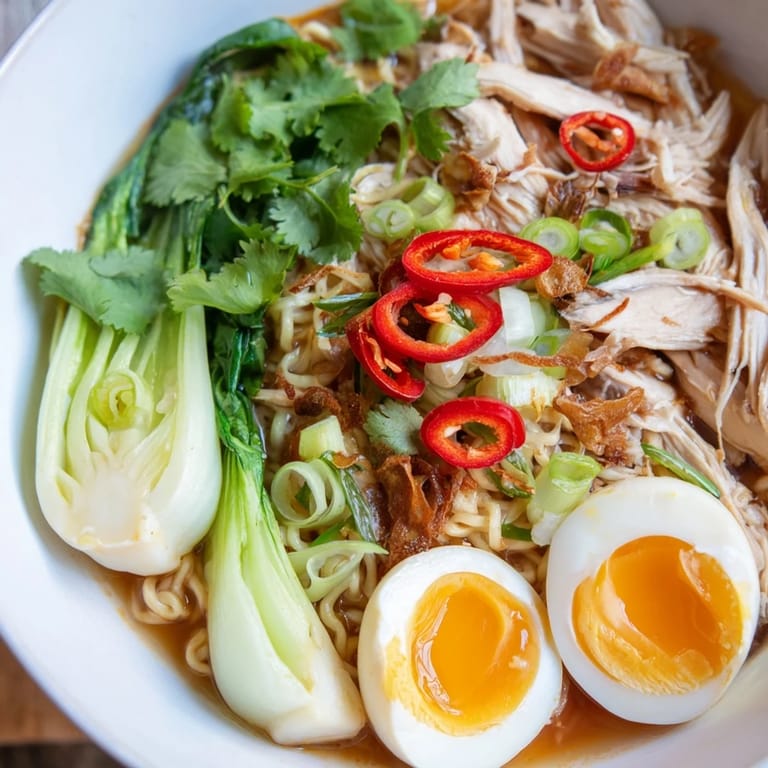
- Noodles and bok choy go down first, then the hot broth poured over creates steam and warmth. Layer your toppings so each spoonful has chicken, egg, greens, and crunch all at once.
 Save
Save The real gift of this bowl came the night someone made it for me after I'd had the worst day. Something about the warmth, the layers of flavor, the way the egg yolk broke into the broth—it felt like being taken care of in the gentlest way possible.
Building Complexity in a Single Bowl
What makes this ramen work isn't any single ingredient but rather how they create a conversation. The miso and curry paste speak different languages, but they understand each other. The soft-boiled egg yolk adds creaminess that nothing else can, the bok choy brings a gentle crunch that keeps the texture from feeling one-note, and the crispy shallots remind you that textural contrast is everything. The cilantro and chili add a last-minute brightness that prevents the whole thing from feeling heavy, even though it's deeply satisfying.
Make-Ahead Strategy
I've learned that the broth tastes even better the next day—the flavors marry overnight, so you can make it in advance and reheat gently. The chicken can be poached ahead and stored in broth. The soft-boiled eggs keep in the fridge for a couple of days. All that's left to do when you're hungry is cook the noodles and assemble, which takes 10 minutes flat. On busy evenings, that's the difference between takeout and homemade.
Variations That Work
I've made this with shrimp instead of chicken on nights when I'm feeling lighter, and it's equally delicious—they cook faster, which means less waiting. For vegetarians, vegetable broth and cubed firm tofu give you the same richness and protein. I've also experimented with swapping the white miso for red miso on days when I wanted more depth; use slightly less because red is more assertive. The beauty of this recipe is that it's flexible enough to adapt to what you have and what you're craving.
- Try adding a handful of mushrooms (shiitake or cremini) to the broth for extra umami and earthiness.
- A drizzle of chili oil instead of fresh chili gives you heat that's smooth and integrated rather than bright and sharp.
- Substitute lime juice for lime wedges if you prefer to blend it into the broth rather than squeeze it in at the end.
 Save
Save This bowl has become my go-to when I want to feel grounded and nourished, when I'm cooking for people I care about, or when I need to prove to myself that something simple can be extraordinary. It's the kind of recipe that gets better the more you make it.
Cooking Guide
- → How do I achieve perfectly soft-boiled eggs?
Boil eggs for exactly 7 minutes, then transfer to ice water immediately to stop cooking. This keeps yolks creamy and whites tender.
- → Can I make the broth spicier?
Yes, increase the amount of Thai red curry paste or add fresh chili slices according to your preferred heat level.
- → What are good alternatives to chicken broth?
Vegetable broth works well, especially for a plant-based variation—just omit chicken and fish sauce for a lighter taste.
- → How should I prepare the noodles for best texture?
Cook noodles according to package instructions, adding bok choy during the final 2 minutes to blanch both together without overcooking.
- → What toppings complement the dish?
Crispy fried shallots, sliced scallions, fresh cilantro, and a squeeze of lime add layers of flavor and texture.