 Save
Save There's something almost meditative about assembling a poke bowl on a Tuesday afternoon when you haven't planned dinner and the fridge is half-empty. I discovered this shrimp version by accident, really—I had some beautiful raw shrimp thawing, a mango that needed eating, and exactly twenty minutes before hunger became an actual problem. The result was so bright and satisfying that it became my go-to when I want something nourishing without spending an hour in the kitchen.
I made this for a friend who was visiting during summer, someone always counting calories but never wanting to feel like she was dieting. Watching her face when she tasted it—that moment when she realized healthy food could actually taste exciting—that's when I knew this bowl had staying power. She asked for the recipe before she finished her first bite.
Ingredients
- Raw shrimp, peeled and deveined (200 g): Look for shrimp that smell like the ocean, not like ammonia—that's your freshness indicator right there.
- Brown rice or cauliflower rice (120 g cooked): Brown rice gives you that satisfying grain base, but cauliflower rice cuts the calories if that matters to you.
- Ripe mango, diced: A ripe mango should yield slightly to gentle pressure, and the color will be mostly golden with maybe some red blushing.
- Edamame, shelled and thawed (100 g): Frozen edamame work perfectly fine and are just as nutritious as fresh.
- Cucumber, thinly sliced: English cucumbers have fewer seeds and thinner skin, which makes them nicer in a bowl like this.
- Carrot, julienned: Cut them thin so they stay slightly crisp and sweet when you eat them.
- Avocado, sliced: Add this right before serving or it'll turn brown and lose its appeal.
- Scallions, thinly sliced: The white and light green parts add onion bite, while the dark green is fresher and milder.
- Low-sodium soy sauce or tamari (2 tbsp): Tamari is your friend if gluten is a concern, and it tastes just as good.
- Rice vinegar (1 tbsp): This is gentler and sweeter than regular vinegar, which is why the sauce stays balanced.
- Toasted sesame oil (1 tsp): A little goes a long way—this stuff is potent in the best way.
- Honey or agave (1 tsp): Just enough to round out the salty and tangy notes.
- Sriracha (1 tsp, optional): Skip it if you don't like heat, or add more if you want that chili kick to really sing.
- Fresh ginger, grated (1 tsp): Microplane your ginger for a fine texture that distributes evenly through the sauce.
- Garlic clove, minced (1 small): One clove is enough to say hello without overpowering everything else.
- Toasted sesame seeds (1 tsp): Toasted seeds taste nuttier and more interesting than raw ones.
- Fresh cilantro, chopped (1 tbsp, optional): Cilantro is one of those herbs people either love or skip entirely, so taste first.
- Lime wedges, for serving: A squeeze of lime at the end brightens up every single element.
Tired of Takeout? 🥡
Get 10 meals you can make faster than delivery arrives. Seriously.
One email. No spam. Unsubscribe anytime.
Instructions
- Get your sauce ready first:
- In a small bowl, whisk together soy sauce, rice vinegar, sesame oil, honey, sriracha, ginger, and minced garlic until everything is combined and the honey dissolves. This way it's sitting there ready to do its job while you cook.
- Cook the shrimp with confidence:
- Heat a non-stick skillet over medium-high heat and give it a light spray of cooking oil. Once it's hot, add your shrimp in a single layer and leave them alone for two to three minutes—you want that pink color and slight curl, which means they're cooked through. Flip and give them another two to three minutes on the other side, then transfer to a plate.
- Build your bowls like you're composing a painting:
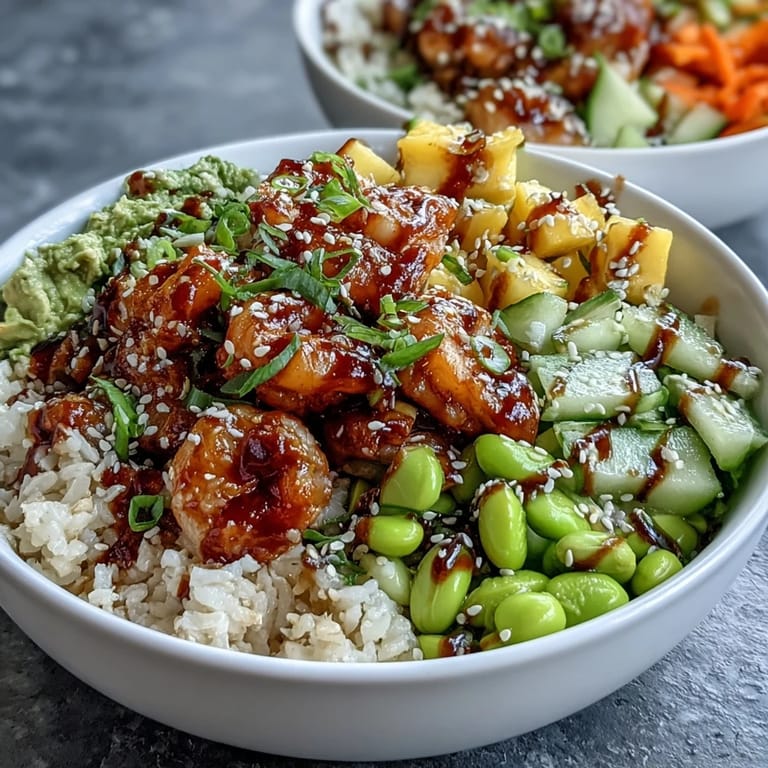
- Divide the cooked rice between two bowls, then arrange everything else on top in whatever way makes you happy—there's no wrong way to do this. The shrimp, mango, edamame, cucumber, carrot, and avocado all get their own little spot.
- Let the sauce do its thing:
- Drizzle that poke sauce evenly over everything, making sure it gets down to the rice so every bite has that savory-tangy element.
- Finish with the flourishes:
- Scatter scallions, sesame seeds, and cilantro on top, then give everything a good squeeze of fresh lime juice right before you eat it.
 Save
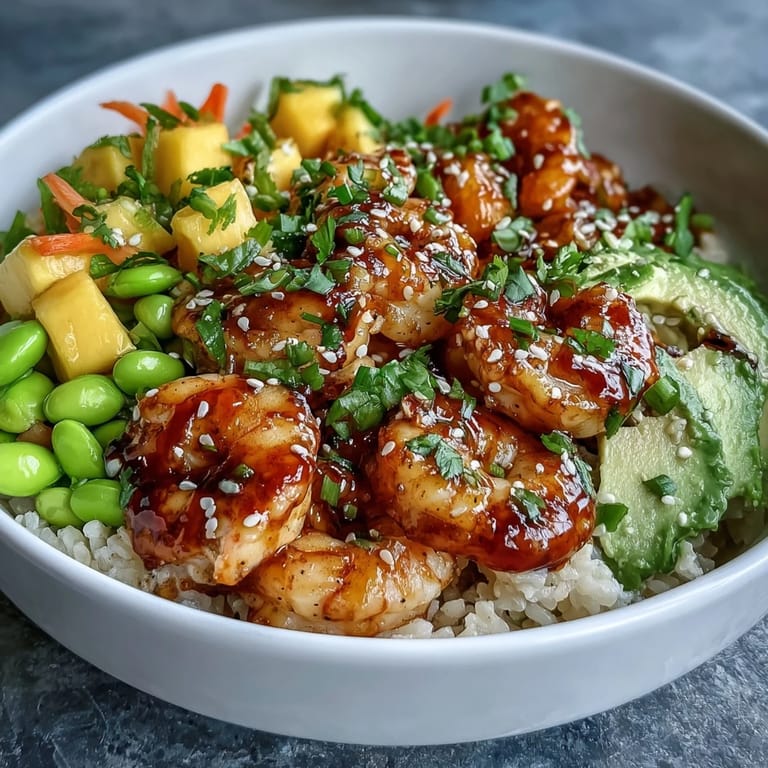
Save There's a quiet pleasure in eating something so colorful and alive-looking that you actually want to eat it slowly. This bowl makes you feel like you're taking care of yourself, not punishing yourself, and that's a difference that matters more than any calorie count.
Why This Bowl Works So Well
Every component here has a job to do. The shrimp brings lean protein and umami richness, the mango adds natural sweetness and brightness, the edamame give you that satisfying protein boost and earthiness, and the raw vegetables keep everything feeling fresh and crunchy. The sauce ties it all together with layers of flavor—salty, tangy, a whisper of heat, all balanced with just enough honey to keep it from being too intense.
Making It Your Own
The beauty of a poke bowl is that it's forgiving and flexible. If you love crunch, add sliced radishes or shredded red cabbage. If you want even fewer calories, swap the rice for mixed greens or quinoa. If you're in a real hurry, grab pre-cooked shrimp from your grocery store seafood section and you've cut your cooking time down to almost nothing. The sauce is also your playground—add more sriracha if heat is your thing, a splash of lime juice if you want extra tang, or a bit of wasabi if you're feeling adventurous.
Storage and Serving
This bowl is best eaten the same day you make it, especially with the avocado involved, but you can prep components ahead of time if you're planning your week. Store the cooked shrimp and vegetables separately, keep the sauce in a little container, and assemble everything when you're ready to eat. If you're pairing this with a drink, a crisp citrusy white wine like Sauvignon Blanc is your answer—the acidity echoes the lime and vinegar in the bowl, and it all just makes sense together.
- Tamari instead of soy sauce makes this completely gluten-free without changing how it tastes.
- If you double the recipe, you'll have a bowl ready for lunch the next day as long as you keep the fresh elements separate.
- Lime is non-negotiable—don't skip that final squeeze.
 Save
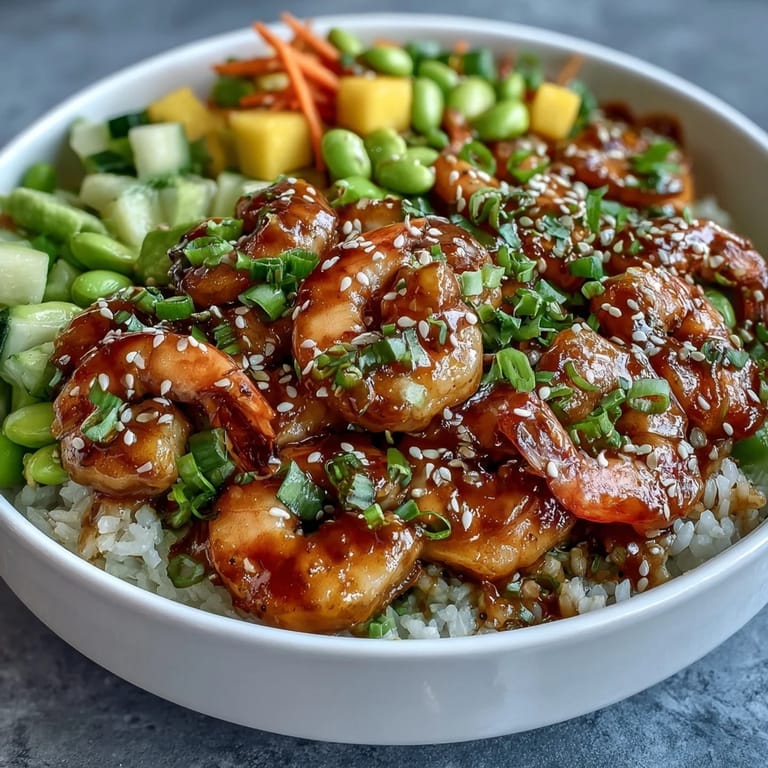
Save This twenty-minute shrimp poke bowl became my answer to that question that hits around five in the afternoon: what do I actually want to eat? It's the kind of dish that feels like a treat while tasting like good sense, and once you make it once, you'll find yourself making it again and again.
Cooking Guide
- → Can I use frozen shrimp instead of fresh?
Yes, frozen shrimp work perfectly for this bowl. Thaw them overnight in the refrigerator or under cold running water before cooking. Pat them dry thoroughly before searing to achieve proper caramelization in the skillet.
- → What can I substitute for brown rice?
Cauliflower rice makes an excellent low-carb alternative, reducing total calories significantly. Quinoa provides a complete protein option, while mixed greens offer a lighter base. Even sushi rice works if you prefer sticky grains.
- → How long does the homemade poke sauce keep?
The sauce stores beautifully in an airtight container in the refrigerator for up to one week. The flavors actually meld and improve after a day. Give it a good whisk before using again as the sesame oil may separate slightly.
- → Is this bowl suitable for meal prep?
Absolutely. Cook the shrimp and rice in advance, then store components separately in airtight containers. Keep the sauce in a small jar. Assembly takes just minutes when ready to eat, though add the avocado and garnishes fresh for best texture.
- → Can I make this without cooking?
If using sashimi-grade shrimp, you can skip the cooking step entirely. Simply slice the raw shrimp thinly and marinate in the poke sauce for 15-20 minutes before assembling. This traditional preparation yields an incredibly tender texture.
- → What other toppings work well?
Sliced radishes, shredded red cabbage, pickled ginger, crushed macadamia nuts, or seaweed salad all complement the flavors. A drizzle of spicy mayo or extra sriracha adds heat if desired. Fresh mint leaves provide another bright herbal element.