 Save
Save Last spring, I was standing in my kitchen on one of those perfect early mornings when the farmers market suddenly has armfuls of green things you'd almost forgotten existed. A bundle of fresh basil caught my eye, and I found myself buying far more herbs than any single person needs. That evening, faced with an overflowing crisper drawer and a half box of pasta, I decided to throw together something that would celebrate all that greenness. The result was this vibrant pasta salad that somehow tastes like spring feels—bright, hopeful, and impossibly fresh.
I served this at a potluck once where everyone brought something heavy and traditional, and watching people pile it onto their plates with actual excitement reminded me that sometimes the simplest ideas are the ones that stand out. My neighbor asked for the recipe right there on the patio, her fork still in hand, and I knew I'd created something worth repeating.
Ingredients
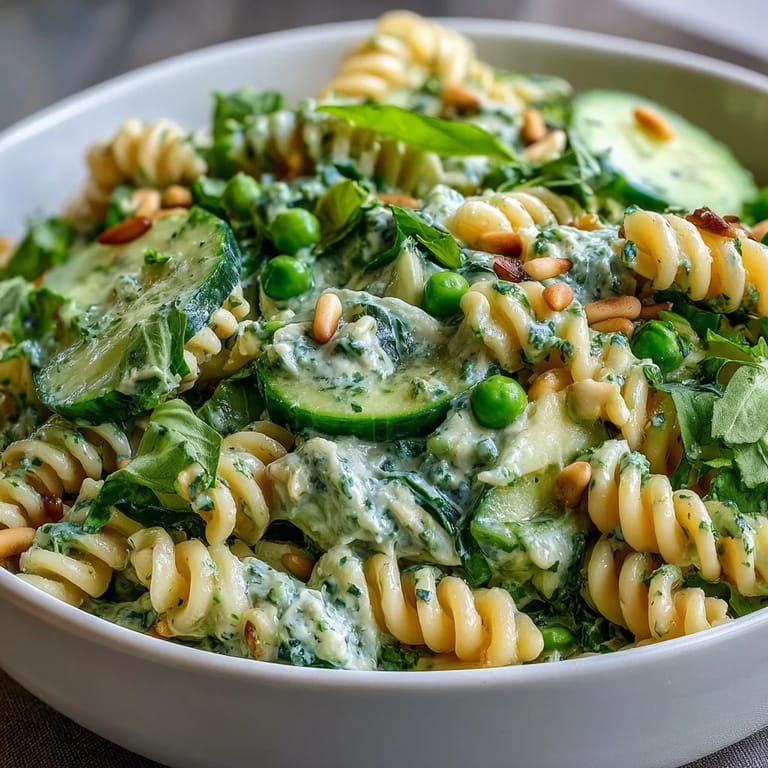
- Short pasta (250 g): Fusilli, penne, or farfalle work beautifully because they catch and hold the creamy dressing in all their little nooks and crannies, making every bite taste intentional.
- Fresh peas (1 cup): These tiny green spheres are packed with sweetness and a subtle earthiness that anchors the brightness of the herbs.
- Sugar snap peas (1 cup): I learned to halve these so they're easier to eat in a salad, and their crisp crunch provides the textural contrast that keeps things interesting.
- Cucumber (1 small): Slice it thin and it becomes almost delicate, adding hydration and a cool, refreshing element that prevents the salad from feeling heavy.
- Baby spinach (2 cups): Raw spinach wilts slightly when tossed with the warm pasta, creating this lovely soft texture that feels almost buttery.
- Spring onions (2): These mild alliums add a whisper of sharpness that makes you taste all the other flavors more vividly.
- Avocado (1 small): Add this just before serving so it stays creamy rather than turning brown and mealy, and it will add richness without needing extra fat.
- Greek yogurt (1/2 cup): This is what makes the dressing tangy and lighter than traditional mayo-heavy versions, and it's the secret to why this salad doesn't feel indulgent.
- Mayonnaise (1/4 cup): Don't skip this because it creates the silky base that helps everything come together into one cohesive sauce.
- Fresh parsley, basil, chives, and tarragon: These four herbs are what transform a simple vegetable salad into something that tastes like you have a personal relationship with your garden.
- Lemon juice (2 tbsp): This brightens everything and prevents the avocado from browning, so it's doing double duty in the best way possible.
- Garlic (1 small clove): Just one clove is enough to add depth without overpowering the delicate herbs, and mincing it small means it disappears into the dressing.
- Olive oil (2 tbsp): This adds richness and helps emulsify the dressing so it clings to every piece of pasta.
- Salt and black pepper: Season carefully because the yogurt is already slightly salty, and you want the herbs to be the star, not the seasoning.
- Toasted pine nuts (optional): These add a buttery crunch that feels a little luxurious, and toasting them yourself takes about three minutes and changes everything.
Tired of Takeout? 🥡
Get 10 meals you can make faster than delivery arrives. Seriously.
One email. No spam. Unsubscribe anytime.
Instructions
- Set the pasta in motion:
- Bring a large pot of salted water to a boil and cook the pasta according to package directions until it has just a slight resistance when you bite it. In the last couple of minutes, toss in the fresh peas and sugar snap peas so they cook just enough to brighten their color without losing their snap.
- Make the dressing while everything else happens:
- While the pasta finishes cooking, combine the Greek yogurt, mayonnaise, all those beautiful fresh herbs, lemon juice, garlic, olive oil, salt, and pepper in a blender or food processor. Blend until it's completely smooth and that gorgeous shade of green, then taste it and adjust if it needs more lemon or salt.
- Cool everything down:
- Drain the pasta and peas in a colander and rinse them under cold water, stirring gently so the pasta separates and stops cooking. This step matters because warm pasta will turn mushy if you add the dressing right away.
- Build the salad:
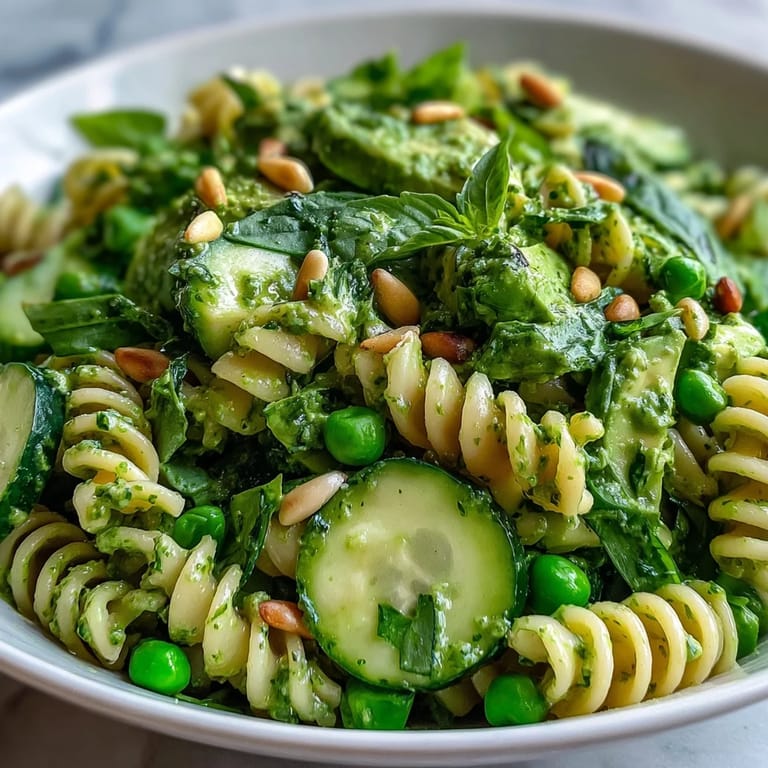
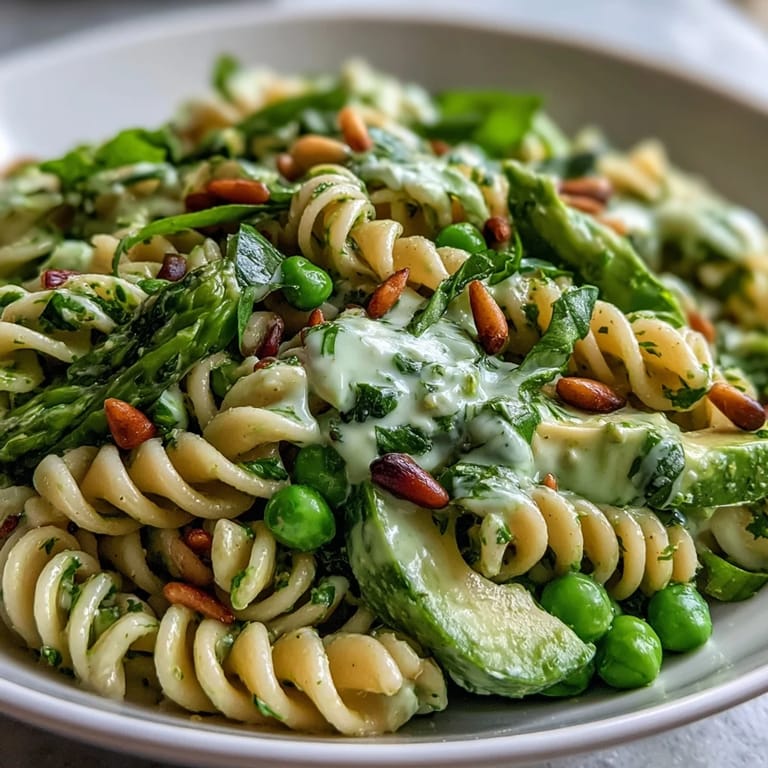
- In a large bowl, combine the cooled pasta and peas with the cucumber, spinach, spring onions, and avocado. Pour the green goddess dressing over everything and toss gently but thoroughly, making sure every piece gets coated with that creamy green goodness.
- Finish with flourish:
- Sprinkle the toasted pine nuts and any extra chopped herbs over the top just before serving, which keeps them from getting soggy and adds that final moment of textural surprise.
 Save
Save There's something magical about feeding people food that makes them feel cared for, and this salad does that because it's clearly made with intention. It's the kind of dish that reminds everyone at the table that eating well doesn't have to be complicated or time-consuming—it just has to taste like someone chose each ingredient thinking about how it would make them feel.
Variations and Additions
I've learned through experimentation that this salad is wonderfully flexible and actually improves when you adapt it to what you have on hand. Grilled chicken breast adds protein without changing the flavor profile, and roasted chickpeas can make it even more filling if you're serving it as a main course rather than a side. Swapping the Greek yogurt for a dairy-free alternative works perfectly if you're feeding people with different dietary needs, and the avocado becomes even more important in that version because it provides that creamy richness you'd otherwise miss.
Serving and Storage
This salad is equally at home on a picnic blanket in the afternoon sun or on a dinner table in the evening, and it's actually better served at room temperature than straight from the refrigerator because the flavors come through more clearly. If you're making it ahead, keep the dressing separate and toss everything together just before you serve it, which takes about two minutes and ensures that the spinach and cucumber stay crisp instead of getting waterlogged. It will keep in the refrigerator for up to three days in an airtight container, though the pasta will continue to absorb the dressing and become softer, which some people prefer and others find less appealing.
Making It Your Own
The beauty of this recipe is that it works as a framework rather than a strict prescription, and the best version is always the one that reflects what's growing near you and what you actually like to eat. Spring asparagus tips would be wonderful instead of or alongside the sugar snap peas, and thinly sliced radishes add a little peppery bite if you want something sharper. I've also discovered that adding fresh dill or even mint transforms the entire flavor profile, creating this herb-forward version that feels completely different but equally delicious.
- Taste the dressing before you add it to the salad because herbs vary in intensity and you might want more lemon or salt depending on what you're using.
- If you're serving this to a crowd, transport it in layers with the dressing at the bottom and the delicate greens on top, then toss it all together right before plating.
- Leftover dressing makes an excellent sauce for grilled vegetables or roasted chicken, so don't feel obligated to use it all on the salad.
 Save
Save This salad has become my answer to that question of what to bring to a gathering when you want to contribute something that feels special but doesn't require you to spend hours in the kitchen. It's proof that sometimes the most elegant dishes are simply the ones that celebrate their ingredients without overcomplicating things.
Cooking Guide
- → How can I make the dish vegan?
Replace the Greek yogurt and mayonnaise with dairy-free alternatives like vegan yogurt and plant-based mayo to keep the creamy texture.
- → What pasta types work best?
Short pasta shapes like fusilli, penne, or farfalle work well as they hold the dressing and mix easily with the veggies.
- → Can I prepare this salad in advance?
Yes, preparing it a few hours ahead allows flavors to meld. Keep the dressing separate until just before serving to maintain freshness.
- → Are there alternatives to pine nuts for garnish?
Toasted almonds or walnuts can be used as crunchy substitutes if pine nuts are unavailable or for allergen concerns.
- → What herbs give the green goddess dressing its flavor?
Fresh parsley, basil, chives, and optionally tarragon combine with lemon and garlic for a vibrant, herbal dressing.