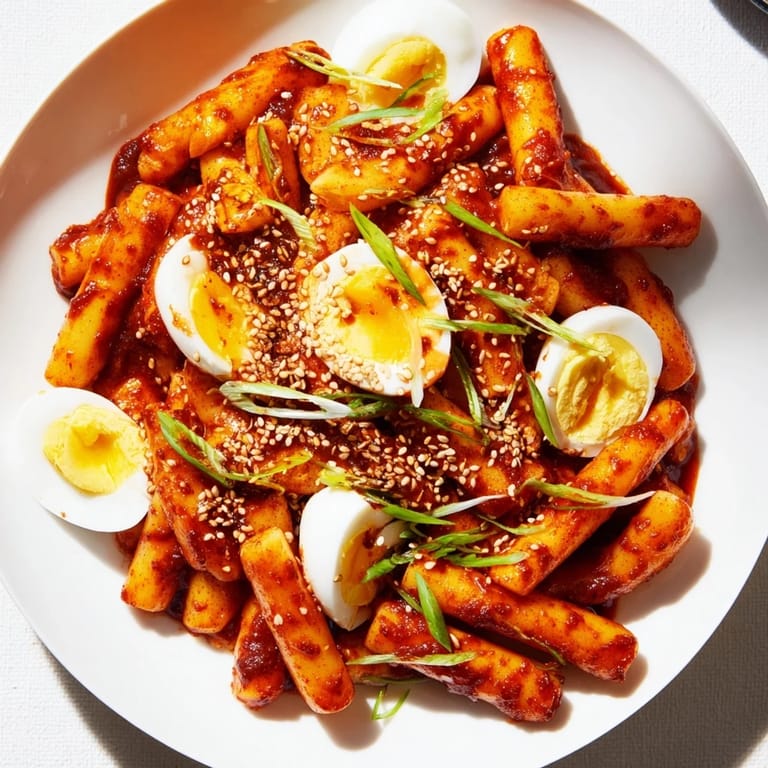
 Save
Save The first time I watched my Korean neighbor make tteokbokki, I stood in her kitchen completely transfixed—not by technique, but by the smell. That deep, funky umami of simmering anchovies mixed with the sharp heat of gochujang and the sweetness of honey created something I couldn't stop breathing in. She laughed when she caught me leaning over the pot and handed me a spoon to taste the sauce before the rice cakes even went in. That single moment convinced me this wasn't just street food; it was pure comfort in a bowl.
I made this for my roommate on a rainy Tuesday when they were stressed about work, and I watched their shoulders relax with the first bite. The kitchen filled with steam, and we sat at the counter in our mismatched sweaters, sharing one bowl and arguing about whether it needed more sesame seeds. By the end, the conversation had shifted from their troubles to us planning a Korean food crawl. That's when I realized tteokbokki had become my comfort-giving dish.
Ingredients
- Korean cylindrical rice cakes (tteok), 500 g: These have a unique chewy texture that soaks up sauce beautifully—don't confuse them with round mochi or glutinous rice balls; the elongated ones are what give tteokbokki its signature bite.
- Large eggs, 4: Boiled eggs are essential here; they provide creamy contrast to the spicy sauce and add substance to make this feel like a real meal.
- Gochujang (Korean chili paste), 3 tablespoons: This fermented paste is the backbone of the sauce; it's complex, slightly sweet, and layered with umami that simple chili powder can't replicate.
- Gochugaru (Korean chili flakes), 2 tablespoons: These add texture and a fresher chili kick that complements the deeper gochujang.
- Soy sauce, 2 tablespoons: Choose a good quality soy sauce; it brings saltiness and umami depth that ties everything together.
- Sugar, 1 tablespoon: This balances the heat and fermented funk of the chili paste, but don't overdo it—you want bold, not candy-like.
- Honey or corn syrup, 1 tablespoon: Honey adds a subtle floral sweetness and helps the sauce glisten; corn syrup works too but feels less authentic.
- Garlic, 2 cloves minced: Fresh, sharp garlic cuts through the richness and adds life to the sauce.
- Toasted sesame oil, 1 teaspoon: A small amount is crucial—use toasted, never raw; it adds a nutty aroma that makes people ask what smells so good.
- Water, 3 cups: This is your broth base; quality matters here because there's nothing to hide behind.
- Dried kelp (kombu), 1 piece (10x10 cm): Kombu infuses the broth with subtle umami and gives it a clean, oceanic depth.
- Dried anchovies, 8 (heads and guts removed): These are optional for vegetarians, but they create a backbone of umami that's hard to replace; ask your fishmonger to clean them or do it yourself.
- Small onion, 1 sliced: Onions soften and sweeten as they simmer, adding natural sweetness to balance the sauce.
- Green onion, 1 sliced: Add this at the end for fresh, sharp contrast and vibrant color.
- Fish cake, 1 sheet sliced (optional): Fish cake adds a slightly bouncy texture and savory depth; it's traditional in Korean street versions.
- Toasted sesame seeds, 1 tablespoon: These are your finishing touch—they add crunch and a warm, nutty aroma.
Tired of Takeout? 🥡
Get 10 meals you can make faster than delivery arrives. Seriously.
One email. No spam. Unsubscribe anytime.
Instructions
- Soften your rice cakes:
- Soak them in warm water for 10 minutes if they're hard or straight from the fridge. This step is what separates chewy from rubbery—don't skip it, even if they look soft enough already.
- Build your broth foundation:
- Add water, kombu, and cleaned anchovies to a saucepan and bring to a gentle boil. Let it simmer for 10 minutes, then fish out the kombu and anchovies—what you're left with is a clear, silky broth that tastes like the ocean and umami had a conversation.
- Cook your eggs while the broth simmers:
- Boil eggs for 8–9 minutes depending on how runny you like the yolk, then shock them in cold water before peeling. This step happens alongside the broth, so you're saving time while building flavor.
- Create the sauce:
- Add gochujang, gochugaru, soy sauce, sugar, honey, minced garlic, and sesame oil directly to your broth. Stir until the gochujang dissolves completely and the sauce turns a deep red—this is when it starts smelling irresistible.
- Combine rice cakes with the sauce:
- Add your drained rice cakes, sliced onion, and fish cake if using, then simmer over medium heat for 10–12 minutes, stirring occasionally. Watch as the sauce reduces and thickens around each cake, coating them in a glossy, spicy glaze.
- Finish with your boiled eggs:
- Gently nestle the peeled eggs into the pot and simmer for another 2–3 minutes. The eggs warm through and soak up the sauce's flavor.
- Garnish and serve immediately:
- Top with sliced green onion and toasted sesame seeds just before serving. This keeps the green onion fresh and the seeds crunchy.
 Save
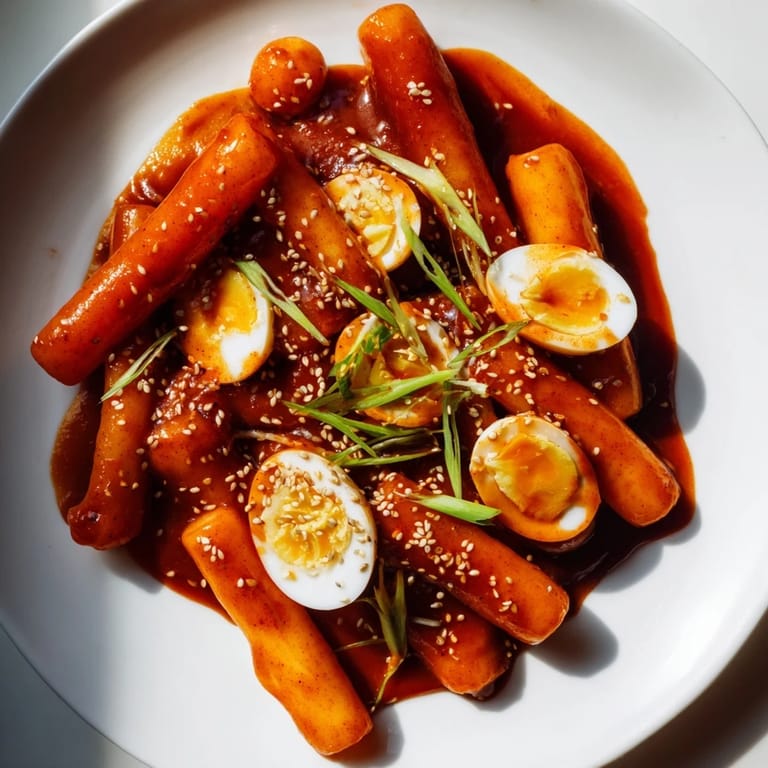
Save I brought a pot of this to a dinner party once, half-expecting it to sit untouched while people picked at safer foods. Instead, everyone crowded around, asking for seconds, and by the end of the night someone was already asking me for the recipe. That's when I understood tteokbokki isn't just Korean comfort food—it's a bridge that brings people together through heat, sweetness, and something that tastes like tradition.
Understanding the Sauce
The magic of tteokbokki lies entirely in how the gochujang and gochugaru work together. Gochujang is fermented, complex, and slightly sweet on its own; gochugaru is fresher and sharper. When you combine them with soy sauce, honey, and a whisper of sesame oil, you're not creating a simple spicy sauce—you're layering heat with umami and sweetness so that no single flavor dominates. The broth made from kombu and anchovies provides a clean, mineral-like foundation that prevents the sauce from tasting one-dimensional. Taste as you go, because different brands of gochujang have different salt levels and heat intensity.
Rice Cakes and Texture
Korean tteok aren't like any other rice cake you might know. They're chewy, slightly springy, and almost elastic when cooked properly. The soaking step isn't just about softening them; it hydrates the outer layer so they don't become gummy when they hit the hot sauce. If you use refrigerated tteok, they'll be harder and need those full 10 minutes in warm water. Fresh ones from a Korean market might need only 5 minutes. The real test is biting into one—it should have a slight resistance, like a tender noodle, not the texture of a pillow or a rock.
Customizing and Expanding
This recipe is your canvas. Add thin slices of cabbage or carrot for crunch and sweetness, or toss in a handful of ramen noodles for extra substance and chewiness. Some people add a splash of gochujang jjigae or even a beaten egg stirred in at the end for creaminess. The vegetarian version works beautifully if you skip the anchovies and fish cake, using a rich vegetable broth instead—mushroom broth adds an earthy umami that partially replaces what the fish would have contributed.
- Cabbage, carrots, or mushrooms add freshness without overwhelming the bold flavors.
- Ramen noodles turn this into something closer to a noodle dish, which some people prefer for texture variety.
- A drizzle of extra sesame oil and a sprinkle of toasted sesame seeds just before eating elevate even a simple weeknight version.
 Save
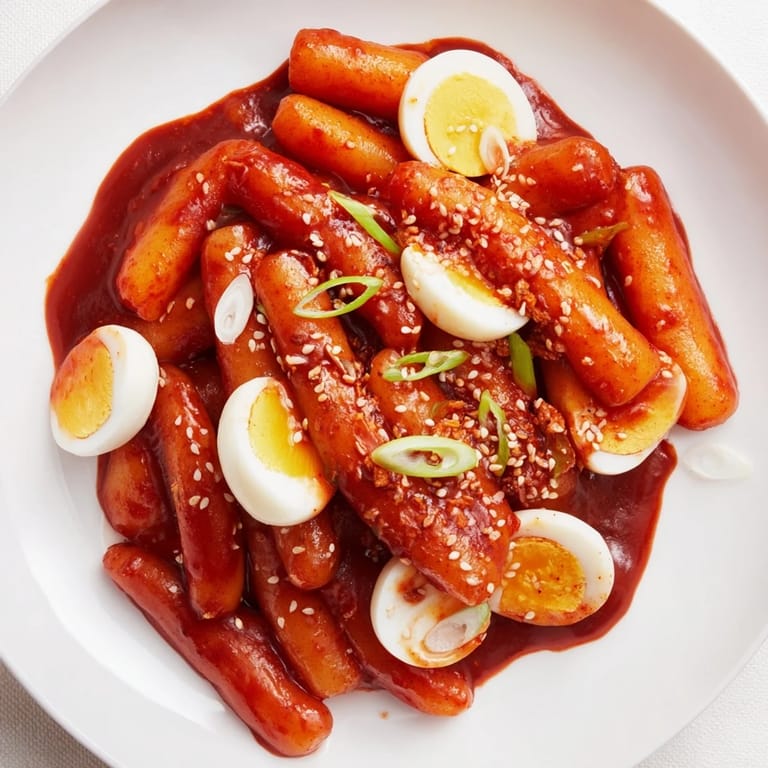
Save Tteokbokki is the kind of dish that satisfies in ways that go beyond hunger. It's warm, bold, and forgiving enough to let you learn as you cook it, and rewarding enough to make you want to master it. Once you understand how the sauce comes together, you'll find yourself making it again and again.
Cooking Guide
- → How can I make the rice cakes soft and chewy?
Soak the rice cakes in warm water beforehand if they are hard or refrigerated. Simmering in the sauce until tender ensures the desired chewy texture.
- → What is the role of gochujang in this dish?
Gochujang adds a bold, spicy-sweet flavor that defines the dish, bringing depth and balanced heat to the sauce.
- → Can I prepare a vegetarian version?
Yes, omit anchovies and fish cake, and use vegetable broth instead to keep it vegetarian-friendly without sacrificing flavor.
- → How long should the eggs be boiled for best texture?
Boil the eggs for 8-9 minutes to achieve a firm yet tender yolk that complements the chewy rice cakes.
- → What are some good garnishes to finish this dish?
Toasted sesame seeds and sliced green onions add a fresh, nutty note and bright contrast to the rich sauce.