 Save
Save The first time I made okonomiyaki, I was standing in a tiny Osaka street stall watching the cook work with the kind of focus that made the whole process look like meditation. Years later, I realized it wasn't precision that mattered most, it was the sound, that beautiful sizzle when the batter hit the hot pan, followed by the smell of caramelizing cabbage. Now whenever I make these savory pancakes at home, that memory comes rushing back, and I'm transported to that narrow alley with the neon glowing above.
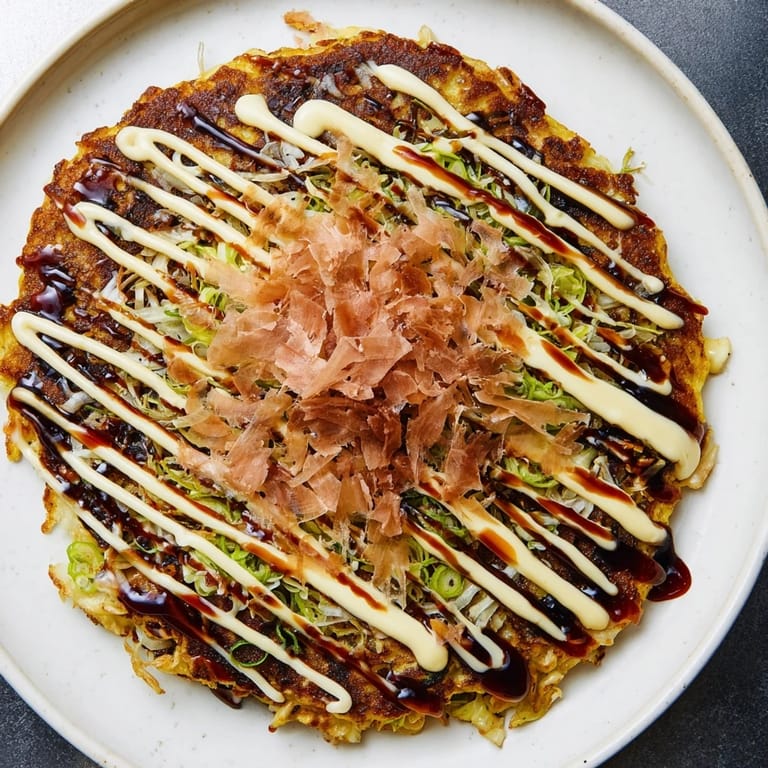
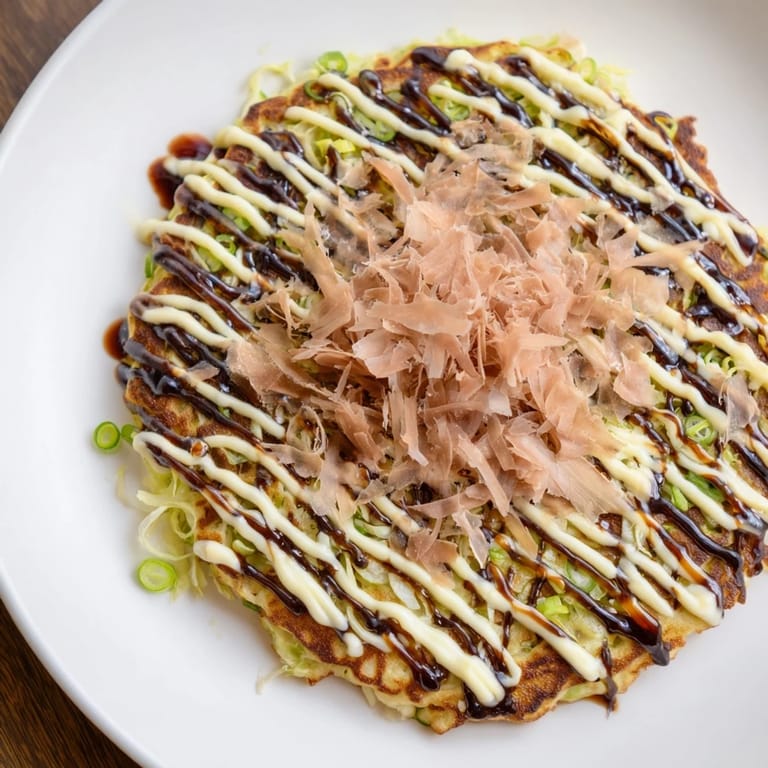
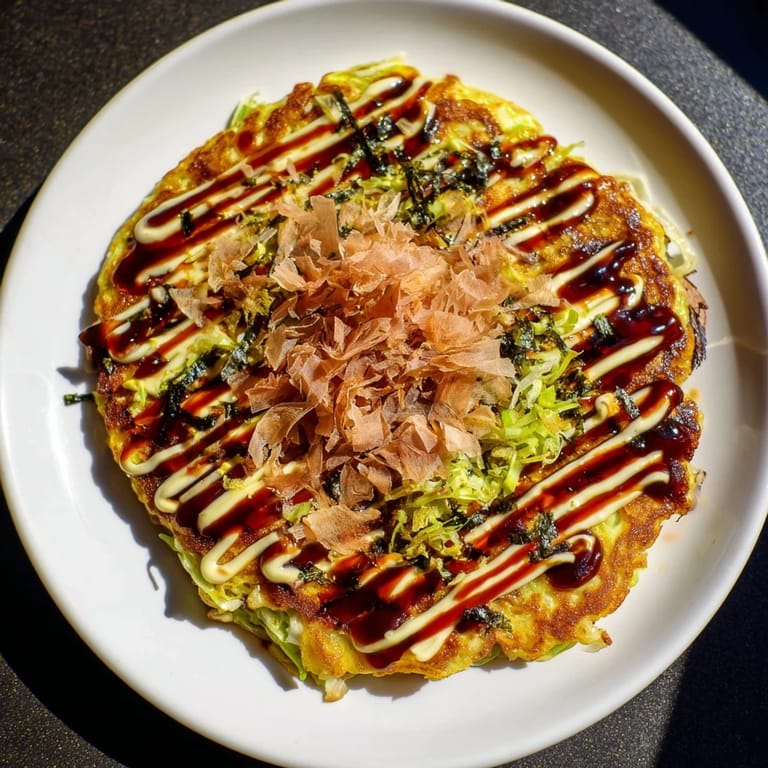
I made these for my partner on a rainy Wednesday when neither of us felt like cooking anything complicated, and somehow they became the highlight of the entire week. The way the okonomiyaki sauce pooled on the plate, how the mayo streaked through it like watercolor, the bonito flakes that curled upward from the heat, it turned what should have been a casual dinner into something almost ceremonial.
Ingredients
- All-purpose flour: The foundation that keeps everything together; I've learned that whisking it smooth with the dashi stops lumps from hiding in the final pancake.
- Dashi stock: This is the secret that separates homemade okonomiyaki from something that just tastes like a regular pancake, so don't skip it for water unless you absolutely have to.
- Eggs: They act as the binder and help the pancake hold its shape when you flip it, which is harder than it sounds at first.
- Finely shredded cabbage: This is where the magic happens, the cabbage wilts down and becomes sweet, creating pockets of tenderness throughout.
- Green onions and carrot: These add texture and freshness that cuts through the richness of the sauce and mayo.
- Okonomiyaki sauce: Tart, tangy, and slightly sweet, it's worth seeking out the real thing rather than trying to shortcut it.
- Japanese mayonnaise: Kewpie has a richer, almost buttery flavor that regular mayo can't match, and it makes all the difference.
- Bonito flakes: They're not just decoration, they add a subtle umami depth and that theatrical moment when they move in the steam.
- Aonori: These seaweed flakes bring a mineral saltiness and bright green color that make the whole plate come alive.
Tired of Takeout? 🥡
Get 10 meals you can make faster than delivery arrives. Seriously.
One email. No spam. Unsubscribe anytime.
Instructions
- Whisk your dry base:
- In a bowl, combine flour, salt, and baking powder, then whisk in dashi stock and eggs until completely smooth. This step is more important than you'd think, because lumps will cook into hard bits that disrupt every bite.
- Fold in the vegetables:
- Add your shredded cabbage, green onions, carrot, and protein of choice, stirring gently until everything is coated but not crushed. The batter will feel thick and full of texture, almost like you're folding clouds into the mix.
- Heat your pan:
- Get a nonstick skillet medium-warm with just half a tablespoon of oil, letting it shimmer slightly. This is the moment where patience matters, rushing the heat means your pancake will burn before the inside cooks through.
- Build your pancake:
- Pour about a cup of batter onto the pan and gently shape it into a thick round, about six inches across. Don't press down on it; let it find its own shape and thickness.
- Cook with intention:
- Watch as the edges begin to firm up and turn golden, usually around four to five minutes, then when the bottom is deep brown and crispy, flip it with one confident motion. The second side will cook faster, maybe three to four minutes, until the whole thing feels set when you press the spatula against it.
- Top while hot:
- Transfer your pancake to a plate and immediately drizzle okonomiyaki sauce and mayo across it, zigzag style, then sprinkle bonito flakes and aonori while the heat is still rising. This timing matters because the warmth makes the bonito flakes curl and dance.
 Save
Save There's a moment that happens every single time I make okonomiyaki, right after I place it on the plate and the bonito flakes start moving with the steam. My eyes catch the purple-pink of aonori mixing with the dark sauce, the glossy mayo, the way the heat makes that one pancake look like it's alive and breathing. That's when I remember why I fell in love with this dish in the first place.
The Art of the Flip
Flipping a pancake this thick takes more confidence than you'd expect, and I've learned that hesitation is the enemy. Use a wide spatula, get underneath the whole thing in one smooth motion, and commit to the flip without second-guessing yourself. The first pancake is always a little rough, the second one smooths out, and by the third you'll be doing it like you've been making them for decades.
Building Your Own Flavor Profile
While okonomiyaki has traditional toppings, the pancake itself is endlessly flexible, you can swap shrimp for bacon, add mushrooms, use whatever vegetables you have on hand. I've made versions with leftover rotisserie chicken, roasted sweet potato, even caramelized onions, and they all work because the batter is forgiving and the sauce ties everything together.
Serving and Pairing
Okonomiyaki is at its best served hot off the skillet, while the layers are still warm and the toppings are still moist. These pancakes have a way of bringing people together, whether you're making them for a quick solo meal or feeding a group of friends gathered around the table hungry and ready to eat.
- Pair with cold Japanese beer or iced green tea for the authentic experience.
- If you're making a full meal, serve alongside a simple miso soup or a light cucumber salad.
- Leftovers reheat gently in a low oven and taste almost as good the next day, which is a rare gift from any dish.
 Save
Save Making okonomiyaki has become my way of slowing down and being present in the kitchen, and I hope it becomes that for you too. There's something about the ritual, the sounds, the smells, that transforms a simple recipe into a moment you'll actually remember.
Cooking Guide
- → What is the key ingredient for the batter?
The batter is made from all-purpose flour, dashi stock, eggs, salt, and baking powder to create a smooth, savory base.
- → Can I substitute shrimp in the filling?
Yes, cooked bacon slices or extra vegetables can replace shrimp for a different flavor profile.
- → How do I achieve the right texture when cooking?
Cook the pancakes over medium heat for 4–5 minutes each side until golden and cooked through, ensuring they stay moist inside.
- → What toppings are traditionally used?
The pancakes are topped with a tangy okonomiyaki sauce, creamy Japanese mayonnaise, smoky bonito flakes, dried seaweed, and pickled ginger.
- → Is there a vegetarian option available?
Omit shrimp, bacon, and bonito flakes, then increase the vegetables to maintain flavor and texture.